This dataset contains photorealistic, high-resolution AI-generated facial portraits created by the authors to support research in synthetic media forensics, deepfake detection, and generative source attribution. Existing synthetic face benchmarks focus heavily on legacy Generative Adversarial Networks (GANs) or early l...
Modern AI capability is increasingly a property of an augmented system rather than a frozen model: test-time computation, retrieved evidence, tools, memory, interfaces, and control rules can all change what is feasible. Generative Calculus II (GC-II) asks where such gains come from. It lifts factorial attribution from...
Md. Amir Khusru Akhtar· Zenodo (CERN European Organi...· 0 citations
Using Csikszentmihalyi’s Systems Model of Creativity, Deleuze and Guattari’s Assemblage Theory, and Rowe’s classification of interactive computer music systems, this article explores how AI-mediated environments for real-time, human-machine co-collaboration transform the ontological and political meaning of performance...
Steven Lewis· Zenodo (CERN European Organi...· 0 citations
The findings show that grammatical dimensions of AI positioning pattern differently across evaluative contexts and should not be collapsed into a single agency gradient.
Xuan-Yu Gu, Hao Xu· International Journal of App...· 0 citations
Machine-readable watermarks and model-side provenance metadata answer one question: whether a generative system participated in a text, proof, or code artifact. They do not answer the questions that determine inventorship, academic credit, and institutional ownership: what a human conceived, contributed, decided, rejec...
Melinda B. Chu· Zenodo (CERN European Organi...· 0 citations
Artificial intelligence (AI) chips can reduce cost, latency, and energy consumption while improving computational efficiency, thereby having the potential to revolutionize AI deployment near sensors. The AI chip architectures are inspired by biological neural networks that integrate memory and computation for emulati...
Generative AI can augment human productivity and cognitive capability. Existing discussions of AI dependence have addressed cognitive offloading, overreliance, skill degradation, delegation of cognitive agency, and the social diffusion of AI use. This paper proposes a complementary pathway: rational AI dependence throu...
kurato· Zenodo (CERN European Organi...· 0 citations
This paper formalises the concept of hyperreproduction as a theoretical framework for understanding the present condition of AI-mediated cultural production. The term names a media-ecological condition in which generative AI systems, embedded within platform infrastructures and driven by imperatives of content maximisa...
Guilherme Coelho· Zenodo (CERN European Organi...· 0 citations
Note. This figure traces the cumulative development of four related accounts of belonging. Stage 1 locates belonging within nested biological and individual, relational and institutional, community and environmental, and cultural and ecological systems. Stage 2 depicts belonging as varying from low to high as condition...
Assistant Professor Benjamin Lindquist studies how engineers deliberately injected randomness into early AI, giving rise to deep-learning models that sometimes hallucinate.
Microsoft Research Blog· microsoft.comOct 22, 2026
Flint-interactive gives AI agents a language for creating interactive visualizations. Click a chart, filter data, highlight related content, and explore beyond the view the author originally chose. The post Flint-interactive: A language for creating interactive data visualizations appeared first on Microsoft Research.
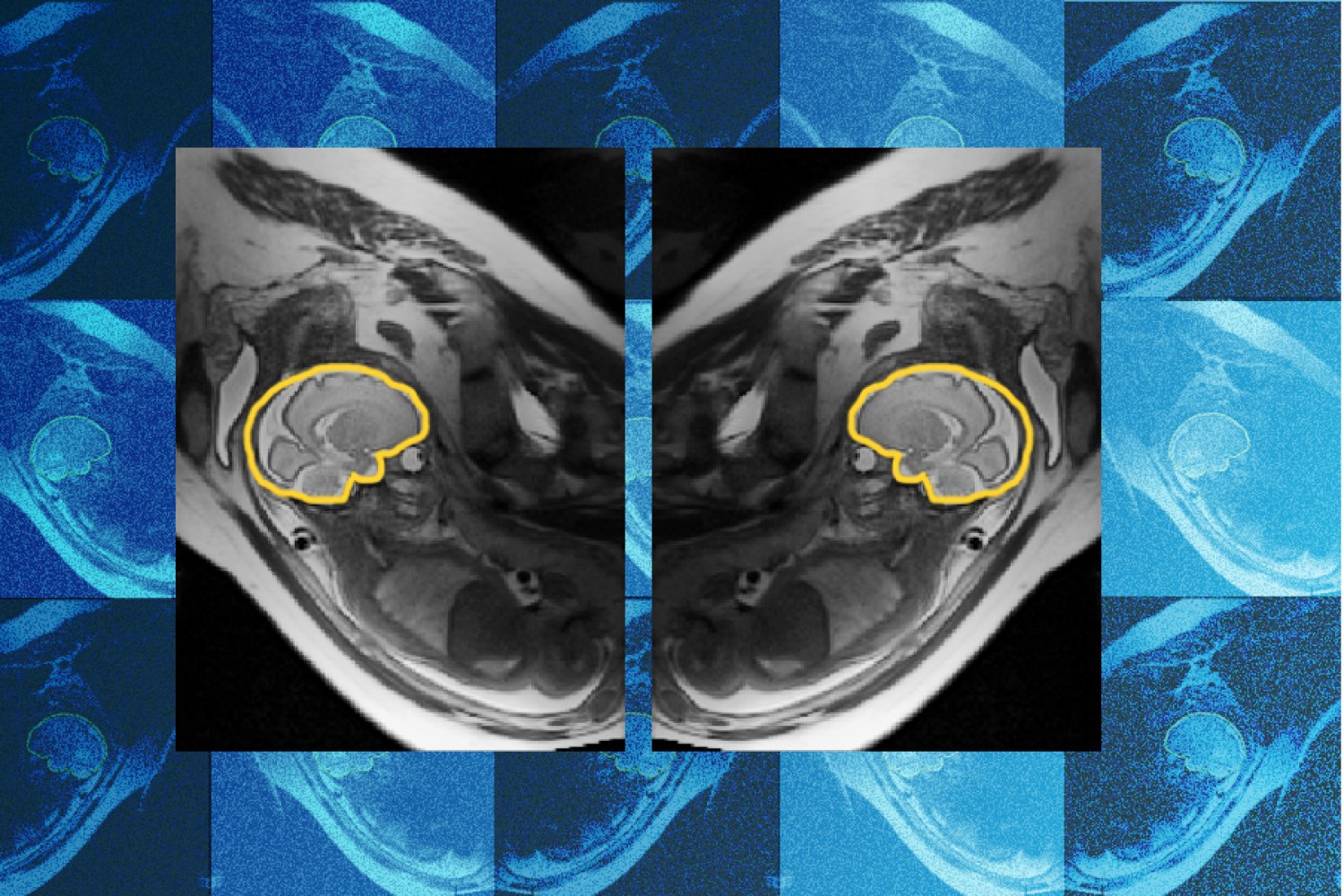
A model developed by researchers at MIT and Boston Children's Hospital adjusts scans on the fly to track fetal movement, potentially sparing families repeat hospital visits.
MIT News · Artificial Intelligence· news.mit.eduOct 18, 2026