Automated machine learning (AutoML) is becoming a disruptive technology across domains such as networking and service engineering, enabling the development of scalable and efficient solutions for network complexity, which is increasingly challenging in the current context, where adaptive and intelligent systems are req...
Prithi Samuel, Balamurugan Balusamy, Rajesh Kumar Dhanaraj et al.· River Publishers eBooks· 0 citations
The convergence of high-throughput sequencing, systems biology and distributed computing has made microbiology a data-intensive field, generating vast genomic, proteomic and metabolomic datasets. Traditional infrastructures—single servers, relational databases and sequential pipelines—are no longer sufficient to manage...
The increasing deployment of generative artificial intelligence (AI) systems has created substantial opportunities for predictive computational optimization. By analyzing historical request patterns, emerging information trends, and user interaction signals, generative AI infrastructures may anticipate future computati...
Jincheng Zhang· Zenodo (CERN European Organi...· 0 citations
Federated Continual Learning (FCL), extending Federated Learning (FL) across dynamically evolving tasks, is becoming increasingly important in multimodal applications. Given the established vulnerability of FL to backdoor attacks, FCL constitutes a natural target for similar threats. However, our experiments show that...
Jiayu Yang, Ye Li, Zhe Zhang et al.· ACM International Conference...· 0 citations
Graph-based federated multi-view clustering (FMVC) enables privacy-preserving collaborative analysis, yet traditional methods rely on full-sample graphs and suffer from prohibitive O(N2) complexities, especially on large-scale data. Recent advances have introduced anchor graphs into FMVC, effectively reducing overhead...
Yang-Fan Du, Su-Yuan Liu, Ji-Yuan Liu et al.· Proceedings of the 34th ACM...· 0 citations
Alzheimer’s disease (AD) is a progressive neurodegenerative disorder, with Mild Cognitive Impairment (MCI) often preceding its onset. Early prediction of MCI progression to AD is crucial for effective intervention. Although multimodal neuroimaging can improve prediction accuracy, incomplete datasets and strict privacy...
Zhiyang Zheng, Rui Qi Chen, Yi Su et al.· IISE Transactions on Healthc...· 0 citations
The rapid growth of the Internet of Medical Things (IoMT) has enabled continuous monitoring of physiological signals and data-driven healthcare services, supporting predictive analytics, personalized treatment, and remote patient monitoring. However, conventional centralized machine learning approaches require sensitiv...
Asynchronous federated learning (AFL) is essential for low-altitude networks due to its benefits in reducing communication bandwidth, lowering transmission delays, and preserving data privacy. However, the highly dynamic mobility of drones, combined with inherent heterogeneities in AFL, including variations in data vol...
Jiawei Cai, Wei Cui, Ying Wen et al.· SAE technical papers on CD-R...· 0 citations
The Diffusion Hypernetwork (DH) integrates diffusion-based optimization with hypernetwork-driven parameter generation, offering a powerful paradigm for modeling complex and structured data. However, in heterogeneous distributed settings such as federated learning, existing DH frameworks face fundamental limitations. Fi...
Hui Wang, Renyu Yang, Hao Peng et al.· ACM International Conference...· 0 citations
Cross-market recommendation (CMR) aims to enhance recommendation performance across multiple markets. Due to its inherent characteristics, i.e., data isolation, non-overlapping users, and market heterogeneity, CMR introduces unique challenges and fundamentally differs from cross-domain recommendation (CDR). Existing CM...
Jundong Chen, Honglei Zhang, Xiangmou Qu et al.· ACM International Conference...· 0 citations
By studying the computational foundations of language learning, Associate Professor Jacob Andreas builds intelligent systems that can communicate effectively with humans.
MIT News · Artificial Intelligence· news.mit.eduNov 17, 2026
AI coding agents are increasingly help developers fix bugs and build features largely on their own, but every interaction with their models consumes tokens. In each session, an agent sends instructions, tool descriptions, and session history to its model. Most efforts to reduce this cost focus on individual tasks. Yet developers return to the same […] The post TokenEconomizer: Learning from Experience to Make AI Coding Agents More Efficient appeared first on Microsoft Research.
MIT News · Artificial Intelligence· news.mit.eduNov 9, 2026
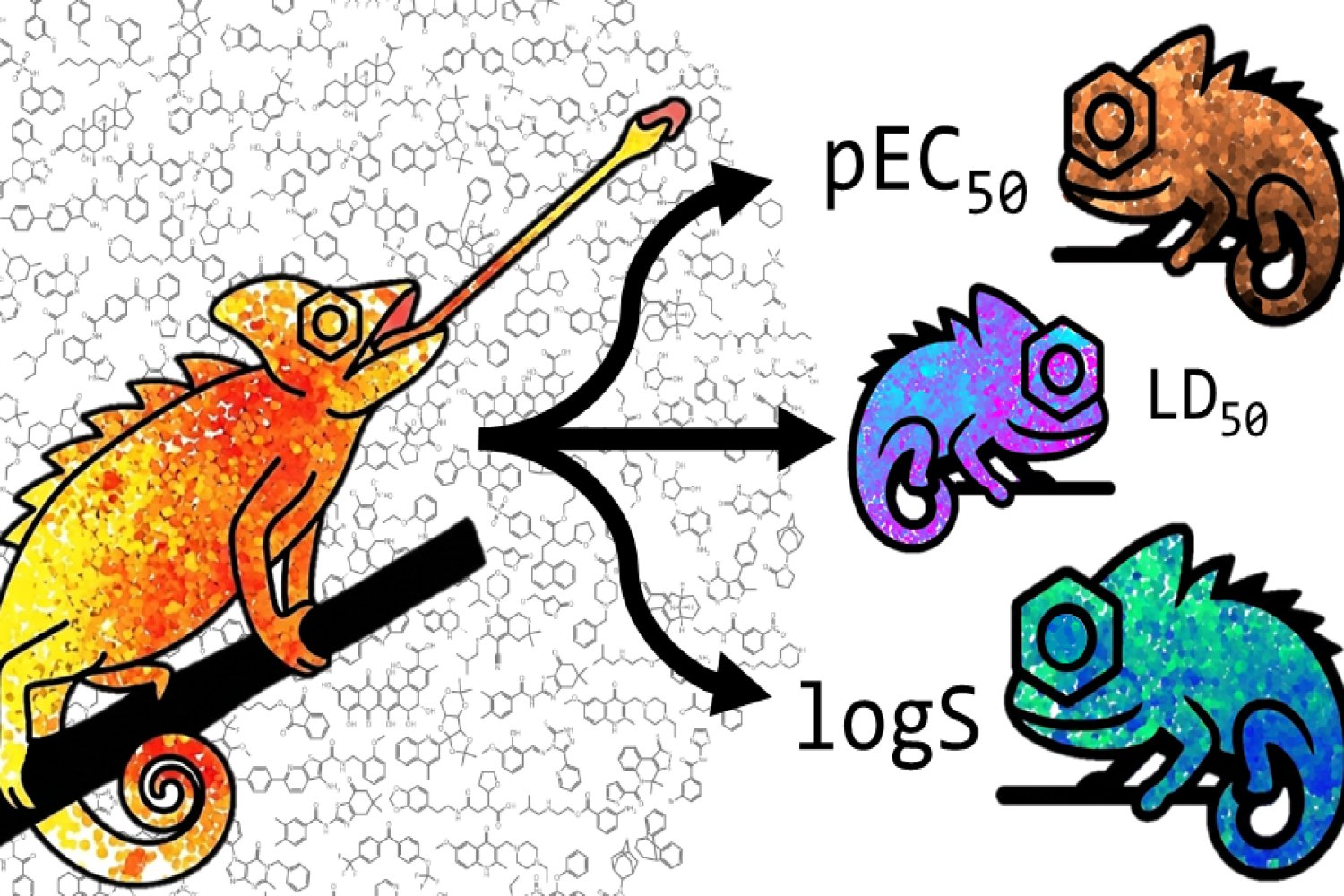
A machine-learning approach called CheMeleon provides a practical way to develop new drugs or other molecules with much less detailed, expensive experimentation.
We use cookies to run the site and, with your consent, for analytics and to show ads.
See our Cookie Policy.