This study conducts a multiple case study on twenty European software startups and proposes a prototype-centric learning model in early stage software startups, and identifies factors that occur as barriers but also facilitators for prototyping in earlystage software startups.
Anh Nguyen-Duc, Xiaofeng Wang, P. Abrahamsson· International Conference on...· 44 citations· ⚡5
This study explores how software firms interact with others in OSS ecosystems from a coopetition perspective, and finds that software firms emphasize the co-creation of common value and partly react to the potential competitiveness on O SS ecosystems.
Anh Nguyen-Duc, D. Cruzes, G. Hanssen et al.· International Conference on...· 17 citations· ⚡2
The enterprise architecture is applied for the largest county comprising of over 1900 social service and healthcare related information systems and the target is to design one joint system with maximum of 300 supporting information systems resulting in 3 B EUR savings.
H. Vilpponen, M. Grundström, P. Abrahamsson· Journal of Advances in Infor...· 3 citations
This study investigates how Lean internal startup facilitates software product innovation in large companies and identifies its enablers and inhibitors, and shows the potential of the method-in-action framework to investigate the Lean startup approach in non-startup context.
Henry Edison, Nina M. Smørsgård, Xiaofeng Wang et al.· Journal of Systems and Softw...· 78 citations· ⚡6
Reach audiences
Advertise in front of researchers, engineers, and readers.
This work presents two board games intended to serve as an engaging introduction to growth hacking for students and helps spark interest in growth hacking among the academia.
Kai-Kristian Kemell, P. Feshchenko, Joonas Himmanen et al.· IWSiB@ESEC/SIGSOFT FSE· 9 citations· ⚡1
The results show that agile software development methods cover, without offering any rationale, different phases of the software development life-cycle and that most of these methods fail to provide adequate project management support.
P. Abrahamsson, Nilay V. Oza, M. Siponen· Agile Software Development· 62 citations· ⚡5
Cyber Physical Systems (CPS) development approaches tend to start from the physical (hardware) perspective, and the software is the final element in the process. However, this approach is unfit for the more software-intensive world that is increasingly iterative, connected, and constantly online. Many constraints preve...
T. Mikkonen, Kai-Kristian Kemell, Petri Kettunen et al.· EUROMICRO Conference on Soft...· 3 citations
Containers are most often discussed in the context of cloud computing, performance and DevOps, and it is found that what is currently missing is more deeply focused research.
Mikael Koskinen, T. Mikkonen, P. Abrahamsson· International Conference on...· 15 citations· ⚡1
Internet-of-Things applications are not only the new opportunity for digital businesses but also a major driving force for the modification and creation of software systems in all industries and businesses. Compared to other types of software-intensive products, the development of Internet-of-Things applications lacks...
Anh Nguyen-Duc, K. Khalid, T. Lønnestad et al.· International Conference on...· 10 citations
Gender issues in software engineering education are gaining research attention due to the desire to promote female participation in the field. The objective of this work is to enhance the understanding of female students' participation in software engineering projects to support gender-aware course optimization. Since...
Anh Nguyen-Duc, M. L. Jaccheri, P. Abrahamsson· 2019 IEEE/ACM 41st Internati...· 9 citations
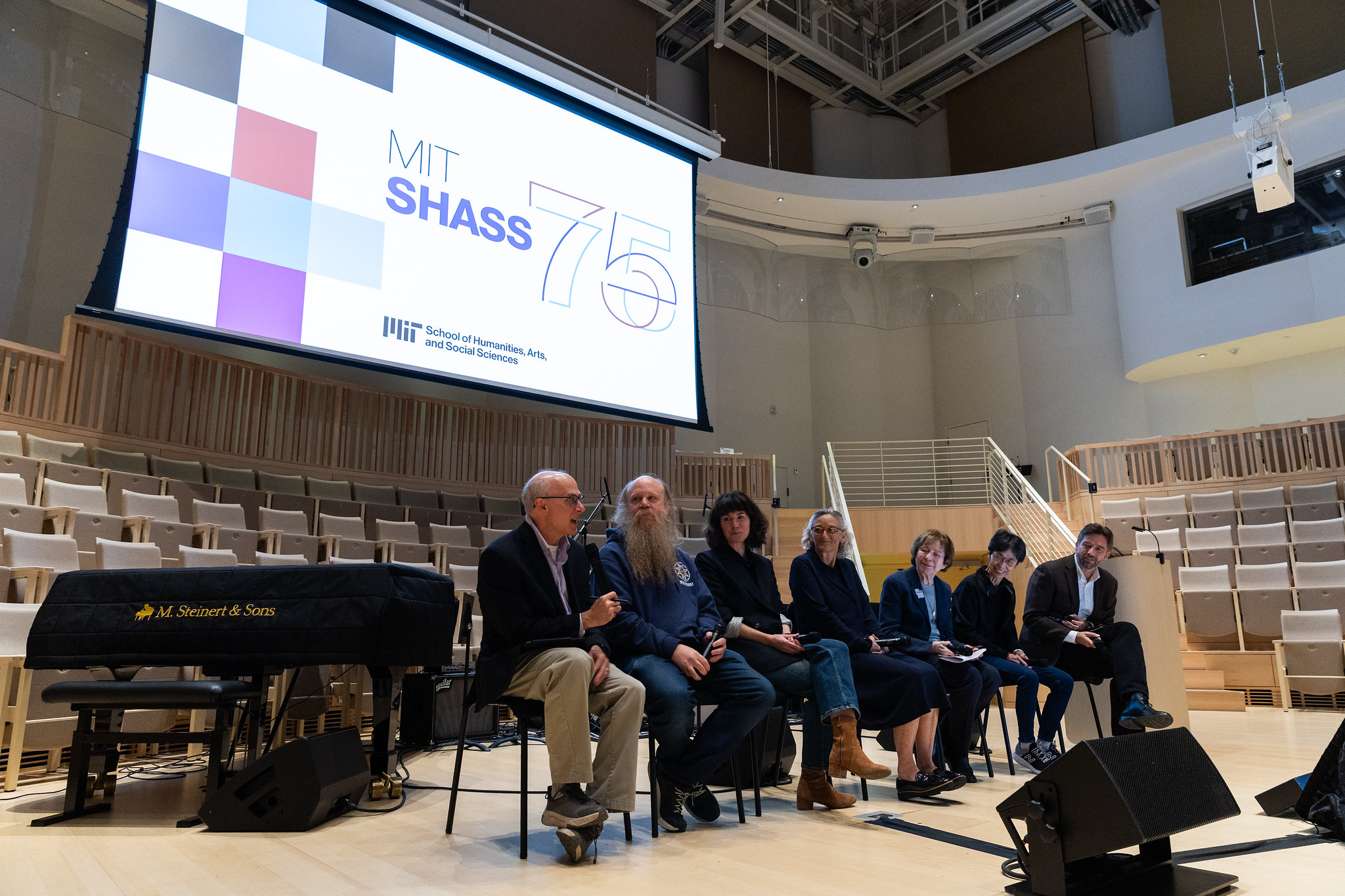
During the School of Humanities, Arts, and Social Sciences’ 75th Anniversary Symposium, President Sally Kornbluth said “MIT has never needed your particular insight and guidance more than we do now.”
Flint-interactive gives AI agents a language for creating interactive visualizations. Click a chart, filter data, highlight related content, and explore beyond the view the author originally chose. The post Flint-interactive: A language for creating interactive data visualizations appeared first on Microsoft Research.