Early Results of an AI Multiagent System for Requirements Elicitation and Analysis
Malik Abdul Sami, Muhammad Waseem, Zheying Zhang et al.
· International Conference on... · 20 citations
· ⚡2
Category
3,740 papers
The use of large language models to automatically improve the user story quality in Austrian Post Group IT agile teams is explored, with a reference model for an Autonomous LLM-based Agent System developed and implemented at the company.
The workshop culminated in the collaborative development of a research roadmap that pinpoints actionable directions for future work, including both immediate solutions and ambitious long-term goals.
Reach audiences
Advertise in front of researchers, engineers, and readers.
Five domain-specific RAG applications developed for real-world scenarios across governance, cybersecurity, agriculture, industrial research, and medical diagnostics are presented, highlighting technical, operational, and ethical challenges affecting the reliability and usability of RAG systems in practice.
Results highlight the ability of LLM-based multi-agent in managing refactoring tasks targeted toward functional programming paradigms and hint that LLM-based multi-agent systems integration into the refactoring of functional programming languages can enhance maintainability and support automated development workflows.
A generalized Multimodal Subspace Support Vector Data Description model with graph-embedded regularization is proposed, illustrating how relational and structural information can be systematically embedded into one-class models, enabling robust learning under complex, high-dimensional, and multimodal conditions.
Preliminary results indicate performance differences across LLMs, suggesting that model choice influences coverage, consistency, and hallucination rates.
LLM-based multi-agent systems can support strategic AI planning by enabling iterative refinement with human experts by supporting structured and collaborative Requirements Engineering processes for AI adoption planning.
Latent-OPD is proposed, which augments OPD with trajectory-level latent distillation and introduces a progressive teacher-lookahead strategy, which aligns middle-to-late student layers with increasingly deeper teacher layers, establishing Latent-OPD as a highly effective approach to frame-efficient video reasoning.
Q-CueGraph maps a question and an image representation to budgeted, coordinate-level observations for a frozen reader, and reaches 92% of full-image ANLS on InfographicVQA from about half the image area.
Professor Paris Smaragdis develops computers with superhuman hearing for applications like speech recognition, music understanding, and environmental monitoring.
 GPT-Lab
· gpt-lab.eu
Oct 8, 2026
Exploring how generative AI could make machine vision more accessible to businesses. The post GenEye in a Box: Making Machine Vision Something You Can Just Ask For appeared first on GPT-Lab.
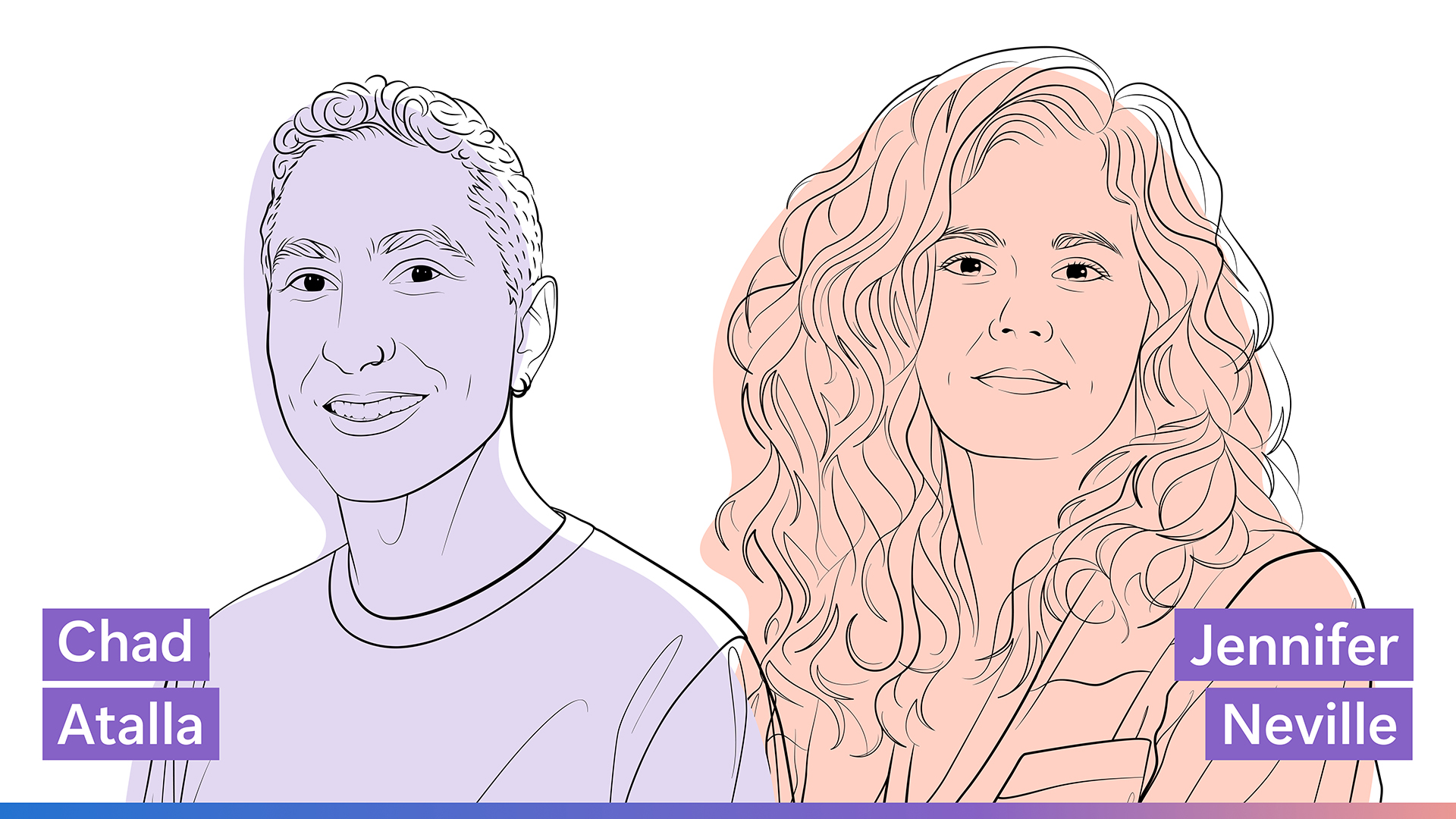
Jennifer Neville did not want to go into computer science—but that’s exactly where she landed. Neville discusses the starts and stops that led to her professional sweet spot and her work identifying “surprising failures” making it hard for AI to handle complexity. The post What AI gets wrong and what failure teaches us appeared first on Microsoft Research.
A Blog post by H company on Hugging Face
A Blog post by Liquid AI on Hugging Face
Computer scientist, entrepreneur, and philanthropist will collaborate with the MIT Schwarzman College of Computing to advance AI and scientific discovery.
We use cookies to run the site and, with your consent, for analytics and to show ads. See our Cookie Policy.