
#computer vision
Open access
Similar papers
Case report
2026
Building Agentic AI Research Teams
This seminar explores how frontier AI systems can be organized into specialized research 'teams' or multiple-agent workflows that support orchestrated literature review, analysis, synthesis, writing, and verification all under human control. It combines conceptual depth with practical demonstrations to help researchers design more reliable and academically defensible AI-supported workflows.
M. Zyphur
· 0 citations
Case report
2026
AI Multi-Agent Workflows in R
This workshop covers the principles and practice of building multi-agent LLM workflows in R using the mini007 package. Participants will learn agent creation, state management, LeadAgent-based task decomposition, and best practices for reproducible, research-ready automation.
Fodil Ihaddaden
· 0 citations
Case report
2026
Agentic AI for Academic Research
This seminar explores how agentic AI can be integrated into academic research as a disciplined, verifiable, and human-led method rather than a generic productivity tool. It provides practical frameworks for responsible use, workflow verification, and multi-agent research design across literature work, analysis, writing, and grant development.
M. Zyphur
· 0 citations
Aug 2026
From Command to Conversation: Integrating Agentic AI Into Command-Line Interfaces
The command-line interface evolves as LLM-based agentic systems add tool execution, planning, and persistent state, enabling autonomous multistep tasks while introducing new security risks today. This article synthesizes empirical evidence on productivity effects, examines current implementations, and provides practitioners with concrete guidance for safe adoption.
Mohit Shrivastava
· Computer · 0 citations
2026
Coding Agents Need Guidance, Not Faith
Coding agents powered by multimodal models are becoming increasingly capable. They explore and write code, fix tests, even coordinate subagents for complex changes. Used well, they expedite development and help deliver solid software at pace. Used badly, they produce confident nonsense at machine speed. Tim Clark guides you to success.
Tim Clark
· ITNOW · 0 citations
Case report
2026
Building Autonomous AI Agents for Scientific Research
This workshop explores how autonomous AI agents can support scientific research in R, from conceptual distinctions between chat systems and agentic workflows to practical deployment with open-source tools (OpenCode). It is designed for researchers who want to use AI critically, securely, and effectively in data-intensive academic work.
R. Maestri
· 0 citations
Related blog posts

Google Research Blog
· research.google
Aug 25, 2026
AgentHands: Generating interactive hand gestures for spatially grounded agent conversations in XR
Human-Computer Interaction and Visualization
Microsoft Research Blog
· microsoft.com
Aug 11, 2026
Introducing CARE-X: Towards Clinically Useful Radiology VLMs with Auxiliary Supervision, Reward-Aligned Learning, and Tool-Augmented Measurement
Radiology AI is evolving beyond report generation. CARE-X explores a unified approach that combines flexible reasoning, calibrated predictions, and measurement-based tools for chest X-ray interpretation. The post Introducing CARE-X: Towards Clinically Useful Radiology VLMs with Auxiliary Supervision, Reward-Aligned Learning, and Tool-Augmented Measurement appeared first on Microsoft Research.
Microsoft Research Blog
· microsoft.com
Jul 30, 2026
Echoverse: Deep, evolving environments for computer-use agents
Computer-use AI agents struggle with multi-step workflows like email and customer support. Echoverse trains agents in realistic environments rather than simply providing more training tasks, helping them improve as the tasks, tests, and environments evolve. The post Echoverse: Deep, evolving environments for computer-use agents appeared first on Microsoft Research.
MIT News · Artificial Intelligence
· news.mit.edu
Jul 29, 2026
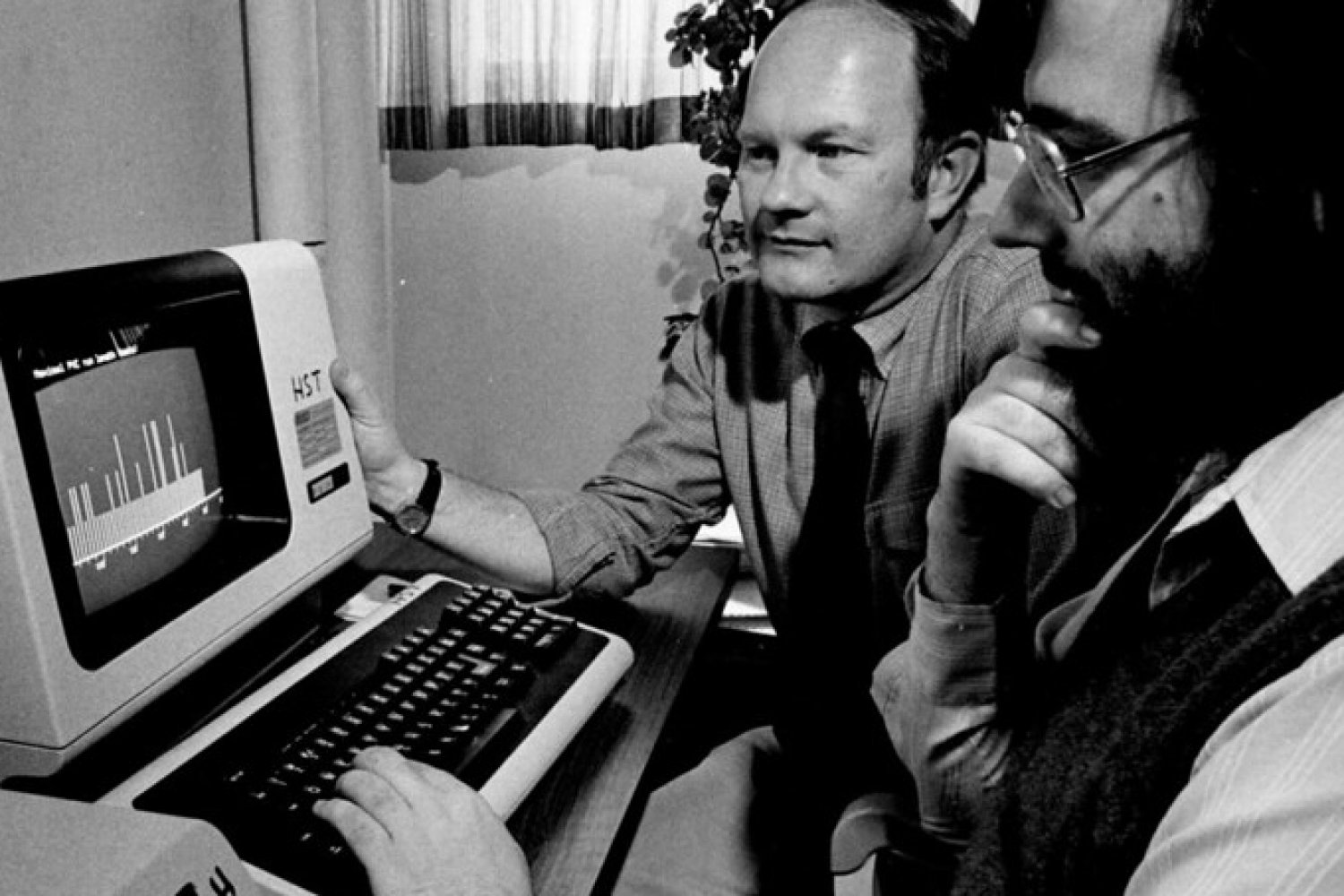
How a medical database developed at MIT evolved into a global standard of data-sharing
The visionary PhysioNet platform launched 25 years ago, based on a system developed at MIT in the 1970s. It has become one of the most comprehensive biomedical and clinical data repositories in existence.