This paper proposes IterCAD, an iterative framework that reformulates orthographic-view-to-CAD generation as a progressive program repair process that consistently improves code executability and geometric fidelity over strong one-shot baselines.
Yu-Chuan Wu, Ke Niu, Hai-Yang Yu et al.· 0 citations
This work proposes TransSLR, a lightweight Temporal Transformer Encoder trained from scratch on 64-frame normalized pose sequences, with average pooling and a classification head that achieves signer-independent generalization without relying on visual appearance on the CASL-W60 benchmark.
Lucia Yen Wanchi, S. Johnny, V. Olufemi et al.· 0 citations
AnchorPrune is a training-free framework that first constructs a protected relevance anchor and then expands it with complementary visual context, establishing relevance-anchored contextual expansion as an effective principle for efficient multimodal inference.
We argue that learning visual representations without labels requires a training signal jointly complete across three non-overlapping objectives: semantic invariance across augmented views, patch-level spatial prediction, and representational non-degeneracy. We formalize these as the observation, prediction, and regula...
While LLM-based multi-agent systems show potential for large-scale software development, successful integration requires addressing challenges such as memory limitations, hallucinations, and code smells, alongside a practitioner-centric perspective.
Z. Rasheed, Muhammad Waseem, Kai-Kristian Kemell et al.· 31 citations
The proposed LLM-based multi-agent system automates qualitative data analysis process, creating opportunities for researchers and practitioners, and future improvements focus on enhancing multilingual performance and integrating continuous expert feedback.
Z. Rasheed, Muhammad Waseem, Aakash Ahmad et al.· arXiv.org· 41 citations
This work designs and operationalizes a governance-aware, multi-tenant AI sandbox that supports structured experimentation and produces reusable evaluation evidence across stakeholders and yields lessons learned and practical considerations that inform deployment and future evolution of governance-aware sandbox platfor...
Muhammad Waseem, M. Islam, Md Nasir Uddin Shuvo et al.· arXiv.org· 0 citations
This work presents the design and implementation of a governance-aware, multi-tenant AI sandbox for structured experimentation and the generation of reusable evaluation evidence across projects and stakeholder groups.
Muhammad Waseem, M. Islam, Md Nasir Uddin Shuvo et al.· 0 citations
A Multi-Vocal Literature Review is conducted, combining insights from both academia and industry, including peer-reviewed studies and grey literature to systematically synthesize and analyze existing knowledge on LLM-based multi-agent systems for code generation.
Z. Rasheed, Muhammad Waseem, Kai-Kristian Kemell et al.· arXiv.org· 2 citations
This study provides the first large-scale empirical comparison of agentic frameworks for reasoning-intensive software engineering tasks and shows that framework selection should prioritize orchestration quality, especially memory control, failure handling, and cost management.
Z. Rasheed, Malik Abdul Sami, Muhammad Waseem et al.· arXiv.org· 1 citation
The vision is to leverage the capabilities of multiple GPT agents to contribute to SE tasks and to propose an initial road map for future work, arguing that multiple G PT agents can perform creative and demanding tasks far beyond coding and debugging.
Z. Rasheed, Muhammad Waseem, Kai-Kristian Kemell et al.· XP Workshops· 34 citations· ⚡2
Exploring how generative AI could make machine vision more accessible to businesses. The post GenEye in a Box: Making Machine Vision Something You Can Just Ask For appeared first on GPT-Lab.
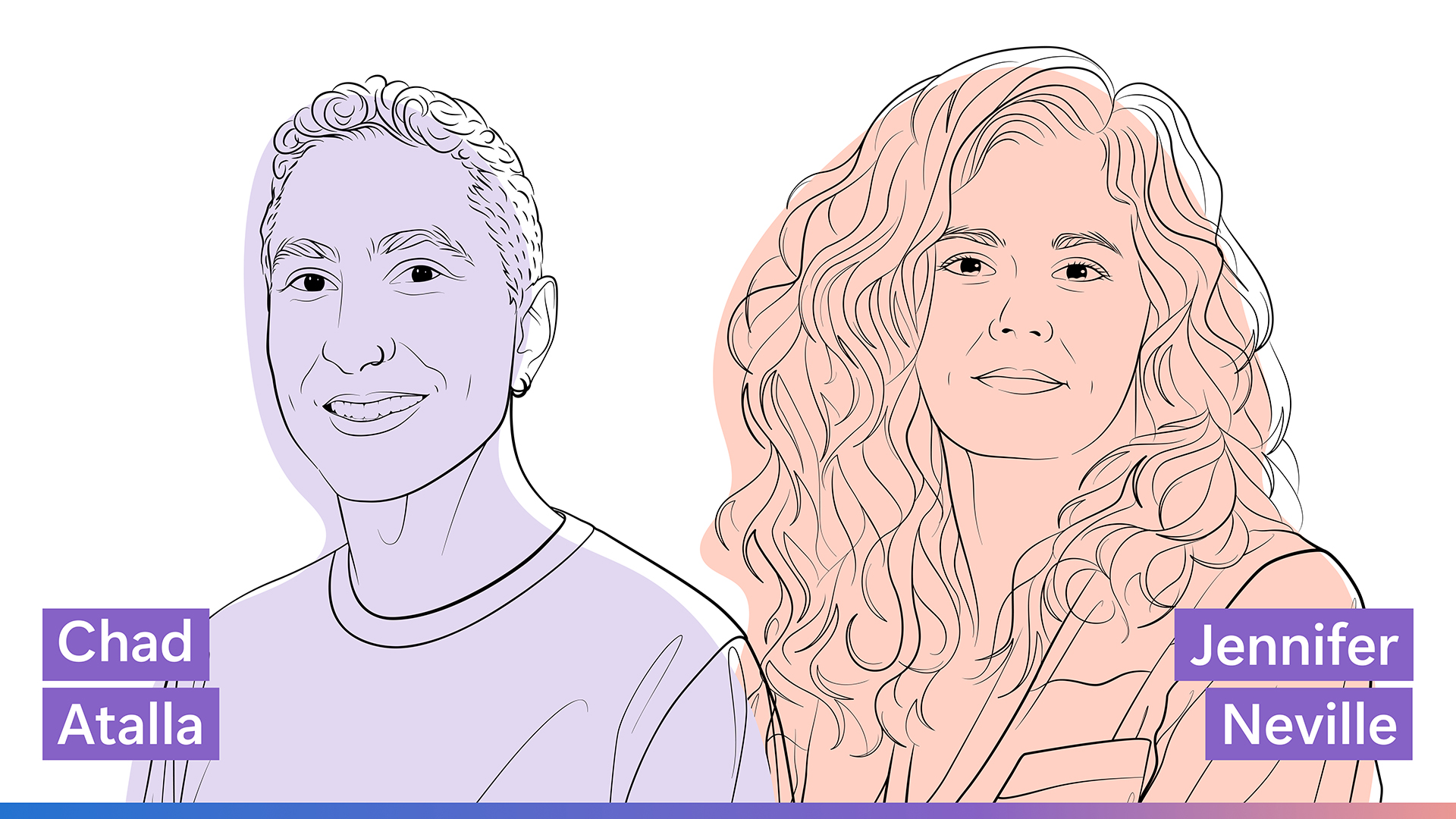
Jennifer Neville did not want to go into computer science—but that’s exactly where she landed. Neville discusses the starts and stops that led to her professional sweet spot and her work identifying “surprising failures” making it hard for AI to handle complexity. The post What AI gets wrong and what failure teaches us appeared first on Microsoft Research.
Computer scientist, entrepreneur, and philanthropist will collaborate with the MIT Schwarzman College of Computing to advance AI and scientific discovery.