This work proposes Robust Semantic-aware Gaussian Splatting SLAM (RoSe-SLAM), to address the dynamic challenge by a holistic semantic scene understanding from uncalibrated monocular inputs, achieving accurate camera tracking and high-quality geometry reconstruction.
Wen-Ting Wang, Jia-Xin Guo, Wen-Zhen Dong et al.· 0 citations
This work introduces ActiveAugment, a unified framework that treats augmentation selection as an online active learning problem, and reveals that the augmentation selection policy evolves meaningfully during training and that strategy choice has a direct impact on generalisation.
This work constructs 11,911 text--staging pairs from 2,328 figurative paintings by reconstructing SMPL bodies, estimating low-frequency illumination, recovering camera parameters, and pairing each scene with ArtEmis descriptions, demonstrating the feasibility of generating editable, emotionally conditioned 3D staging r...
FigMirror is proposed, an agentic framework that unlocks coordinate grounding and coding capabilities present in modern computer-use models through Grounded Measurement, which locates visual elements by coordinates and measures their properties through executable code.
Xiaohan Zhao, Jiacheng Liu, Yaxin Luo et al.· 0 citations
Reach audiences
Advertise in front of researchers, engineers, and readers.
Face-Edit-Attributes, the largest collection of $169$ facial editing attributes focused on hair, accessories, and pose edits, is presented, which shows that most models performed hair and accessory edits well, but struggled with editing pose.
RoboPhys-3D, a 3D-grounded EWM benchmark built on RoboTwin 2.0, is introduced, and Average Full Score, a hierarchical score averaging all 50 metrics for comprehensive evaluation, and RoboPhyscore, a compact task-aligned score averaging the metrics most strongly correlated with task success are introduced.
Tian-Yi Wang, Jia-Zhou Chen, Yi-Ming Xu et al.· 1 citation
Token-Guided Attribute Privacy (TGAP), a pre-LLM token disentangler that learns a residual transformation of visual tokens before they leave the trusted boundary, is proposed, suggesting that securing the compact token interface is a practical path toward privacy-preserving wearable multimodal AI.
Zhi-Min Li, Pan Wang, Jing-Xiang Chen et al.· 0 citations
This research quantifies the similarity between original pieces and AI-generated counterparts, particularly those produced by the Stable Diffusion XL Refiner 1.0, using Siamese Networks with frozen CLIP encoders and cosine similarity optimized through triplet loss.
Diego Castro Elvira, Navil Pineda Rugerio, Jesús García-Ramírez et al.· 0 citations
MnIST-PRO is addressed, a benchmark that isolates agentic perception by converting MNIST digit recognition into a sequential, glimpse-based search task with lookback constraints, and ten multimodal models are evaluated, showing that simply acquiring visual evidence is not enough and agents must also be able to build an...
Vernon Toh, N. Majumder, Zhengyuan Liu et al.· 0 citations
Results show that 2D spatial performance in text-only LLMs depends on both the model and the output medium, and is not explained by code-generation ability alone.
A. Nedungadi, Stefan Oehmcke, Stefan Lüdtke· 0 citations
This work introduces a schema-aware target construction strategy, builds the generator on top of a pretrained vision-language model for multimodal garment understanding, and imposes feasibility-aware regularization to encourage structurally valid and simulation-compatible outputs.
Exploring how generative AI could make machine vision more accessible to businesses. The post GenEye in a Box: Making Machine Vision Something You Can Just Ask For appeared first on GPT-Lab.
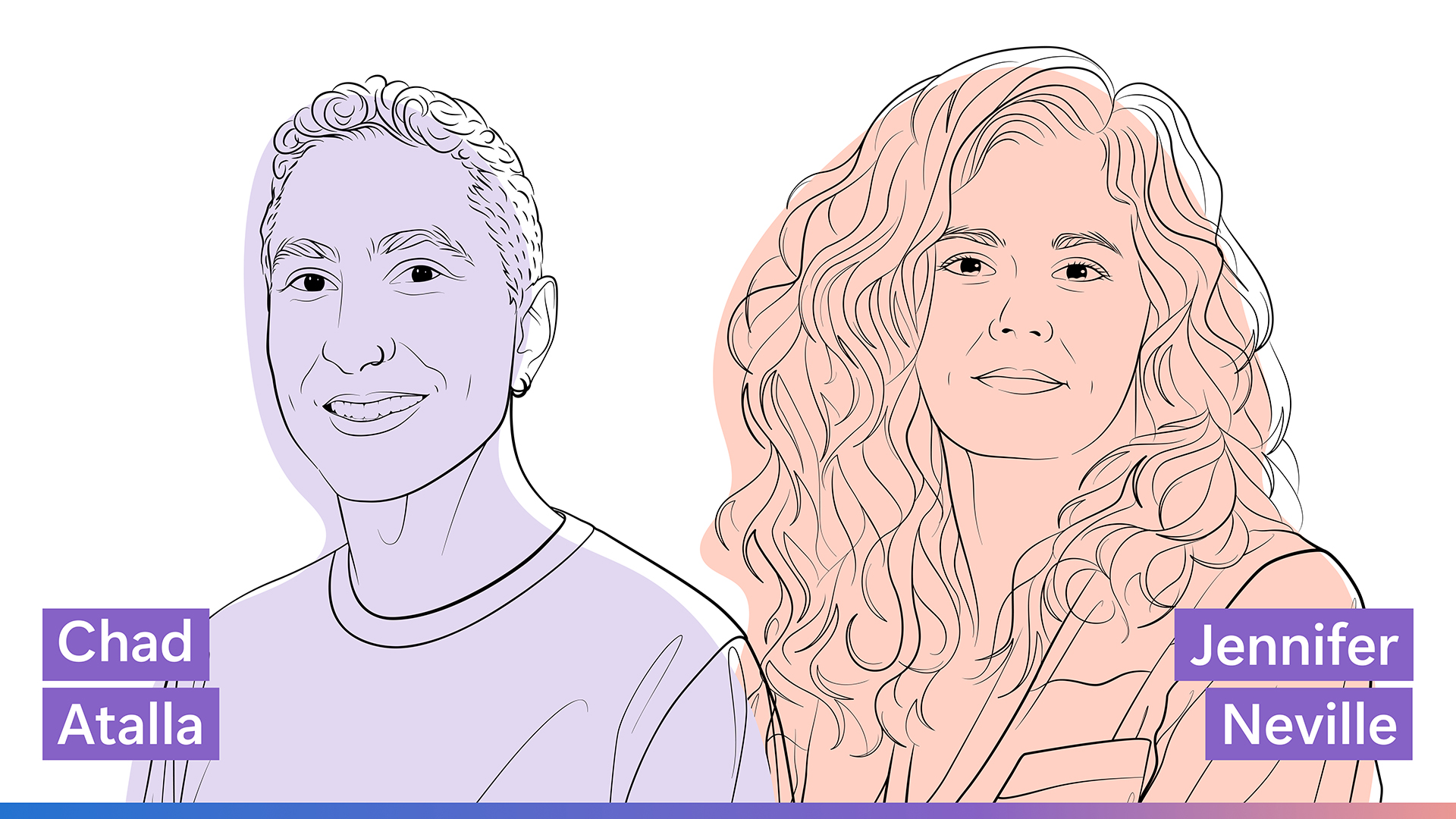
Jennifer Neville did not want to go into computer science—but that’s exactly where she landed. Neville discusses the starts and stops that led to her professional sweet spot and her work identifying “surprising failures” making it hard for AI to handle complexity. The post What AI gets wrong and what failure teaches us appeared first on Microsoft Research.
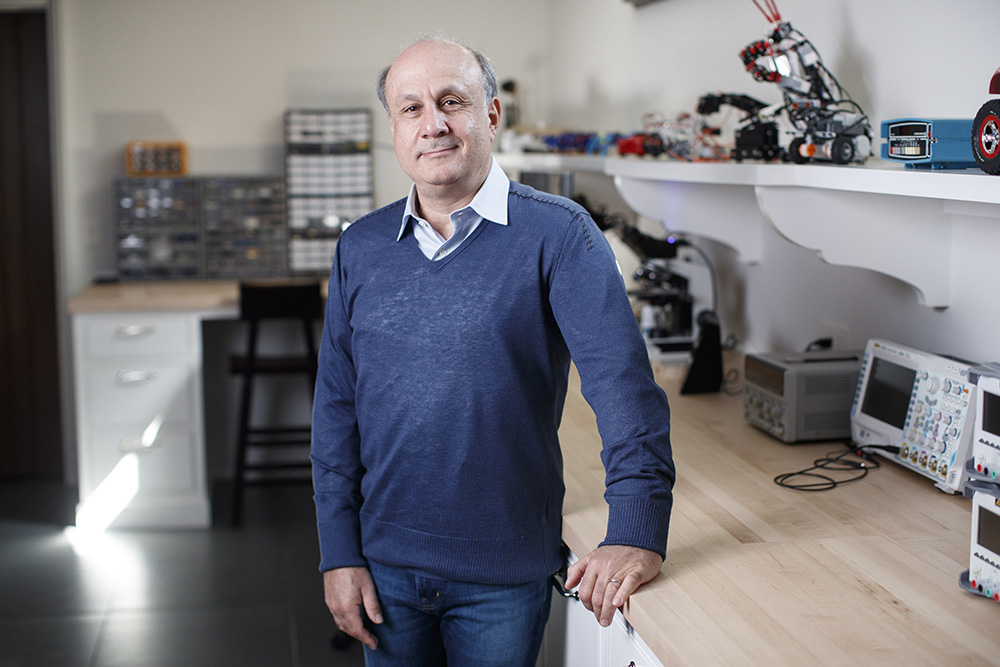
Computer scientist, entrepreneur, and philanthropist will collaborate with the MIT Schwarzman College of Computing to advance AI and scientific discovery.