3 Questions: What is the best path forward for AI in academia?
MIT Statistics and Data Science Center Director Alexander (Sasha) Rakhlin shares important considerations for departments and institutions.
Updates and guides from us, plus hand-picked reads from tech & AI blogs.
MIT Statistics and Data Science Center Director Alexander (Sasha) Rakhlin shares important considerations for departments and institutions.
Exploring how generative AI could make machine vision more accessible to businesses. The post GenEye in a Box: Making Machine Vision Something You Can Just Ask For appeared first on GPT-Lab.
By rethinking how large cloud computing systems operate, Associate Professor Christina Delimitrou seeks to make data centers more energy efficient.
Training AI agents with reinforcement learning can be challenging because their tools, context, and decision-making are managed by complex frameworks. Agent Lightning connects existing agents to RL training, making it easier to improve them without rebuilding them. The post Agent Lightning v1.0: A 3,500-Line Lightweight Agentic RL Framework for Training Agents with Real Harnesses appeared first on Microsoft Research.
Reach audiences
Advertise in front of researchers, engineers, and readers.
An ongoing survey tracks the latest AI accelerator systems to keep hardware relevant for Lincoln Laboratory staff and sponsors.
Jennifer Neville did not want to go into computer science—but that’s exactly where she landed. Neville discusses the starts and stops that led to her professional sweet spot and her work identifying “surprising failures” making it hard for AI to handle complexity. The post What AI gets wrong and what failure teaches us appeared first on Microsoft Research.
Earth AI
The effort aims to help U.S. learners from kindergarten to community college, with an emphasis on math, making, and the constructive use of AI.
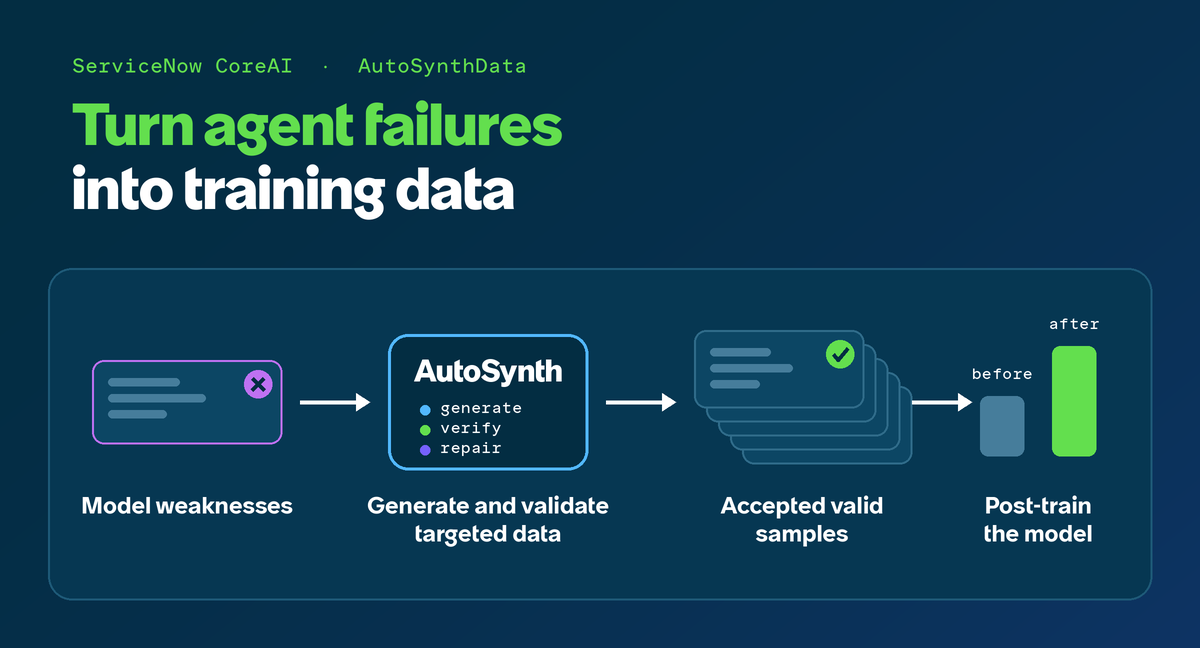
A Blog post by ServiceNow-AI on Hugging Face
“InstructMesh” can generate designs for everyday objects that are easy to edit and fabricate for both experts and newcomers to 3D modeling.
With $2.1 million funding from Google.org, the open-source Public Transit Intelligence Hub will unify public transit monitoring, operations, and passenger communication.
Proof of concept for watermarking AI-generated proteins while preserving biological function.
We use cookies to run the site and, with your consent, for analytics and to show ads. See our Cookie Policy.