Protecting cities with AI-driven flash flood forecasting
Climate & Sustainability
More from the blog

Introducing Gemini 3.7 Flash
Gemini 3.7 Flash is our most intelligent workhorse model yet for coding and agents.
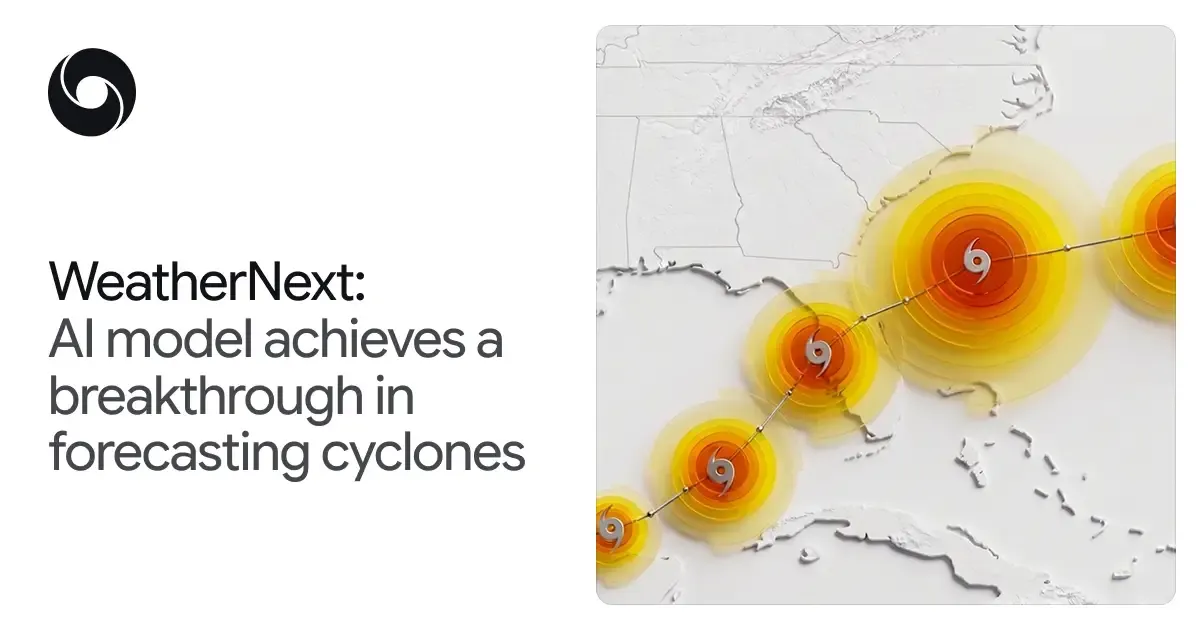
WeatherNext: AI model achieves breakthrough in forecasting cyclones
WeatherNext enables accurate cyclone forecasts that can give an extra day of warning. Now we are open sourcing the model.

Introducing Gemini 3.6 Flash, 3.5 Flash-Lite, and 3.5 Flash Cyber
We’re introducing new Gemini models, including Gemini 3.6 Flash, 3.5 Flash-Lite and 3.5 Flash Cyber.

Introducing Gemini 3.5 Flash Cyber
Google introduces Gemini 3.5 Flash Cyber, a lightweight cybersecurity model to find and patch vulnerabilities.
Related papers
An explainable generative AI framework for detecting low-rate API-based DDoS attacks in cloud environments
Artificial Intelligence for Real-Time Cyber Threat Classification and Emerging Threat Detection: A Structured Review of Methods, Datasets, Challenges, and Research Directions
The reviewed literature indicates that AI-based methodologies often demonstrate superior detection capabilities for intricate and previously unseen attack patterns compared to traditional methods; however, direct performance comparisons are complicated due to discrepancies in datasets, experimental designs, and evaluation protocols.
Adaptive Repayment Optimisation for SME Lending: A Stochastic Programming Framework with Generative AI Explanation
The Adaptive Repayment Optimisation Engine is introduced, a novel framework that applies constrained stochastic optimisation to the design of loan repayment schedules for small and medium-sized enterprises (SMEs) and contributes to the operations research literature by bridging stochastic programming, explainable AI, and financial regulation in a novel application domain.
The socio-ecological costs of AI: Toward socially responsible and sustainable communication practices
The adoption of generative artificial intelligence among communication practitioners and researchers surged after the launch of ChatGPT in November 2022, urging practitioners to critically engage in exploring pathways for fostering socially responsible and environmentally sustainable AI practices.