New chip could help tiny robots traverse complex environments
Researchers combined an efficient algorithm with dedicated hardware to rapidly generate 3D maps for navigation using minimal memory and power.
More from the blog

Paving the way for greener ammonia production
New MIT research could lead to better materials for a fossil-fuel-free process for making the chemical that's essential to fertilizer and other products.

When AI art has no author: Study finds generated images often can’t be traced to training data
A new method for surgically removing training examples from a model reveals that as datasets grow, the link between what a model learns and what it produces dissolves.

Putting sign language AI into users’ hands
Introducing sign-language-to-text (SL2T), our breakthrough model powering new sign language features for Deaf and hard of hearing users.
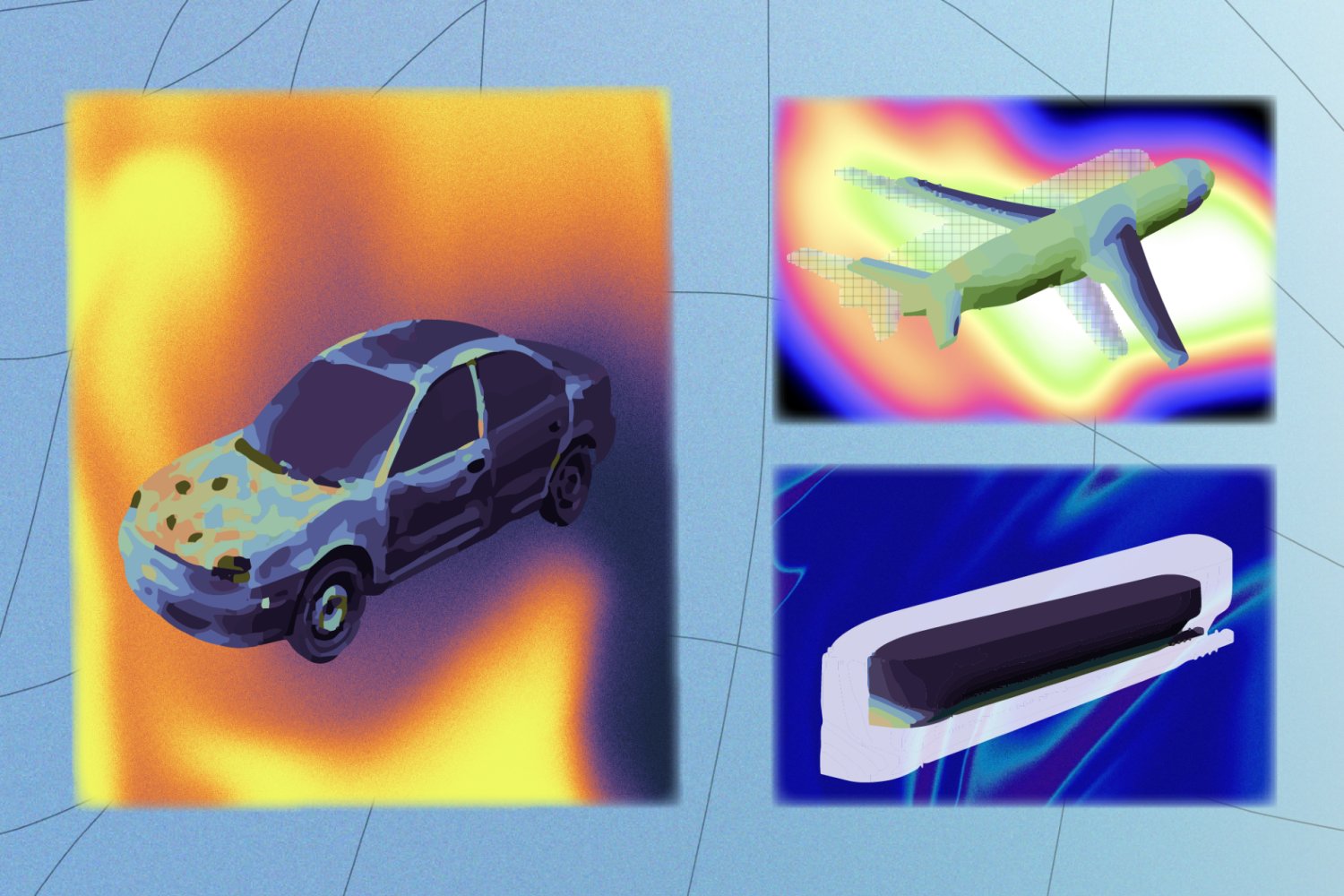
With a feel for physics, AI models simulate a wider range of real-world scenarios
“GeoPT” helps AI models understand the basics of physics so they can simulate how objects respond to things like wind and water more efficiently and accurately.
Related papers
Mutation-induced phenotypic plasticity drives formation of a pro-metastatic tumour-intrinsic niche
It is argued that formation of a tumour-intrinsic niche is a prerequisite for BRAF-mutant CRC seeding to distant organs and that interference with niche formation may help avoid metastatic relapse.
Unlocking non-model organisms with CRISPR-Cas: A roadmap for sustainable biotechnology.
It is concluded that bridging the gap between foundational CRISPR research and its real-world applications is imperative and future efforts should focus on democratizing tools via open-source platforms, advancing delivery systems, and fostering sustainable innovation through synthetic biology integration to fully realize the transformative potential of genome editing in organisms beyond model organisms.
Induced pluripotent stem cell reprogramming: methodological evolution and challenges in clinical translation
This review summarizes the trajectory of iPSC reprogramming technologies and identifies the core “translational triltrilas”, namely, the inherent tradeoffs between security, homogeneity, and scalability, and proposes a comprehensive strategy to overcome these bottlenecks.
GigaBrain-WBC-0.5: A Behavior World Model for Robust Whole-Body Control with Environment Interaction
GigaBrain-WBC-0.5, the first Behavior World Model for humanoid whole-body control, is presented, which trains a causal Transformer to jointly predict its next action, next state, and the distribution over its next latent behavior command, so the network that acts also models how the environment shapes what it can do next.