Aug 2026· Journal of King Saud University: Computer and Information Sciences· Vol 38· 0 citations· 38 references
TL;DR
A unique, computationally efficient triple-feature block network capable of highly accurate plant disease classification across diverse species and complex imaging environments is proposed.
Potato leaf disease poses a significant threat to global food security, causing substantial crop losses that jeopardise agricultural productivity and farmers’ livelihoods worldwide. Existing automated detection frameworks suffer from several persistent limitations, including over-reliance on controlled benchmark datasets, narrow disease class coverage, exclusive use of spatial feature representations, absence of feature selection, and dependence on single-architecture end-to-end pipelines. To address these limitations, this paper proposes ComPo-Net, a novel lightweight ensemble framework that integrates three efficient CNN architectures—ResNet18, ShuffleNet, and MobileNetV2—for nine-class potato leaf disease detection and classification. Deep features are extracted from three intermediate layers of each network, with the Discrete Wavelet Transform applied for dimensionality reduction and cross-network fusion of the higher-dimensional layer features, capturing spectral–spatial information that purely spatial approaches cannot provide, while the remaining layer features are directly concatenated across networks. One-way Analysis of Variance (ANOVA) feature selection is subsequently applied to retain the most statistically significant features from the combined multi-scale, multi-network representation, and seven machine learning classifiers are systematically evaluated to identify the optimal classification strategy. The framework is assessed on a merged dataset of three publicly available benchmarks spanning both controlled and uncontrolled imaging environments, constituting a nine-class evaluation setting not previously addressed at this scale in the literature. ComPo-Net achieves an accuracy of 96.32%, an F1-score of 93.87%, an MCC of 0.9350, and AUC values exceeding 0.993 across all nine classes with Cubic SVM as the best-performing classifier. When compared against methods evaluated on the seven-class uncontrolled-environment dataset—the closest available task setting to ComPo-Net’s nine-class merged benchmark—ComPo-Net surpasses the best-performing comparable method by a margin of 6.45 percentage points, demonstrating the effectiveness of multi-scale ensemble feature extraction combined with spectral–spatial representation and principled feature selection for robust potato leaf disease detection under diverse real-world conditions.
Plant leaf diseases significantly reduce agricultural productivity and crop yield worldwide, making early and accurate detection essential to prevent large-scale crop damage. Traditional disease identification methods rely on manual inspection by experts, which is time-consuming, costly, and often inaccessible to farmers in rural areas. This paper proposes an AI-based leaf disease detection system using deep learning and transfer learning, in which EfficientNetB5 serves as a pretrained feature extractor to classify 38 plant disease categories spanning 14 crop species. Preprocessing includes HSV-based leaf segmentation, resizing to 456×456 pixels, and EfficientNet-specific normalization. A compact two-layer dense classifier is trained on the 2,048-dimensional feature vectors produced by the frozen backbone. The system achieves an overall validation accuracy of 96.49%, macro-average precision of 0.97, recall of 0.96, and F1-score of 0.96 on 2,280 held-out images. Beyond classification, the system provides actionable cure and precautionary recommendations for every detected disease, making it directly useful to smallholder farmers. Comparative analysis with ResNet50, VGG16, and MobileNetV2 confirms that EfficientNetB5 achieves the highest accuracy with a favorable parameter-to-performance ratio. Multi-class ROC evaluation further demonstrates strong discriminative capability across all disease categories.
Kuppala Ajay Kumar, Yella Sai Krishna, R. Kumar et al.· 2026 6th International Confe...· 0 citations
Introduction Accurate and rapid diagnosis of plant leaf disease symptoms is critical for sustainable agricultural crop production, yet traditional methods often lack efficiency and robustness under field conditions. Methods Here, we propose a deep learning framework based on an improved Vision Transformer architecture that integrates a dynamic sparse attention mechanism, termed KBTNet, for targeted feature extraction in symptom-affected regions of leaf images. The model incorporates a learnable nonlinear enhancement module to capture subtle visual disease symptom variations such as lesions, discoloration patterns, and spot distributions, and a lightweight Transformer design to reduce computational cost. Results Evaluated on a multisource dataset containing soybean and tomato leaf images representing diverse disease symptom patterns, our approach achieved 93.19% classification accuracy, outperforming current state-of-the-art models. Additional evaluations on public plant disease datasets from multiple crops further demonstrate the model's ability to recognize disease symptom patterns across diverse crop species. Discussion The proposed framework achieves stable performance across diverse crop and disease symptom categories, maintains high efficiency under reduced parameter complexity, and exhibits strong potential for realtime field diagnostics on edge devices. This work provides a scalable and efficient tool for plant disease symptom detection and classification and supports the integration of visionbased intelligence into crop disease monitoring and management systems.
Yunqin Shen, Mengyuan Zhu, Tao Hu et al.· Frontiers in Plant Science· 0 citations
Artificial intelligence (AI) has significantly enhanced image-based analysis across many domains, including agriculture. Deep learning methods have demonstrated strong potential for automated plant disease detection, which is critical to enhancing crop production and precision agriculture. Nevertheless, the diagnosis of plant diseases remains challenging due to unclear backgrounds, high inter-class similarity, and substantial intra-class variability across crop species. To overcome these issues, this paper presents a parameter-efficient hybrid deep learning architecture that combines DenseNet121 with a lightweight Vision Transformer (ViT) module. Instead of using many spatial patches, as in conventional ViT models, the presented framework limits the transformer to a single CNN-derived global token, which is used for lightweight feature refinement at low computational cost. The model is tested on five publicly available agricultural datasets: corn leaf, tomato leaf, BananaLSD, MangoLeafBD, and groundnut leaf. Experimental findings show consistently high performance across all datasets, with accuracies of 97.50%, 99.60%, 98.94%, 99.88%, and 99.66%, respectively. The proposed architecture shows stable convergence behavior, a good precision-recall balance, and effective training behavior with various dataset sizes. Additionally, Grad-CAM visualizations were used to enhance model explainability, highlighting leaf-relevant regions and providing qualitative indications of image regions contributing to predictions.
Timely and accurate identification of tomato leaf diseases is important for reducing crop losses and supporting sustainable crop management. This study developed a modified AlexNet architecture for classifying field-captured tomato leaf images into seven disease categories. A custom dataset obtained under variable backgrounds and lighting conditions was expanded through rotation, horizontal and vertical flipping, and zooming to reduce class imbalance and improve model generalisation. The proposed architecture comprised three convolutional layers with 3 × 3 filters, reduced fully connected layers, and dropout regularisation to balance predictive performance and computational efficiency. The model was implemented using TensorFlow and Keras and trained for 30 epochs. Its performance was evaluated using accuracy and loss curves, a confusion matrix, receiver operating characteristic curves, area under the curve values, class-wise precision, recall and F1-scores, and Gradient-weighted Class Activation Mapping. Under the reported experimental protocol, the model achieved a validation accuracy of 99.74% and a macro-average F1-score of 0.8907. Bacterial spot and early blight showed comparatively strong classification performance, whereas target spot was the most difficult category to classify. Grad-CAM visualisations indicated that the model generally focused on symptom-bearing leaf regions. Comparisons with selected ResNet and VGG architectures showed favourable results for the proposed model on the same dataset. Independent external validation and deployment-oriented testing remain necessary before broader field applicability can be established.
Debabrat Bharali, Kanak C. Bora, Rashel Sarkar et al.· Journal of Scientific Resear...· 0 citations
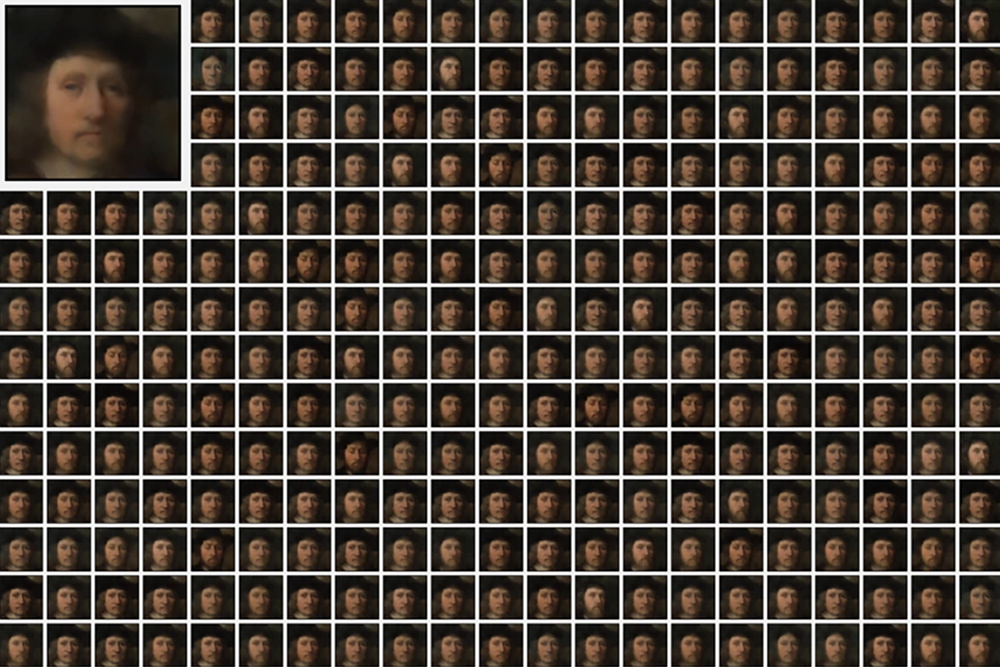
A new method for surgically removing training examples from a model reveals that as datasets grow, the link between what a model learns and what it produces dissolves.