Skip to content

Artificial Intelligence for Real-Time Cyber Threat Classification and Emerging Threat Detection: A Structured Review of Methods, Datasets, Challenges, and Research Directions

Aug 2026 · International Journal for Research in Applied Science and Engineering Technology · 0 citations

TL;DR

The reviewed literature indicates that AI-based methodologies often demonstrate superior detection capabilities for intricate and previously unseen attack patterns compared to traditional methods; however, direct performance comparisons are complicated due to discrepancies in datasets, experimental designs, and evaluation protocols.

Abstract

The swift adoption of cloud computing, the Internet of Things (IoT), fifth-generation (5G) communication, and edge computing has extensively broadened the cyber-attack surface, facilitating the emergence of threats with increased scale, speed, and complexity. Traditional detection techniques, which rely on signatures, rules, and statistical analysis, continue to be effective for identifying known attacks; however, their capacity to detect zero-day exploits, polymorphic malware, and advanced persistent threats is limited. Consequently, there has been a rise in the implementation of artificial intelligence (AI) for adaptive and realtime cyber threat analysis. This review evaluates the evolution of AI-driven methodologies for real-time cyber threat classification and the identification of new threats, drawing from over fifty peer-reviewed studies identified through a structured search of leading scholarly databases. Instead of treating the studies in isolation, the literature is synthesized based on detection objectives, computational techniques, datasets, evaluation metrics, deployment environments, and acknowledged limitations. The review juxtaposes conventional detection methods with machine learning, deep learning, explainable AI (XAI), reinforcement learning, federated learning, graph neural networks (GNNs), large language models (LLMs), and generative AI. It places particular emphasis on frequently utilized cybersecurity datasets and evaluation practices, as well as ongoing challenges related to class imbalance, adversarial manipulation, computational overhead, model interpretability, privacy concerns, and inadequate validation in real-world scenarios. The reviewed literature indicates that AI-based methodologies often demonstrate superior detection capabilities for intricate and previously unseen attack patterns compared to traditional methods; however, direct performance comparisons are complicated due to discrepancies in datasets, experimental designs, and evaluation protocols. Moreover, a limited number of proposed models have been evaluated under authentic operational circumstances. In light of these observations, the review identifies significant research gaps and outlines prospective paths for developing explainable, privacy-conscious, computationally efficient, and readily deployable AI-enabled cyber-defence systems.
Read PDF

Similar papers

Review Open access Jul 2026

AI-Driven Cybersecurity Frameworks for Real-Time Intrusion Detection and Threat Intelligence

The rapid expansion of digital infrastructures, cloud ecosystems, Internet of Things (IoT) environments, and intelligent enterprise platforms has significantly increased the complexity and frequency of cybersecurity threats. Traditional security mechanisms based on static rules and signature-based detection approaches...

Dilshan Jayawardena, Dr. Kavindi Perera · 0 citations
Review Open access Jun 2026

A Comprehensive Survey of Artificial Intelligence Applications in Cyber Security: Taxonomy, Challenges, and Future Directions

The increasing complexity and scale of cyber threats demand intelligent and adaptive defense mechanisms that extend beyond traditional approaches. Artificial Intelligence (AI) has emerged as a key enabler for enhancing cyber security through automated detection, analysis, and response. This paper presents a comprehensi...

Shahid Alam, Ehab T Alnfrawy, Amina Jameel et al. · 0 citations
Open access Jul 2026

Role of Artificial Intelligence in Preventing and Predicting Cybersecurity Threats

It is concluded that AI has become an indispensable component of modern cybersecurity strategies and will play a critical role in safeguarding digital infrastructure against emerging cyber threats.

Shaurya Gupta · 0 citations
Review Open access Jul 2026

Machine Learning Techniques for Real-Time Cyber Threat Detection and Prevention

Background: India faced a surge of cyber threats, from their frequency to sophistication, as the growth of Digital Technologies, Cloud Computing, Internet of Things (IoT), Artificial Intelligence (AI), and the rise of online financial services. In this regard, machine learning (ML) is a potential solution that offers i...

Kartikeya Tiwari · 0 citations
Open access Aug 2026

Adaptive Threat Intelligence Framework for Real-Time Cyberattack Detection Using Behavior-Based Analytics

The rapid growth of interconnected digital infrastructures, cloud computing environments, Internet of Things devices, and enterprise networking systems has significantly increased the frequency, complexity, and sophistication of cyberattacks targeting organizational information assets. Traditional cybersecurity mechani...

S. Tamilselvi · 0 citations
Review Open access Aug 2026

Artificial Intelligence and Cyber Defense: Navigating Emerging Threats in an Interconnected World

Artificial intelligence (AI) has emerged as a transformative force in cybersecurity, offering capabilities that extend far beyond the static, rule-based defenses of the past. Machine learning, deep learning, and natural language processing techniques are increasingly embedded in intrusion detection systems, threat inte...

Nicolas Guzman Camacho · 0 citations

Related blog posts

Microsoft Research Blog Oct 6, 2026

What AI gets wrong and what failure teaches us

Jennifer Neville did not want to go into computer science—but that’s exactly where she landed. Neville discusses the starts and stops that led to her professional sweet spot and her work identifying “surprising failures” making it hard for AI to handle complexity.  The post What AI gets wrong and what failure teaches us appeared first on Microsoft Research.

Microsoft Research Blog Sep 29, 2026

Introducing Quine: An AI research system designed for the complexity of biology

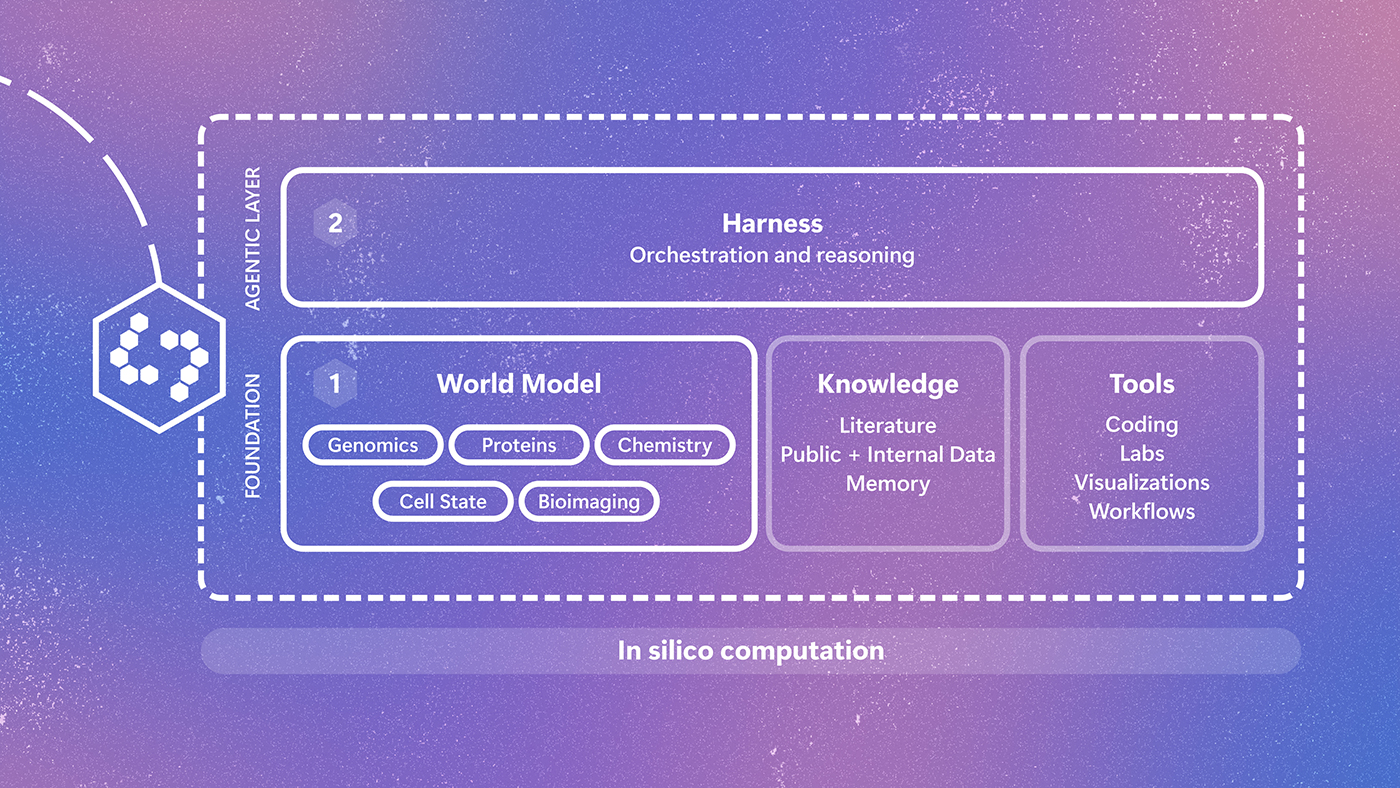
Biology doesn't operate in silos, and neither should the AI representation of it. Quine is an early-stage research effort to create a multimodal world model of biology. By connecting insights across biological scales and modalities, Quine helps scientists computationally search a space far larger than intuition allows and prioritize hypotheses before they reach the lab. Experimental results provide important feedback, helping researchers sharpen future research directions. The post Introducing Q…

We use cookies to run the site and, with your consent, for analytics and to show ads. See our Cookie Policy.