It is argued that preventing lasting harm to young adults'dvelopment is paramount, and implications for rethinking AI chatbot dependence grounded in this understanding are provided.
Abstract
The growing integration of general-purpose AI chatbots into people's daily lives has raised concerns about the potential for unhealthy dependence, particularly among young adults. As a first step toward understanding and characterizing AI chatbot dependence from the perspective of young adults, we collected testimonials from AI chatbot users aged 18 to 25 through an online questionnaire to capture their thoughts and experiences with this phenomenon. From participant responses, we identified three contributing factors of AI dependence: chronic use, efficiency, and delegation. The combination of these in a person's interaction behavior was considered to indicate AI dependence. Participants also observed feelings of atrophy in abilities from AI dependence, leading to psychological impacts such as feelings of inadequacy. Interpreting these findings through the lens of self-determination theory reveals how AI chatbot dependence can impact young adults'personal and social development. We argue that preventing lasting harm to young adults'development is paramount, and provide implications for rethinking AI chatbot dependence grounded in this understanding.

It is suggested that AI’s non-human nature can both reduce stigma and increase concerns about trust and authenticity, and human-centered systems should provide age-appropriate safety guardrails, transparent limitations, privacy protections, and clear pathways to human support.
Jing-Jie Wang, Theresa Nguyen, John Marion et al.· Proceedings of the Human Fac...· 0 citations
This work examined AI-related discourse on r/teenagers from January 2023 to July 2026 using validated keyword-based retrieval and a human-in-the-loop, LLM-assisted thematic analysis to position adolescent AI use not simply as technology adoption, but as an emerging negotiation over AI's place and boundaries in everyday...
It is found that PST is shaped by identity development and demographic factors, and the proposed Human-AI Self-Talk (HAIST) framework is proposed to guide the design of non-clinical AI companions to support learning and self-sufficiency.
Ann-Kareen Gedeus, N. Wagener, Ying-Xuan Li et al.· Proceedings of the 14th Nord...· 0 citations
It is argued that HCI researchers and designers should account for users'histories with their chatbots and broader care ecologies when evaluating AI systems over time and introducing updates that may disrupt established sources of support.
Meryl Ye, Briana Vecchione, Livia Garofalo et al.· 0 citations
While ChatGPT was primarily viewed as an efficient tool in a work context, the quantitative survey reveals a weakly significant correlation between psychological stress and openness toward the social-emotional use of chatbots.
Stefanie Osetrow, H. Klapperich, A. Huldtgren· Message Understanding Confer...· 0 citations
This study was motivated by increasing concerns over the psychological effects of artificial intelligence (AI) tools on human well-being. Specifically, this study examined the correlation between the use of AI information technology and self-esteem in performance contexts, determining whether AI can function as a sourc...
Jayden Minjoon Kim, Jung Yeun Cho· Journal of emerging investig...· 0 citations
Related blog posts
MIT News · Artificial Intelligence· news.mit.eduOct 28, 2026
Professor Paris Smaragdis develops computers with superhuman hearing for applications like speech recognition, music understanding, and environmental monitoring.
MIT News · Artificial Intelligence· news.mit.eduOct 23, 2026
During the School of Humanities, Arts, and Social Sciences’ 75th Anniversary Symposium, President Sally Kornbluth said “MIT has never needed your particular insight and guidance more than we do now.”
MIT News · Artificial Intelligence· news.mit.eduOct 23, 2026
Assistant Professor Benjamin Lindquist studies how engineers deliberately injected randomness into early AI, giving rise to deep-learning models that sometimes hallucinate.
MIT News · Artificial Intelligence· news.mit.eduOct 22, 2026
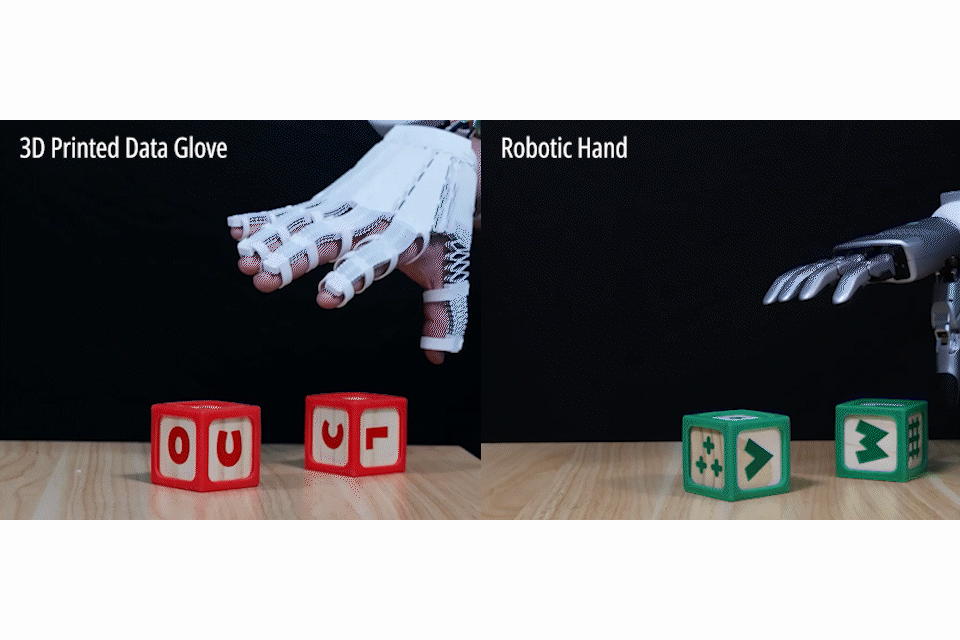
“X-Hinges” helps design and 3D print items like lamps and gloves with an interactive twist: automatically embedded sensors that perceive and adaptively respond to human contact.
We use cookies to run the site and, with your consent, for analytics and to show ads.
See our Cookie Policy.