Skip to content

From Intent to Execution Grant: An Execution-Boundary Conformance Profile for High-Risk AI Actions

Sep 2026 · 0 citations · 25 references
Computer Science

TL;DR

EBL-Core, an execution-boundary conformance profile for deciding whether one canonical, fully materialized AI-generated candidate may receive action-scoped execution authority under explicit conditions, is specified.

Abstract

AI agents increasingly propose actions with external consequences, including financial transfers, infrastructure changes, software deployments, disclosures, and physical actuation. Authorization engines, policy languages, runtime monitors, provenance mechanisms, and agent guardrails provide important foundations, but do not necessarily define a common semantic contract for the final transition from a particular candidate action to execution authority. We specify EBL-Core, an execution-boundary conformance profile for deciding whether one canonical, fully materialized AI-generated candidate may receive action-scoped execution authority under explicit conditions. It binds a structured intent object, Root and Operational Policies, evidence obligations, typed evidence, context, time, and a verifiable Decision Derivation through an Execution Release Contract (ERC). An ERC is not an authority-bearing token; a verified ALLOW ERC may support a separate Execution Grant governed by Redemption-time validation. EBL-Core specifies action binding, policy non-weakening, evidence handling, deterministic adjudication, derivation verification, and grant lifecycle behavior. An accompanying reference artifact provides schemas, adjudication, separate verification and Semantic Replay, and a linearizable in-memory grant store. In the retained run, 34 static vectors and 15 lifecycle checks matched expected outcomes. Across 100 trials, 32 concurrent Redemption attempts yielded exactly one successful Redemption and protected test effect per trial; 100 Revoke-Redeem races ended in valid terminal outcomes. These bounded results demonstrate executability of the specified subset, not human-intent correctness, evidence truth, complete mediation, production readiness, mechanized correctness, or deployment-level security.


View source

Similar papers

#computer vision Review Sep 2017

Agile Software Development Methods: Review and Analysis

This publication proposes a definition and a classification of agile software development approaches and analyses ten software development methods that can be characterized as being "agile" against the defined criterion.

P. Abrahamsson, O. Salo, Jussi Ronkainen et al. · 727 citations · ⚡54
#computer vision Jun 2008

The impact of agile practices on communication in software development

The study shows that agile practices improve both informal and formal communication, but indicates that, in larger development situations involving multiple external stakeholders, a mismatch of adequate communication mechanisms can sometimes even hinder the communication.

M. Pikkarainen, Jukka Haikara, O. Salo et al. · 401 citations · ⚡48
#machine learning Review Open access Oct 2014

Software development in startup companies: A systematic mapping study

The results indicate that software engineering work practices are chosen opportunistically, adapted and configured to provide value under the constrains imposed by the startup context.

Nicolò Paternoster, Carmine Giardino, M. Unterkalmsteiner et al. · 394 citations · ⚡54
#computer vision Review Mar 2008

Agile methods in European embedded software development organisations: a survey on the actual use and usefulness of Extreme Programming and Scrum

The results show that the embedded industry has been able to apply agile methods in its development processes and that the appreciation of the agile methods and their individual practices appears to increase once adopted and applied in practice.

O. Salo, P. Abrahamsson · 238 citations · ⚡9
#computer vision Open access Jul 2017

What happens when software developers are (un)happy

Consequences of happiness and unhappiness that are beneficial and detrimental for developers' mental well-being, the software development process, and the produced artifacts are found.

D. Graziotin, Fabian Fagerholm, Xiaofeng Wang et al. · 236 citations · ⚡13
#computer vision Open access Oct 2004

Mobile-D: an agile approach for mobile application development

The Mobile-D approach is briefly outlined here and the experiences gained from four case studies are discussed, which helped develop an agile development approach for mobile application development.

P. Abrahamsson, Antti Hanhineva, H. Hulkko et al. · 225 citations · ⚡18

Related blog posts

GPT-Lab Sep 17, 2026

Beyond Prompt Engineering: The Role of Tacit Knowledge in Software Engineering

AI is making software generation faster, but speed does not remove the need for expertise. As more work is delegated to AI, tacit knowledge may become one of the most important human advantages in software engineering. The post Beyond Prompt Engineering: The Role of Tacit Knowledge in Software Engineering appeared first on GPT-Lab.

MIT News · Artificial Intelligence Aug 17, 2026

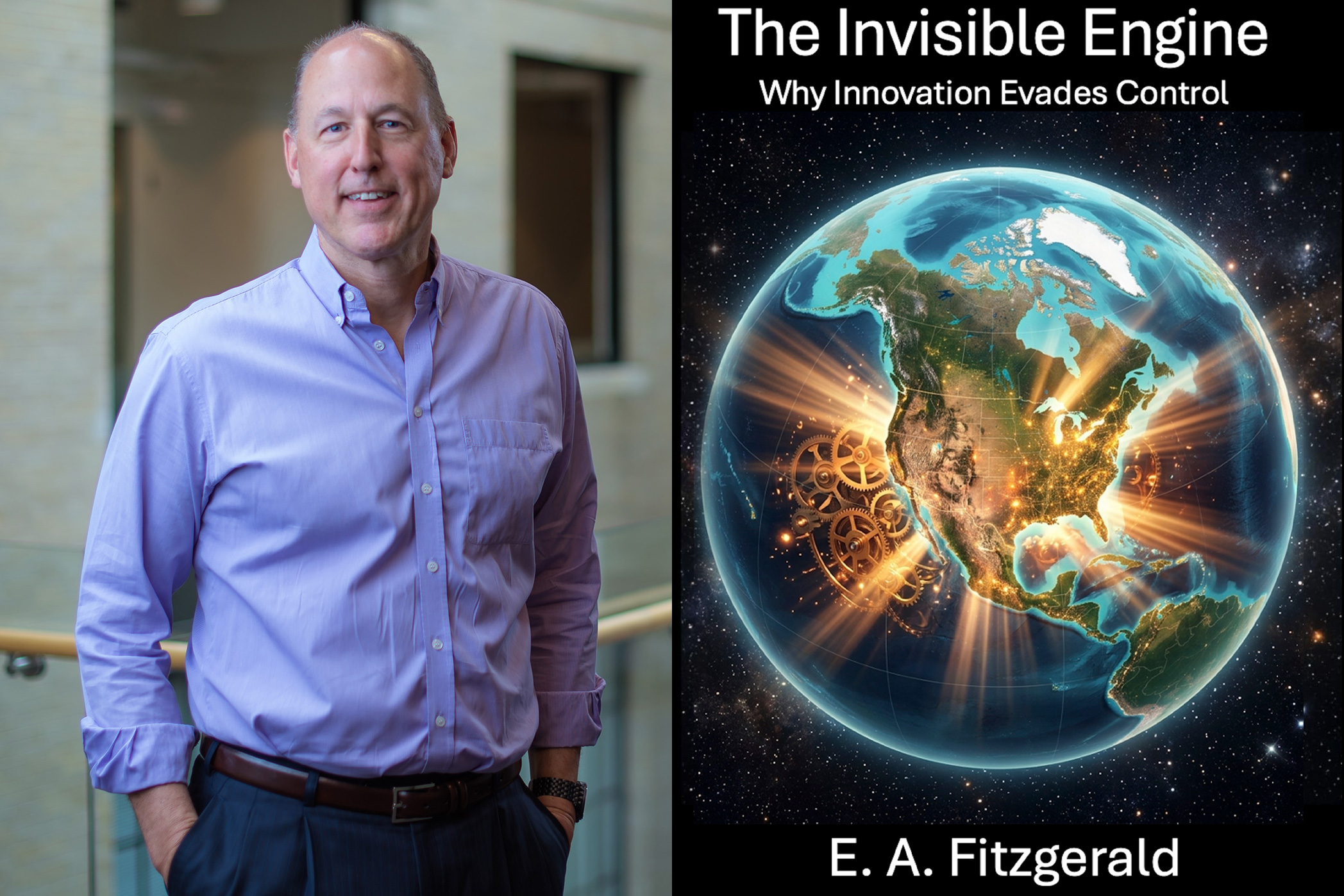
Q&A: Rethinking how innovation happens

In his latest book, Professor Eugene Fitzgerald examines the forces that turn breakthroughs into value — and why innovation resists simple formulas.

Microsoft Research Blog Aug 12, 2026

MindTopo reveals VLMs’ spatial reasoning abilities

A path, a fence, a knot. MindTopo sets a new benchmark for testing how AI understands topological relationships and highlights new opportunities to strengthen spatial reasoning and planning. The post MindTopo reveals VLMs’ spatial reasoning abilities appeared first on Microsoft Research.

We use cookies to run the site and, with your consent, for analytics and to show ads. See our Cookie Policy.