Skip to content
#generative ai Review Open access

Next-Generation Antimicrobial Peptides for Biofilm-Associated Infections: Engineering, Biomaterial Delivery and AI-Assisted Discovery

Sep 2026 · Antibiotics · Vol 15 · 0 citations · 125 references
Medicine

TL;DR

This focused review summarizes recent advances in AMP engineering, biomaterial-assisted delivery, and AI-guided discovery for biofilm-associated infections in the context of antimicrobial resistance.
Abstract

Antimicrobial peptides (AMPs) are increasingly regarded as next-generation antimicrobial agents because of their broad-spectrum activity, rapid killing, antibiofilm potential, immunomodulatory properties, and mechanisms of action that differ from those of many conventional antibiotics. Despite these advantages, their clinical translation remains limited by proteolytic instability, hemolysis or cytotoxicity, poor pharmacokinetics, salt and serum sensitivity, production costs, and delivery challenges. The AMP field is therefore shifting from natural peptide discovery toward integrated engineering pipelines that combine rational peptide modification, biomaterial-based delivery, high-throughput screening, and artificial intelligence (AI), particularly machine learning (ML) and deep learning approaches. Chemical and structural modifications, including D-amino acid substitution, N-glycine substitution, cyclization, lipidation, PEGylation, terminal amidation, hydrocarbon stapling, hybridization, sequence truncation, metal coordination, and biomaterial immobilization, are being used to improve stability, potency, selectivity, antibiofilm activity, and tissue localization. In parallel, AI-guided approaches, including ML, deep learning, and generative modeling, enable large-scale exploration of diverse peptide sources, including microbiomes and extinct proteomes, to entirely new sequences, while supporting optimization of potency, selectivity, stability, toxicity, and synthesizability. This focused review summarizes recent advances in AMP engineering, biomaterial-assisted delivery, and AI-guided discovery for biofilm-associated infections in the context of antimicrobial resistance.
Read PDF

Similar papers

Review Sep 2026

Metal nanoparticles as next-generation therapeutics against antimicrobial resistance: mechanisms, functionalization, and translational potential

E engineered metal NPs represent a promising platform for next-generation antimicrobial strategies and may help address multidrug resistance through simultaneous molecular and physical effects.

Amir Jalali, Majid Komijani, Zainab Diaa Wahab et al. · 0 citations
Jan 2026

Development of Novel Antimicrobial Peptides and Their Engineering into Nanoparticles to Improve Performance.

This study identified potent AMPs with promising therapeutic potential by constructing and screening a synthetic random peptide library using a bacterial surface display system, and identified WP-4 and WP-6, which showed high antimicrobial activity, good biocompatibility, rapid bactericidal effects, and low propensity...

Shuai-Yang Wang, Shuang Wang, Xiu-Jian Liu et al. · 0 citations
Review Open access Sep 2026

Antimicrobial peptides in the era of resistance: integrating AI-driven design, host-microbe interactions, and nanotechnological delivery

This review synthesizes recent advances in AMP research, focusing on their structural diversity, mechanistic interactions with microbial membranes, and immunomodulatory roles in shaping host-microbe dynamics, and establishes a framework for overcoming current limitations.

Wasim Ullah Khan, Zhu-Yu Hua, Xu Xia et al. · 0 citations
Review Open access Sep 2026

Antimicrobial Peptides Beyond the Petri Dish: Translational Barriers to Therapeutic Development

Antimicrobial peptides (AMPs) are promising antibiotics with rapid bactericidal mechanisms, broad-spectrum activity, and efficacy against drug-resistant pathogens. Yet, despite decades of research and development of many active AMPs, translation to the clinic remains limited. Although AMPs kill bacteria efficiently u...

Marc Torrent · 0 citations
Review Open access Sep 2026

Reframing Antimicrobial Peptides beyond Direct Antimicrobial Activity toward Host-Directed Functions and Disease-Specific Therapeutic Applications

Antimicrobial peptides (AMPs) have been extensively investigated as alternatives to conventional antibiotics to combat multidrug-resistant bacteria. This narrow antibiotic-replacement framework underestimates the biological and translational potential of AMPs. The present review reframes them as disease-context-depende...

Min-Ho Lee · 0 citations
Review Sep 2026

Advances in Antimicrobial Peptides: Design, Mechanism, and Clinical Application-A Critical Review.

This review explores how computational design, artificial intelligence, and peptidomimetics can generate next-generation AMPs with enhanced stability and reduced toxicity, framing their role in future antimicrobial strategies.

Shesham Kumari, Ranjeet Kumar, Manish Singh et al. · 0 citations

Related blog posts

Microsoft Research Blog Nov 16, 2026

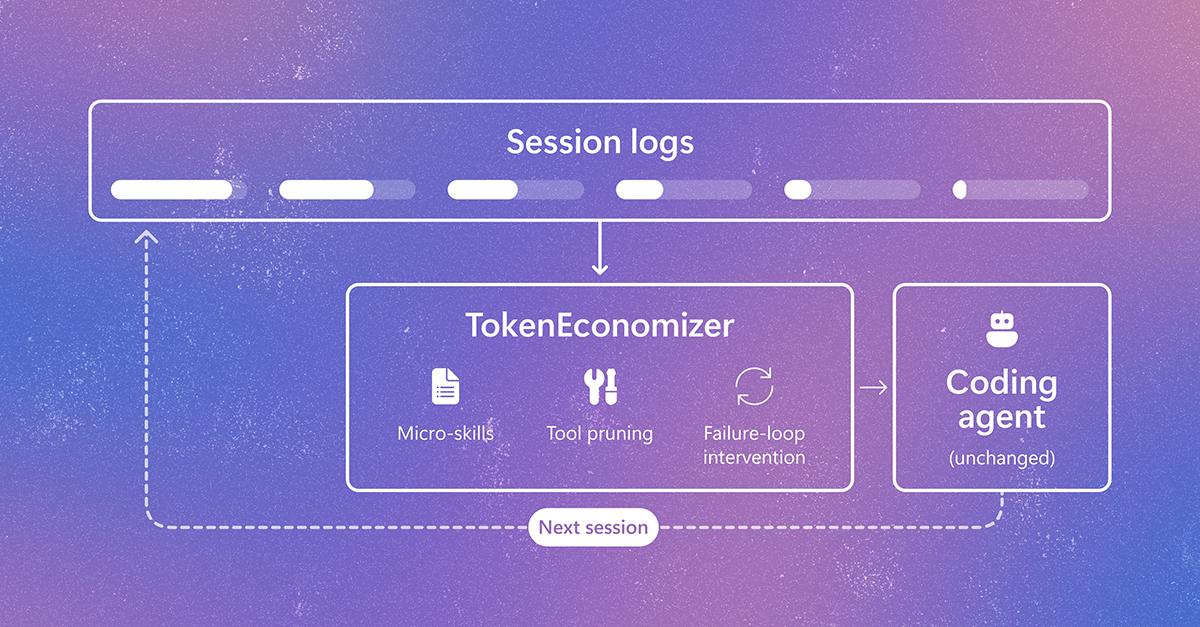
TokenEconomizer: Learning from Experience to Make AI Coding Agents More Efficient

AI coding agents are increasingly help developers fix bugs and build features largely on their own, but every interaction with their models consumes tokens. In each session, an agent sends instructions, tool descriptions, and session history to its model. Most efforts to reduce this cost focus on individual tasks. Yet developers return to the same […] The post TokenEconomizer: Learning from Experience to Make AI Coding Agents More Efficient appeared first on Microsoft Research.

GPT-Lab Nov 13, 2026

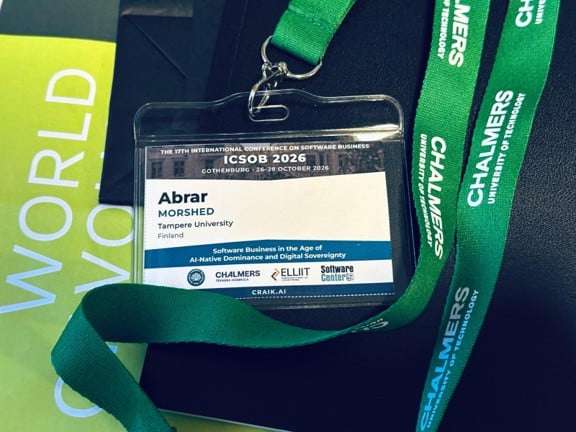
TenderIntell at ICSOB 2026: Three Days in Gothenburg

At ICSOB 2026 in Gothenburg, we presented TenderIntell, our work on multi-agent support for tendering. This post looks back at the conference, the idea behind a panel of three AI reviewers who score each proposal independently, and why evaluating agents reliably is the question we keep coming back to. The post TenderIntell at ICSOB 2026: Three Days in Gothenburg appeared first on GPT-Lab.

MIT News · Artificial Intelligence Nov 13, 2026

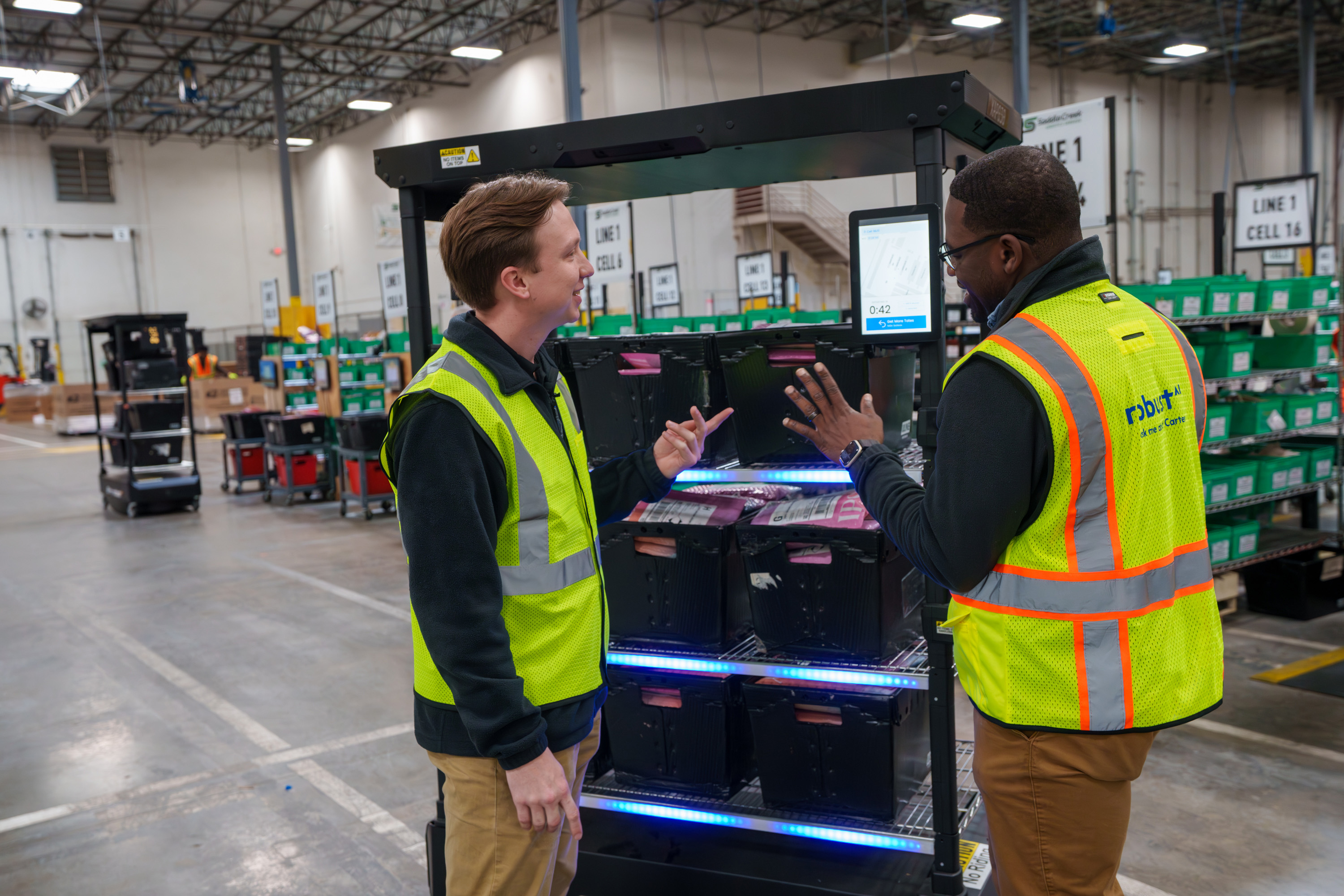
Helping robots fit into the human workplace

Founded by Anthony Jules ’92, SM ’92 and Professor Emeritus Rodney Brooks, Robust AI’s robots are designed to collaborate with humans in factories and warehouses.

We use cookies to run the site and, with your consent, for analytics and to show ads. See our Cookie Policy.