Skip to content
#edge computing Review Open access

Zero Trust Architecture

Aug 2026 · Journal of Computers, Mechanical and Management · 0 citations · 36 references

TL;DR

This paper synthesizes reported evidence on ZTA across three research questions: effectiveness relative to perimeter models, the implementation challenges enterprises face, and the security contribution of individual components.

Abstract

Background: Cloud computing, remote workforces, and Internet of Things (IoT) deployments have eroded the enterprise network perimeter, exposing the limits of security models that grant implicit trust to internal actors. Zero Trust Architecture (ZTA), governed by the principle of "Never Trust, Always Verify," addresses this through continuous verification, least-privilege access, micro-segmentation, and adaptive monitoring. Objectives: This paper synthesizes reported evidence on ZTA across three research questions: effectiveness relative to perimeter models, the implementation challenges enterprises face, and the security contribution of individual components. Methods: A structured literature review was conducted on a predefined corpus of 37 ZTA-related studies. A rubric-based composite model incorporating relevance, methodology quality, recency, and measurability of outcomes characterized each study. All 37 met the appraisal threshold of S >= 3.0, the lowest composite score being 3.55, so the rubric characterized the corpus rather than functioning as an exclusion filter. Results: Reported findings suggest that ZTA can improve breach detection, reduce unauthorized access, and limit attack propagation in specific empirical and simulation contexts. Headline values, including 75% improvement in breach detection, 66.7% reduction in unauthorized access, up to 80% attack-surface reduction, and 100% repulsion of simulated malicious packet injections, are drawn from a limited number of studies and need replication. Implementation barriers include performance overhead in IoT and edge environments, high transition costs, legacy migration complexity, interoperability gaps, and cultural resistance. Conclusions: ZTA is a promising and structurally well-aligned security framework for modern distributed environments, but the strength of evidence varies by component and deployment context.

Read PDF

Similar papers

#computer vision Review Sep 2017

Agile Software Development Methods: Review and Analysis

This publication proposes a definition and a classification of agile software development approaches and analyses ten software development methods that can be characterized as being "agile" against the defined criterion.

P. Abrahamsson, O. Salo, Jussi Ronkainen et al. · 727 citations · ⚡54
#computer vision Jun 2008

The impact of agile practices on communication in software development

The study shows that agile practices improve both informal and formal communication, but indicates that, in larger development situations involving multiple external stakeholders, a mismatch of adequate communication mechanisms can sometimes even hinder the communication.

M. Pikkarainen, Jukka Haikara, O. Salo et al. · 401 citations · ⚡48
#machine learning Review Open access Oct 2014

Software development in startup companies: A systematic mapping study

The results indicate that software engineering work practices are chosen opportunistically, adapted and configured to provide value under the constrains imposed by the startup context.

Nicolò Paternoster, Carmine Giardino, M. Unterkalmsteiner et al. · 394 citations · ⚡54

Related blog posts

GPT-Lab Sep 17, 2026

Beyond Prompt Engineering: The Role of Tacit Knowledge in Software Engineering

AI is making software generation faster, but speed does not remove the need for expertise. As more work is delegated to AI, tacit knowledge may become one of the most important human advantages in software engineering. The post Beyond Prompt Engineering: The Role of Tacit Knowledge in Software Engineering appeared first on GPT-Lab.

Microsoft Research Blog Aug 31, 2026

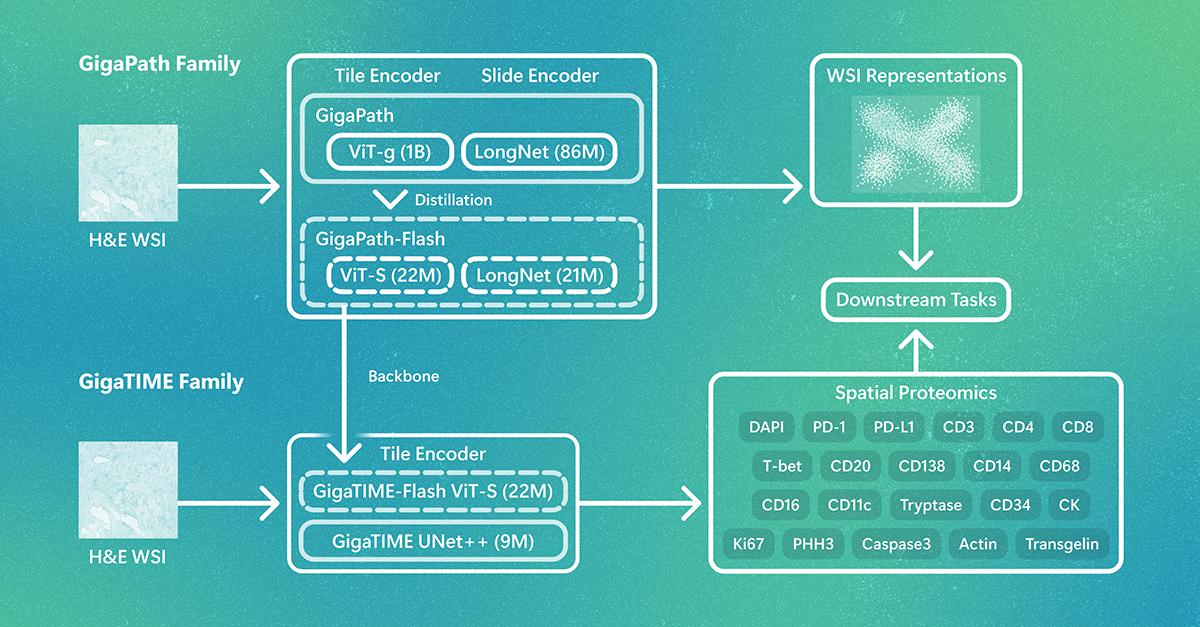
GigaPath-Flash and GigaTIME-Flash: Toward population-scale discovery with efficient pathology foundation models

What if pathology foundation models could do more with less? GigaPath-Flash and GigaTIME-Flash cut computational demands while maintaining strong performance, opening the door to larger studies and broader exploration. The post GigaPath-Flash and GigaTIME-Flash: Toward population-scale discovery with efficient pathology foundation models appeared first on Microsoft Research.

We use cookies to run the site and, with your consent, for analytics and to show ads. See our Cookie Policy.