Sep 2026· IEEE Internet of Things Journal· Vol 13, pp. 40185-40197· 0 citations· 36 references
Computer Science
Abstract
Split federated learning (SFL) is renowned for its low computational overhead, extremely suitable for resource-constrained edge computing scenarios while inheriting privacy-preserving characteristics from federated learning (FL). In this framework, clients employ lightweight models to process private data locally and transmit intermediate outputs to a powerful server for further computation. However, SFL is a double-edged sword: while it enables edge computing and enhances privacy, it also introduces intellectual property ambiguity as both clients and the server jointly contribute to training. Existing watermarking techniques fail to protect both sides since no single participant possesses the complete model. To address this, we propose a robust model intellectual property protection scheme using client–server watermark embedding (RISE) for SFL. Specifically, RISE adopts an asymmetric client–server watermarking design: the server embeds feature-based watermarks through a loss regularization term, while clients embed backdoor-based watermarks by injecting predefined trigger samples into private datasets. This co-embedding strategy enables both clients and the server to verify model ownership. Experimental results on standard datasets and multiple network architectures show that RISE achieves over 95% watermark detection rate ( $p$ -value $\lt {\,}0.03$ ) across most settings. It exhibits no mutual interference between client- and server-side watermarks and remains robust against common removal attacks. Our source code is available at GitHub
This publication proposes a definition and a classification of agile software development approaches and analyses ten software development methods that can be characterized as being "agile" against the defined criterion.
P. Abrahamsson, O. Salo, Jussi Ronkainen et al.· arXiv.org· 727 citations· ⚡54
The study shows that agile practices improve both informal and formal communication, but indicates that, in larger development situations involving multiple external stakeholders, a mismatch of adequate communication mechanisms can sometimes even hinder the communication.
M. Pikkarainen, Jukka Haikara, O. Salo et al.· Empirical Software Engineeri...· 401 citations· ⚡48
The results indicate that software engineering work practices are chosen opportunistically, adapted and configured to provide value under the constrains imposed by the startup context.
Nicolò Paternoster, Carmine Giardino, M. Unterkalmsteiner et al.· Information and Software Tec...· 394 citations· ⚡54
The perception of the impact of agile methods is predominantly positive, and several challenge areas were discovered, but based on this study, agile methods are here to stay.
M. Laanti, O. Salo, P. Abrahamsson· Information and Software Tec...· 260 citations· ⚡20
AI is making software generation faster, but speed does not remove the need for expertise. As more work is delegated to AI, tacit knowledge may become one of the most important human advantages in software engineering. The post Beyond Prompt Engineering: The Role of Tacit Knowledge in Software Engineering appeared first on GPT-Lab.
MIT News · Artificial Intelligence· news.mit.eduSep 9, 2026
A weeklong summer workshop brought higher education faculty to campus to explore how AI and machine learning materials can be adapted for their classrooms.
MIT News · Artificial Intelligence· news.mit.eduSep 2, 2026
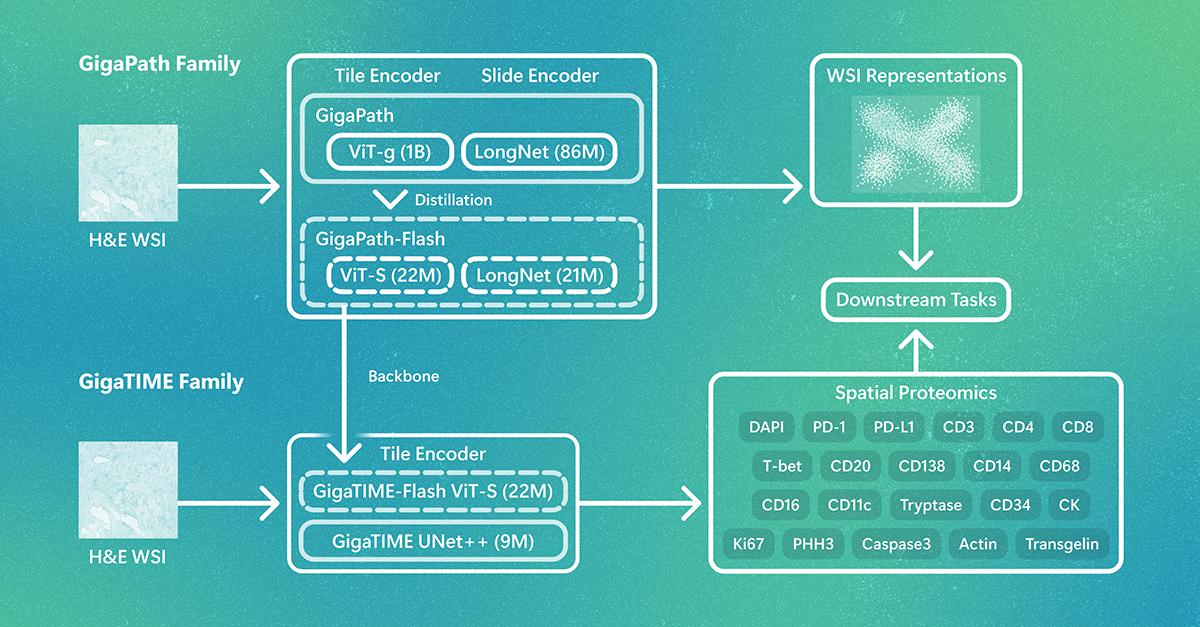
What if pathology foundation models could do more with less? GigaPath-Flash and GigaTIME-Flash cut computational demands while maintaining strong performance, opening the door to larger studies and broader exploration. The post GigaPath-Flash and GigaTIME-Flash: Toward population-scale discovery with efficient pathology foundation models appeared first on Microsoft Research.
We use cookies to run the site and, with your consent, for analytics and to show ads.
See our Cookie Policy.