Skip to content
#edge computing Review Open access

A systematic review of data handling and management techniques in edge computing for IoT

Sep 2026 · Discover Applied Sciences · 0 citations

Abstract

The proliferation of Internet of Things (IoT) devices and latency-sensitive applications has increased the need for edge computing, which complements existing cloud systems by enabling data processing closer to the source. By processing data closer to the source, edge computing reduces latency, bandwidth consumption, and response time. Organisations face major challenges in data management because edge environments use decentralised systems and limited resources, which require them to manage multiple data management tasks, including storage resources, data caching, data aggregation and data integrity verification. The resolution of these problems is necessary to create Edge-IoT systems that can operate at a large scale while maintaining trustworthy and secure operations. This paper presents a comprehensive and systematic review of recent advancements that occurred between 2022 and 2025 in data handling optimisation techniques for edge computing in IoT applications. The study employs a structured review methodology that meets Scopus and Web of Science standards to evaluate research studies that are divided into four main categories, which include data storage optimisation, data caching strategies, data aggregation mechanisms and data integrity assurance techniques. A total of 52 primary technical studies were selected for detailed comparative analysis, while additional secondary literature sources were used for theoretical background and contextual discussion. The study conducts a comprehensive comparative analysis, which assesses performance through latency and energy consumption, system scalability, security overhead and system performance under varying workloads. The review evaluates application-specific use cases, which include smart cities, healthcare, industrial IoT, autonomous vehicles and smart agriculture, to demonstrate the real-world significance of present solutions. The review identifies gaps in adaptive optimisation, heterogeneous device support, privacy preservation, and cross-layer coordination as critical research problems. The document describes existing challenges and future research paths that will help create advanced data processing systems for edge-enabled Internet of Things networks.

Read PDF

Similar papers

#computer vision Review Sep 2017

Agile Software Development Methods: Review and Analysis

This publication proposes a definition and a classification of agile software development approaches and analyses ten software development methods that can be characterized as being "agile" against the defined criterion.

P. Abrahamsson, O. Salo, Jussi Ronkainen et al. · 727 citations · ⚡54
#computer vision Jun 2008

The impact of agile practices on communication in software development

The study shows that agile practices improve both informal and formal communication, but indicates that, in larger development situations involving multiple external stakeholders, a mismatch of adequate communication mechanisms can sometimes even hinder the communication.

M. Pikkarainen, Jukka Haikara, O. Salo et al. · 401 citations · ⚡48
#machine learning Review Open access Oct 2014

Software development in startup companies: A systematic mapping study

The results indicate that software engineering work practices are chosen opportunistically, adapted and configured to provide value under the constrains imposed by the startup context.

Nicolò Paternoster, Carmine Giardino, M. Unterkalmsteiner et al. · 394 citations · ⚡54

Related blog posts

GPT-Lab Sep 17, 2026

Beyond Prompt Engineering: The Role of Tacit Knowledge in Software Engineering

AI is making software generation faster, but speed does not remove the need for expertise. As more work is delegated to AI, tacit knowledge may become one of the most important human advantages in software engineering. The post Beyond Prompt Engineering: The Role of Tacit Knowledge in Software Engineering appeared first on GPT-Lab.

Microsoft Research Blog Aug 31, 2026

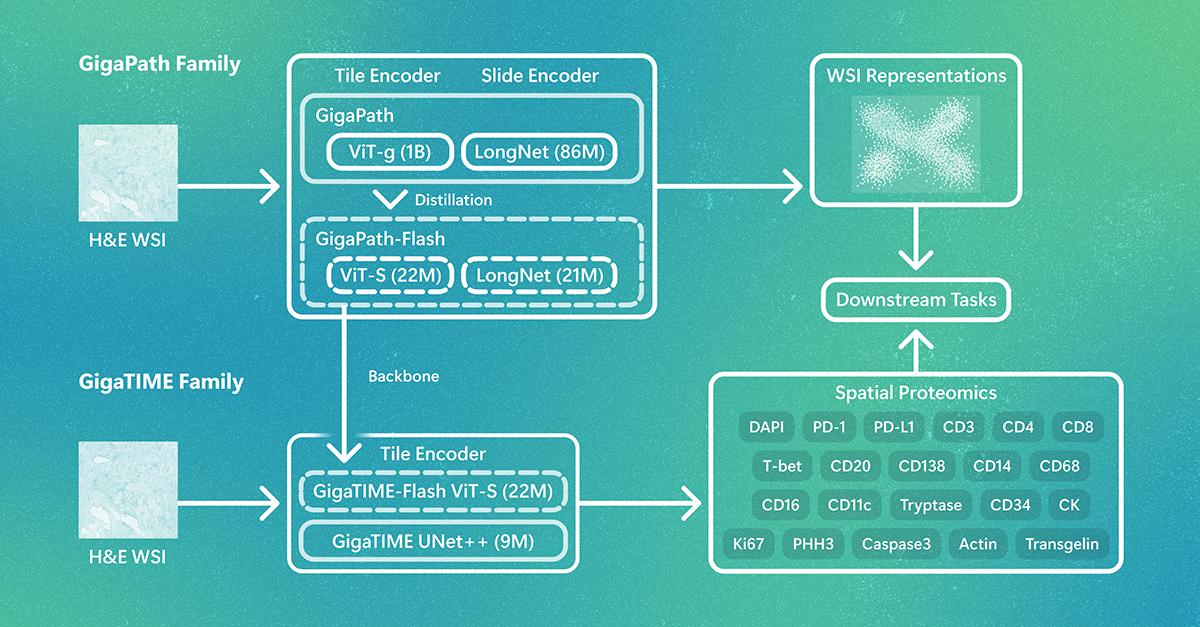
GigaPath-Flash and GigaTIME-Flash: Toward population-scale discovery with efficient pathology foundation models

What if pathology foundation models could do more with less? GigaPath-Flash and GigaTIME-Flash cut computational demands while maintaining strong performance, opening the door to larger studies and broader exploration. The post GigaPath-Flash and GigaTIME-Flash: Toward population-scale discovery with efficient pathology foundation models appeared first on Microsoft Research.

We use cookies to run the site and, with your consent, for analytics and to show ads. See our Cookie Policy.