Skip to content
#federated learning Open access

EdgeSecure: A Heterogeneous Federated Learning Framework for Lightweight Malware Detection in Resource-Constrained IoT Networks

Sep 2026 · Al-Noor Journal of Engineering Management and Computer Science · 0 citations · 15 references
Advanced Malware Detection Techniques

Abstract

The rapid expansion of Internet of Things (IoT) devices has intensified security challenges, particularly malware attacks that continue to grow in sophistication while operating under strict resource constraints. Conventional centralized machine learning–based malware detection approaches face significant limitations in IoT environments due to privacy risks, high communication overhead, and computational inefficiency. To overcome these challenges, this paper presents a lightweight federated learning framework tailored for real-time malware detection in resource-constrained IoT systems. The proposed approach employs the Federated Proximal (FedProx) algorithm to effectively address the non-IID data distribution inherent in heterogeneous IoT networks. In parallel, a compact multilayer perceptron (MLP) architecture is designed with fewer than 10,000 parameters, ensuring low computational complexity and energy efficiency suitable for edge devices. The framework also integrates intelligent data preprocessing strategies to mitigate class imbalance and supports automatic binary transformation of multi-class malware detection tasks. Comprehensive experimental evaluations are conducted on two representative IoT security datasets, IoT23 and DNN-EdgeIIoT. Using five federated clients across 50 communication rounds, the proposed framework demonstrates robust and consistent performance. On the IoT23 dataset, it achieves an accuracy of 93.90%, an F1-score of 96.44%, and an AUC of 99.01%. Similarly, on the DNN-EdgeIIoT dataset, the framework attains 99.32% accuracy, a 98.73% F1- score, and a 99.80% AUC. Notably, the model maintains exceptionally high precision, reaching 99.74% on IoT23 and 99.85% on DNN-EdgeIIoT.Overall, the proposed framework addresses three critical research gaps: preserving data privacy without centralized data aggregation, handling non-IID data distributions in IoT networks, and enabling efficient computation for resource-limited devices. The results demonstrate that the federated model achieves performance comparable to or exceeding centralized approaches, while significantly reducing communication overhead, making it a practical and scalable solution for IoT malware detection.
Read PDF

Similar papers

#machine learning Review Open access Oct 2014

Software development in startup companies: A systematic mapping study

The results indicate that software engineering work practices are chosen opportunistically, adapted and configured to provide value under the constrains imposed by the startup context.

Nicolò Paternoster, Carmine Giardino, M. Unterkalmsteiner et al. · 394 citations · ⚡54
#machine learning Review Open access Jun 2014

Why Early-Stage Software Startups Fail: A Behavioral Framework

This state-of-practice investigation was performed using a literature review followed by a multiple-case study approach and presents how inconsistency between managerial strategies and execution can lead to failure by means of a behavioral framework.

Carmine Giardino, Xiaofeng Wang, P. Abrahamsson · 175 citations · ⚡19
#machine learning Review Open access Oct 2016

“Failures” to be celebrated: an analysis of major pivots of software startups

This study conducts a case survey study based on the secondary data of the major pivots happened in 49 software startups, and demonstrates that customer need pivot is the most common among all pivot types.

Sohaib Shahid Bajwa, Xiaofeng Wang, Anh Nguyen-Duc et al. · 127 citations · ⚡15
#machine learning Review Open access May 2016

Key Challenges in Software Startups Across Life Cycle Stages

It is found that what perceived as biggest challenges by software startups do vary across different life cycle stages, even though its significance decreases when the learning focuses of the startups move from problem to solution and their products mature.

Xiaofeng Wang, Henry Edison, Sohaib Shahid Bajwa et al. · 62 citations · ⚡6

Related blog posts

Microsoft Research Blog Sep 30, 2026

Forecasting space weather risks on power grids

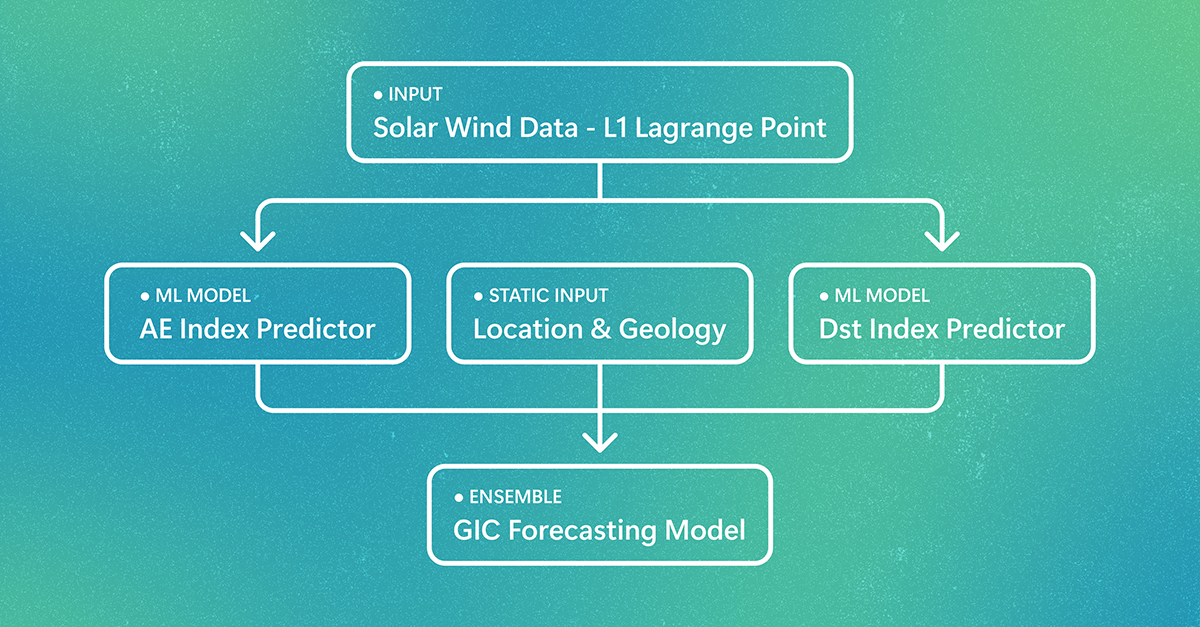
Extreme space-weather events can damage power systems on Earth and degrade GPS accuracy and satellite operations. A new machine learning system can predict where damage is likely to occur 30-60 minutes before a storm arrives. The post Forecasting space weather risks on power grids appeared first on Microsoft Research.

We use cookies to run the site and, with your consent, for analytics and to show ads. See our Cookie Policy.