For graphoid automata, these results give polynomial-time recognition without a graph-width restriction, effective boundary composition, and comparison of finite graph relations, and the quadratic boundary bounds are optimal in the worst case.
Abstract
Finite automata can describe relations of unbounded arity that are exponentially larger than their descriptions. We prove that constraint satisfaction for such relations is solvable in polynomial time whenever their length slices are preserved by a common fixed edge operation on a finite domain. The algorithm computes compact representations of the complete solution relation and its projections. Its main ingredient is a polynomial-time compilation of nondeterministic finite automata into the fork witnesses and small projections required by the few-subpowers algorithm. In the Mal'tsev case, a direct proof is polynomial also when the domain and operation table are supplied as input, answering the Mal'tsev tractability question for automatic constraint satisfaction. We also characterize all invariant relations of a family of 3-edge algebras with neither Mal'tsev nor near-unanimity terms. Their normal forms combine Boolean activity constraints with affine value spaces and yield canonical quadratic-bit representations constructible from NFAs or arbitrary generators. For graphoid automata, these results give polynomial-time recognition without a graph-width restriction, effective boundary composition, and comparison of finite graph relations. The quadratic boundary bounds are optimal in the worst case. A fixed three-state example separates polynomial-time recognition from hard exact counting.
This publication proposes a definition and a classification of agile software development approaches and analyses ten software development methods that can be characterized as being "agile" against the defined criterion.
P. Abrahamsson, O. Salo, Jussi Ronkainen et al.· arXiv.org· 727 citations· ⚡54
The study shows that agile practices improve both informal and formal communication, but indicates that, in larger development situations involving multiple external stakeholders, a mismatch of adequate communication mechanisms can sometimes even hinder the communication.
M. Pikkarainen, Jukka Haikara, O. Salo et al.· Empirical Software Engineeri...· 401 citations· ⚡48
The results indicate that software engineering work practices are chosen opportunistically, adapted and configured to provide value under the constrains imposed by the startup context.
Nicolò Paternoster, Carmine Giardino, M. Unterkalmsteiner et al.· Information and Software Tec...· 394 citations· ⚡54
The perception of the impact of agile methods is predominantly positive, and several challenge areas were discovered, but based on this study, agile methods are here to stay.
M. Laanti, O. Salo, P. Abrahamsson· Information and Software Tec...· 260 citations· ⚡20
AI is making software generation faster, but speed does not remove the need for expertise. As more work is delegated to AI, tacit knowledge may become one of the most important human advantages in software engineering. The post Beyond Prompt Engineering: The Role of Tacit Knowledge in Software Engineering appeared first on GPT-Lab.
MIT News · Artificial Intelligence· news.mit.eduSep 9, 2026
A weeklong summer workshop brought higher education faculty to campus to explore how AI and machine learning materials can be adapted for their classrooms.
MIT News · Artificial Intelligence· news.mit.eduSep 2, 2026
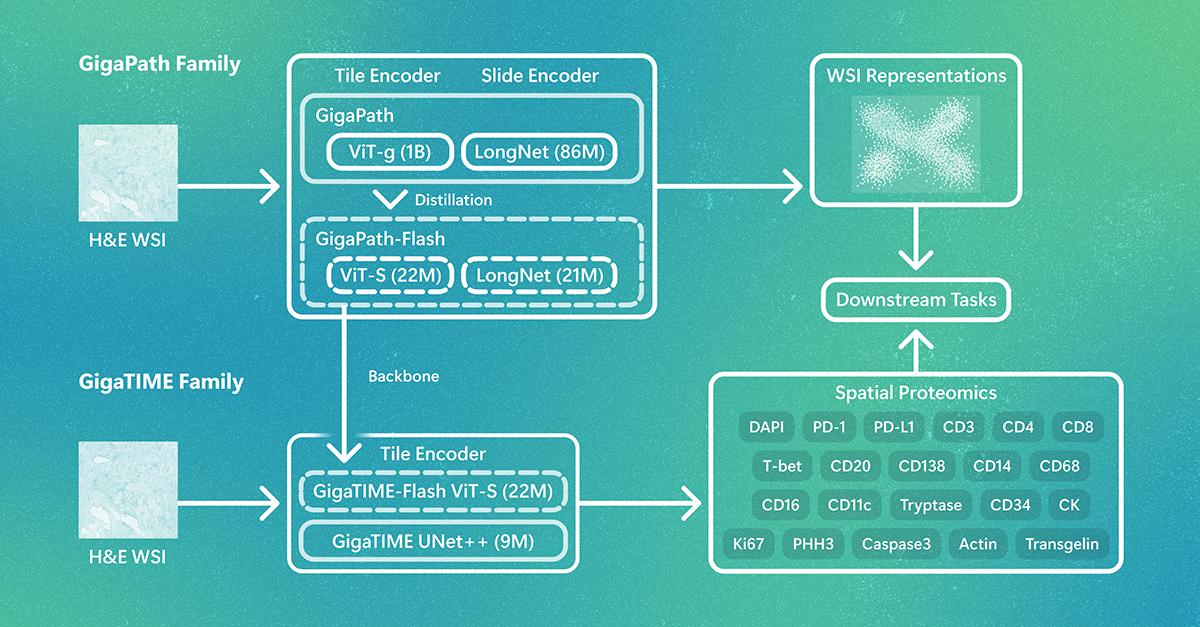
What if pathology foundation models could do more with less? GigaPath-Flash and GigaTIME-Flash cut computational demands while maintaining strong performance, opening the door to larger studies and broader exploration. The post GigaPath-Flash and GigaTIME-Flash: Toward population-scale discovery with efficient pathology foundation models appeared first on Microsoft Research.
We use cookies to run the site and, with your consent, for analytics and to show ads.
See our Cookie Policy.