To examine the architectural determinants of robustness, perturbations that alter connectivity topology, excitatory/inhibitory sign structure, weight magnitudes, and weight placement are constructed while preserving complementary properties.
Abstract
Reservoir computing provides a controlled setting for studying how recurrent network architectureshapes computation: input signals are projected into a high-dimensional state space by a fixed nonlinear dynamical system, and only the readout is trained. However, reservoir performance can be dependent on hyperparameters; this paper asks which recurrent network features support robustness to those parameter changes. We characterize computational performance using memory capacity (MC), truncated single-delay information-processing capacity (IPC), and kernel rank (KR). Generalization across input histories is measured using generalization rank (GR), while hyperparameter robustness is quantified using the coefficient of variation (CV) of each metric across sweeps of target spectral radius, input scaling, leak rate, and neuron bias. To examine the architectural determinants of robustness, we construct perturbations that alter connectivity topology, excitatory/inhibitory sign structure, weight magnitudes, and weight placement while preserving complementary properties. Across these experiments, the C. elegans connectome consistently occupies a relatively low-variance regime. The central result is a performance-robustness tradeoff: architecture variants with higher task-agnostic performance also tend to exhibit greater hyperparameter sensitivity and poorer common-tail generalization. Across the E/I edge balance sweeps and shuffle controls, this tradeoff is closely associated with the raw spectral radius before normalization. Because every perturbed matrix is rescaled to the same target radius, matrices with lower raw spectral radius receive greater global amplification of their recurrent weights. The observed differences among architectures therefore characterize the joint effects of structural variation and architecture-specific global rescaling under spectral-radius normalization.
This publication proposes a definition and a classification of agile software development approaches and analyses ten software development methods that can be characterized as being "agile" against the defined criterion.
P. Abrahamsson, O. Salo, Jussi Ronkainen et al.· arXiv.org· 727 citations· ⚡54
The study shows that agile practices improve both informal and formal communication, but indicates that, in larger development situations involving multiple external stakeholders, a mismatch of adequate communication mechanisms can sometimes even hinder the communication.
M. Pikkarainen, Jukka Haikara, O. Salo et al.· Empirical Software Engineeri...· 401 citations· ⚡48
The results indicate that software engineering work practices are chosen opportunistically, adapted and configured to provide value under the constrains imposed by the startup context.
Nicolò Paternoster, Carmine Giardino, M. Unterkalmsteiner et al.· Information and Software Tec...· 394 citations· ⚡54
The perception of the impact of agile methods is predominantly positive, and several challenge areas were discovered, but based on this study, agile methods are here to stay.
M. Laanti, O. Salo, P. Abrahamsson· Information and Software Tec...· 260 citations· ⚡20
AI is making software generation faster, but speed does not remove the need for expertise. As more work is delegated to AI, tacit knowledge may become one of the most important human advantages in software engineering. The post Beyond Prompt Engineering: The Role of Tacit Knowledge in Software Engineering appeared first on GPT-Lab.
MIT News · Artificial Intelligence· news.mit.eduSep 9, 2026
A weeklong summer workshop brought higher education faculty to campus to explore how AI and machine learning materials can be adapted for their classrooms.
MIT News · Artificial Intelligence· news.mit.eduSep 2, 2026
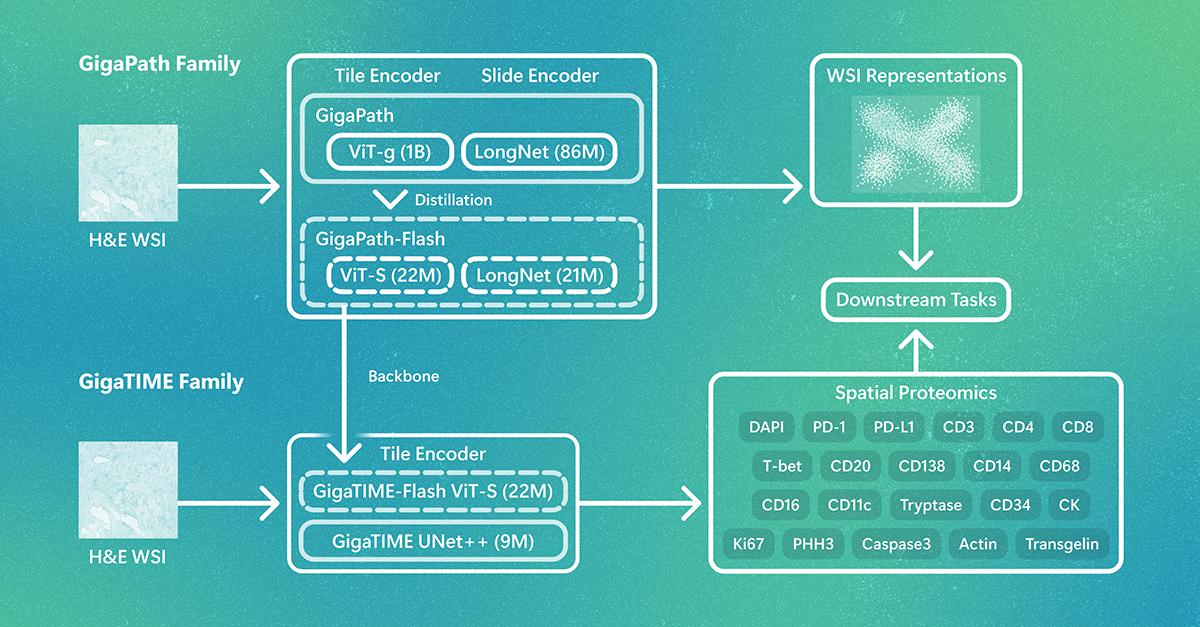
What if pathology foundation models could do more with less? GigaPath-Flash and GigaTIME-Flash cut computational demands while maintaining strong performance, opening the door to larger studies and broader exploration. The post GigaPath-Flash and GigaTIME-Flash: Toward population-scale discovery with efficient pathology foundation models appeared first on Microsoft Research.
We use cookies to run the site and, with your consent, for analytics and to show ads.
See our Cookie Policy.