Skip to content
#edge computing Preprint

AI-Native Orchestration in the 6G Continuum: Evolving Operator Platforms with Agentic AI

Unknown authors
Sep 2026 · 0 citations · 14 references
Computer Science

TL;DR

An agentic OP framework autonomously reconciles stringent Service Level Agreements (SLAs) while enhancing infrastructure energy efficiency and establishing a scalable blueprint for cross-domain Network-as-a-Service (NaaS) models that align standardised exposure with 6G autonomous requirements.

Abstract

As Sixth-Generation (6G) networks evolve towards a seamless Cloud-Edge-Internet of Things (IoT) continuum, autonomous orchestration across distributed compute and network domains becomes critical. Future 6G services will span multiple administrative and operator domains, making federation essential for ubiquitous, ultra-low-latency service continuity beyond individual footprints. This complexity demands AI-native mechanisms supporting intent-driven automation and closed-loop management. While the GSMA Operator Platform (OP) provides the architectural blueprint for multi-operator federation and network capability exposure, and the ETSI Software Development Group OpenOP (SDG OOP) offers a primary open-source reference implementation, current frameworks are limited by stateless API interactions and lack native intelligence. This paper proposes an Agentic-driven Intelligence extension for the GSMA OP architecture, using the OOP as the reference framework. We introduce an AI-native orchestration layer where autonomous agents manage persistent service contexts and enable closed-loop control via CAMARA APIs. By integrating a Declarative Monitoring and Alerting System (DeMAS) into the OOP stack and establishing a decentralised agent negotiation protocol, the proposed architecture enables real-time, intent-driven resource optimisation and autonomous cross-domain conflict resolution across federated domains. We validate our approach through a representative 6G use case involving Ultra-Reliable Low-Latency Communication (URLLC) and enhanced Mobile Broadband (eMBB) coexistence, demonstrating that an agentic OP framework autonomously reconciles stringent Service Level Agreements (SLAs) while enhancing infrastructure energy efficiency. Our findings establish a scalable blueprint for cross-domain Network-as-a-Service (NaaS) models that align standardised exposure with 6G autonomous requirements.

View source

Similar papers

#computer vision Review Sep 2017

Agile Software Development Methods: Review and Analysis

This publication proposes a definition and a classification of agile software development approaches and analyses ten software development methods that can be characterized as being "agile" against the defined criterion.

P. Abrahamsson, O. Salo, Jussi Ronkainen et al. · 727 citations · ⚡54
#computer vision Jun 2008

The impact of agile practices on communication in software development

The study shows that agile practices improve both informal and formal communication, but indicates that, in larger development situations involving multiple external stakeholders, a mismatch of adequate communication mechanisms can sometimes even hinder the communication.

M. Pikkarainen, Jukka Haikara, O. Salo et al. · 401 citations · ⚡48
#machine learning Review Open access Oct 2014

Software development in startup companies: A systematic mapping study

The results indicate that software engineering work practices are chosen opportunistically, adapted and configured to provide value under the constrains imposed by the startup context.

Nicolò Paternoster, Carmine Giardino, M. Unterkalmsteiner et al. · 394 citations · ⚡54

Related blog posts

GPT-Lab Sep 17, 2026

Beyond Prompt Engineering: The Role of Tacit Knowledge in Software Engineering

AI is making software generation faster, but speed does not remove the need for expertise. As more work is delegated to AI, tacit knowledge may become one of the most important human advantages in software engineering. The post Beyond Prompt Engineering: The Role of Tacit Knowledge in Software Engineering appeared first on GPT-Lab.

Microsoft Research Blog Aug 31, 2026

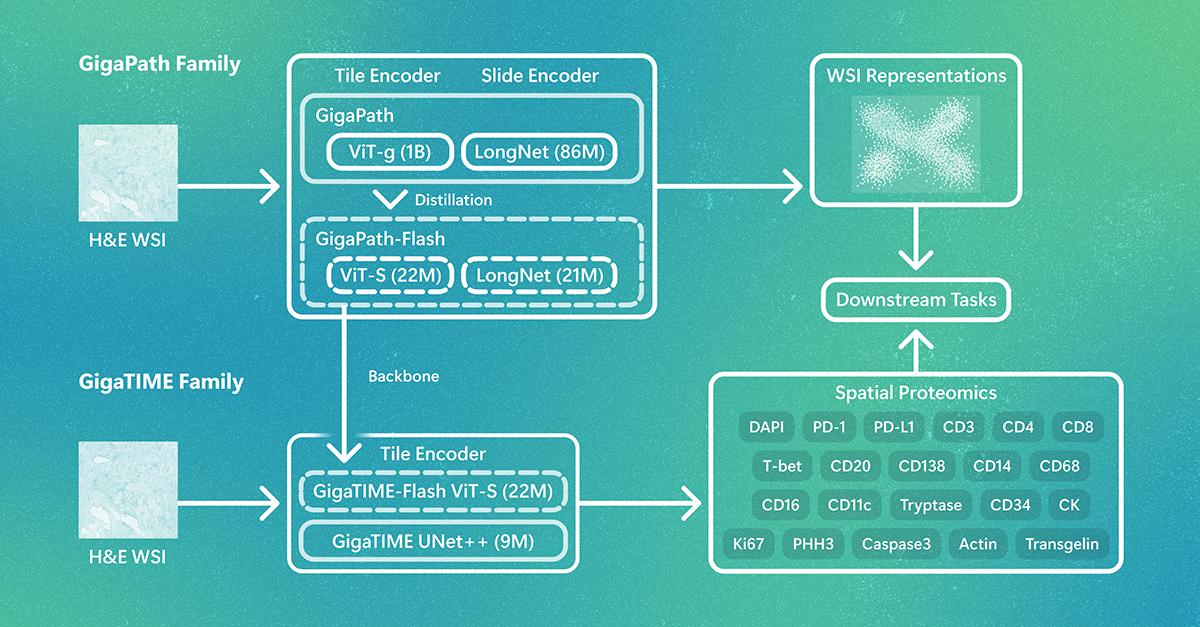
GigaPath-Flash and GigaTIME-Flash: Toward population-scale discovery with efficient pathology foundation models

What if pathology foundation models could do more with less? GigaPath-Flash and GigaTIME-Flash cut computational demands while maintaining strong performance, opening the door to larger studies and broader exploration. The post GigaPath-Flash and GigaTIME-Flash: Toward population-scale discovery with efficient pathology foundation models appeared first on Microsoft Research.

We use cookies to run the site and, with your consent, for analytics and to show ads. See our Cookie Policy.