Skip to content
#edge computing Preprint

Quantum Query Complexity of Persistence Statistics in Graph Zigzags

Unknown authors
Sep 2026 · 0 citations · 63 references
Physics Computer Science

TL;DR

The query complexity of estimating scalar summaries of zigzag bar lifetimes from snapshot-adjacency bits is studied, finding quantum estimators are optimal in two regimes.

Abstract

We study the query complexity of estimating scalar summaries of zigzag bar lifetimes from snapshot-adjacency bits. For graphs $G_1,\ldots,G_m$ on $n$ labeled vertices, let $\ell_b$ be the snapshot lifetime of a degree-one bar $b$ of the intersection zigzag. For a probability generating function $\phi(x)=\mathbb{E}[x^R]$, the statistic $F_\phi=\sum_b\phi(\ell_b/m)$ includes normalized degree-$r$ total persistence and the mean generalized rank over a uniform time window. An exact identity underlies our algorithm: sample $R$ uniform times; the expected generalized rank between their minimum and maximum equals $F_\phi$. For graphs that rank is the circuit rank of an intersection graph, so a nonlinear barcode functional becomes an average of edge and component counts, and no barcode is computed. Without spectral-gap, homology-state, or QRAM assumptions, this gives a quantum estimator with additive error $\varepsilon n$ and $\widetilde O(\sqrt{m(K+n)}/\varepsilon)$ queries when a bound $K\ge F_\phi$ is supplied, against $\widetilde O(m\min\{n^2,(K+n)/\varepsilon^2\})$ classically, and an adaptive quantum variant with the same instance dependence. These estimators are optimal in two regimes. For every fixed power weight $x^r$, $r\ge2$, and for the uniform-window mean, the worst-case complexities are $\widetilde\Theta(n\sqrt m/\varepsilon)$ quantum and $\Theta(n^2m)$ classical. On sparse instances, under an explicit split-leakage promise met by power and binomial weights of logarithmic degree and the promise $F_\phi\le K$, they are $\widetilde\Theta(\sqrt{mK}/\varepsilon)$ and $\widetilde\Theta(m\min\{n^2,K/\varepsilon^2\})$. The classical lower bounds hold against fully adaptive algorithms, and fewer than $m$ such statistics cannot determine the positive-lifetime histogram. All bounds concern snapshot access; with an explicit update stream, near-linear full-barcode algorithms are known.

View source

Similar papers

#computer vision Review Sep 2017

Agile Software Development Methods: Review and Analysis

This publication proposes a definition and a classification of agile software development approaches and analyses ten software development methods that can be characterized as being "agile" against the defined criterion.

P. Abrahamsson, O. Salo, Jussi Ronkainen et al. · 727 citations · ⚡54
#computer vision Jun 2008

The impact of agile practices on communication in software development

The study shows that agile practices improve both informal and formal communication, but indicates that, in larger development situations involving multiple external stakeholders, a mismatch of adequate communication mechanisms can sometimes even hinder the communication.

M. Pikkarainen, Jukka Haikara, O. Salo et al. · 401 citations · ⚡48
#machine learning Review Open access Oct 2014

Software development in startup companies: A systematic mapping study

The results indicate that software engineering work practices are chosen opportunistically, adapted and configured to provide value under the constrains imposed by the startup context.

Nicolò Paternoster, Carmine Giardino, M. Unterkalmsteiner et al. · 394 citations · ⚡54

Related blog posts

GPT-Lab Sep 17, 2026

Beyond Prompt Engineering: The Role of Tacit Knowledge in Software Engineering

AI is making software generation faster, but speed does not remove the need for expertise. As more work is delegated to AI, tacit knowledge may become one of the most important human advantages in software engineering. The post Beyond Prompt Engineering: The Role of Tacit Knowledge in Software Engineering appeared first on GPT-Lab.

Microsoft Research Blog Aug 31, 2026

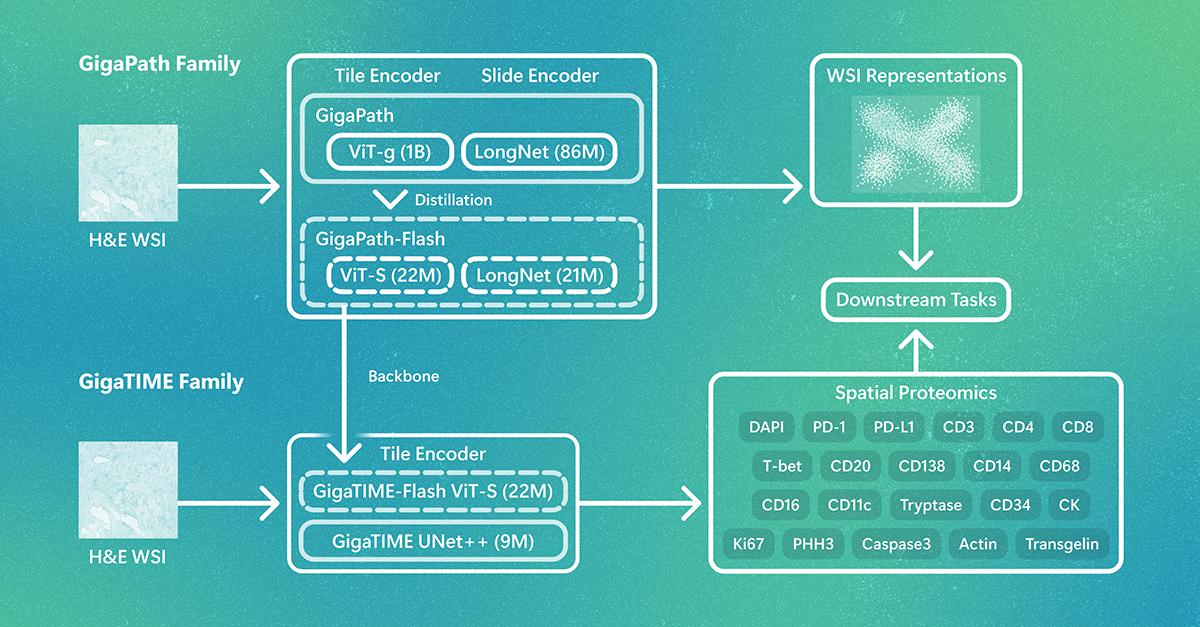
GigaPath-Flash and GigaTIME-Flash: Toward population-scale discovery with efficient pathology foundation models

What if pathology foundation models could do more with less? GigaPath-Flash and GigaTIME-Flash cut computational demands while maintaining strong performance, opening the door to larger studies and broader exploration. The post GigaPath-Flash and GigaTIME-Flash: Toward population-scale discovery with efficient pathology foundation models appeared first on Microsoft Research.

We use cookies to run the site and, with your consent, for analytics and to show ads. See our Cookie Policy.