We develop a manifestly gauge and Lorentz invariant perturbative calculus to study the finite time and distance evolution of the electrically charged states created by Wilson-line-dressed scalar field operators in scalar quantum electrodynamics. By an Osterwalder-Schrader reflection and Euclidean gluing, the overlap of two dressed states is expressed as a Euclidean 2 point function of dressed operators, which is then evaluated in renormalized perturbation theory with a Stueckelberg photon mass as a gauge, BRST and Lorentz invariant infrared cutoff. This renders explicit and computable in closed form several structural features of the charged sector that have so far been accessible mainly through non-perturbative or algebraic arguments. We find that states dressed by non-parallel Wilson lines are ``cloud orthogonal". Their overlap vanishes as a power of the infrared regulator, with an exponent that depends only on the angle between the two dressings and is an infrared analogue of the cusp anomalous dimension with the difference that it is one-loop exact whenever the charged matter is mass-gapped. Charged states are thereby superselected by the orientation of their dressing. Within a superselection sector the 2 point function is infrared finite but exhibits the infraparticle. The mass shell pole is replaced by the edge of a branch cut. As a result, the asymptotic spread of a dressed charge is a power law in proper time with a one-loop-exact computable exponent depending on the dressing and on the direction of motion. We show that although cloud orthogonality and the infraparticle are each extremely sensitive to fundamental infrared cutoffs, the infraparticle scaling law persists across a wide window of proper time.
This publication proposes a definition and a classification of agile software development approaches and analyses ten software development methods that can be characterized as being "agile" against the defined criterion.
P. Abrahamsson, O. Salo, Jussi Ronkainen et al.· arXiv.org· 727 citations· ⚡54
The study shows that agile practices improve both informal and formal communication, but indicates that, in larger development situations involving multiple external stakeholders, a mismatch of adequate communication mechanisms can sometimes even hinder the communication.
M. Pikkarainen, Jukka Haikara, O. Salo et al.· Empirical Software Engineeri...· 401 citations· ⚡48
The results indicate that software engineering work practices are chosen opportunistically, adapted and configured to provide value under the constrains imposed by the startup context.
Nicolò Paternoster, Carmine Giardino, M. Unterkalmsteiner et al.· Information and Software Tec...· 394 citations· ⚡54
The perception of the impact of agile methods is predominantly positive, and several challenge areas were discovered, but based on this study, agile methods are here to stay.
M. Laanti, O. Salo, P. Abrahamsson· Information and Software Tec...· 260 citations· ⚡20
AI is making software generation faster, but speed does not remove the need for expertise. As more work is delegated to AI, tacit knowledge may become one of the most important human advantages in software engineering. The post Beyond Prompt Engineering: The Role of Tacit Knowledge in Software Engineering appeared first on GPT-Lab.
MIT News · Artificial Intelligence· news.mit.eduSep 9, 2026
A weeklong summer workshop brought higher education faculty to campus to explore how AI and machine learning materials can be adapted for their classrooms.
MIT News · Artificial Intelligence· news.mit.eduSep 2, 2026
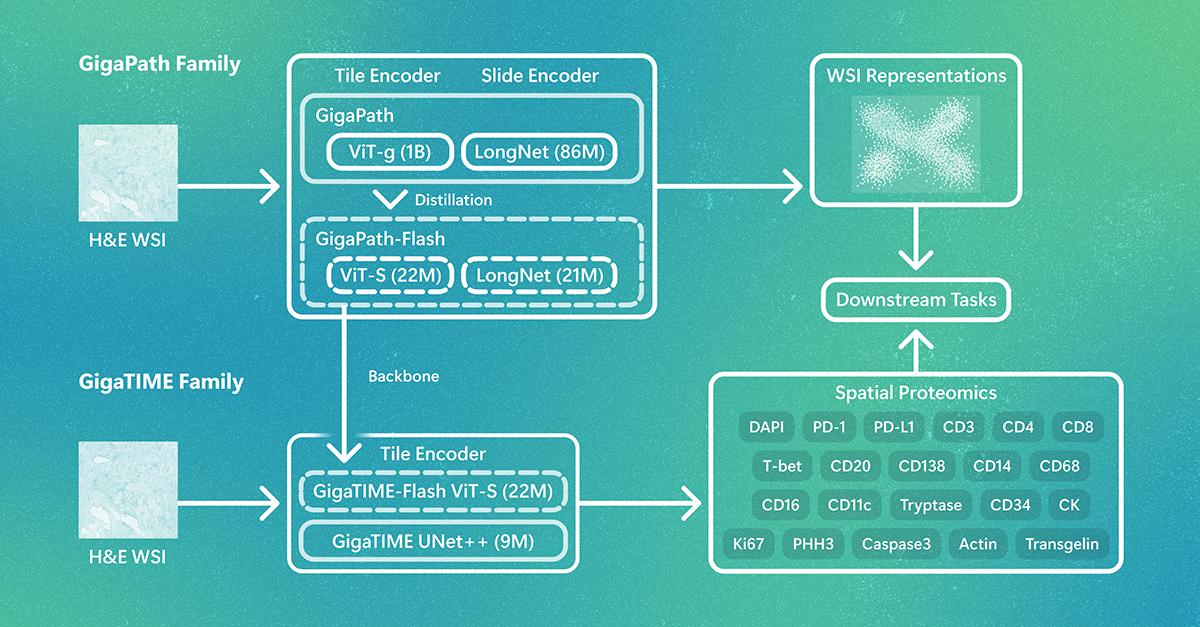
What if pathology foundation models could do more with less? GigaPath-Flash and GigaTIME-Flash cut computational demands while maintaining strong performance, opening the door to larger studies and broader exploration. The post GigaPath-Flash and GigaTIME-Flash: Toward population-scale discovery with efficient pathology foundation models appeared first on Microsoft Research.
We use cookies to run the site and, with your consent, for analytics and to show ads.
See our Cookie Policy.