Skip to content
#edge computing Open access

Tree-to-cycle transition scale characterizes trade-off between dissipation and construction cost in adaptive transport networks

Unknown authors
Sep 2026 · bioRxiv · 0 citations · 27 references
Biology

TL;DR

The tree-to-cycle transition scale is introduced, a single number given by the radius of the thickest edge outside the maximum spanning tree, which is interpreted as the highest cost a network accepts for redundancy and suggests a route to comparing observed networks by the trade-off they realize.

Abstract

Biological transport networks range from tree-like to highly reticulated architectures, which have been proposed to reflect different balances between viscous dissipation and metabolic cost. This balance cannot currently be inferred from structure: available descriptors either discard edge width entirely or preserve it only as a hierarchical decomposition that has not been mapped to the dissipation–cost trade-off. Here we introduce the tree-to-cycle transition scale, a single number given by the radius of the thickest edge outside the maximum spanning tree, which we interpret as the highest cost a network accepts for redundancy. We compute it for networks adapting to spatially correlated load fluctuations, whose correlation length sets their position on the Pareto front. The transition scale decreases linearly with dissipation and increases linearly with metabolic cost. Its scatter is largest in the regime where some networks end up off the front, and adding a growth term removes the scatter but splits the correlation into two branches. A single quantity read off the static network architecture thus characterizes where a network sits on the Pareto front, and is sensitive to the trajectory the network took through the optimization landscape. This suggests a route to comparing observed networks, for example leaf venations across species or growth conditions, by the trade-off they realize.

Read PDF

Similar papers

#computer vision Review Sep 2017

Agile Software Development Methods: Review and Analysis

This publication proposes a definition and a classification of agile software development approaches and analyses ten software development methods that can be characterized as being "agile" against the defined criterion.

P. Abrahamsson, O. Salo, Jussi Ronkainen et al. · 727 citations · ⚡54
#computer vision Jun 2008

The impact of agile practices on communication in software development

The study shows that agile practices improve both informal and formal communication, but indicates that, in larger development situations involving multiple external stakeholders, a mismatch of adequate communication mechanisms can sometimes even hinder the communication.

M. Pikkarainen, Jukka Haikara, O. Salo et al. · 401 citations · ⚡48
#machine learning Review Open access Oct 2014

Software development in startup companies: A systematic mapping study

The results indicate that software engineering work practices are chosen opportunistically, adapted and configured to provide value under the constrains imposed by the startup context.

Nicolò Paternoster, Carmine Giardino, M. Unterkalmsteiner et al. · 394 citations · ⚡54

Related blog posts

GPT-Lab Sep 17, 2026

Beyond Prompt Engineering: The Role of Tacit Knowledge in Software Engineering

AI is making software generation faster, but speed does not remove the need for expertise. As more work is delegated to AI, tacit knowledge may become one of the most important human advantages in software engineering. The post Beyond Prompt Engineering: The Role of Tacit Knowledge in Software Engineering appeared first on GPT-Lab.

Microsoft Research Blog Aug 31, 2026

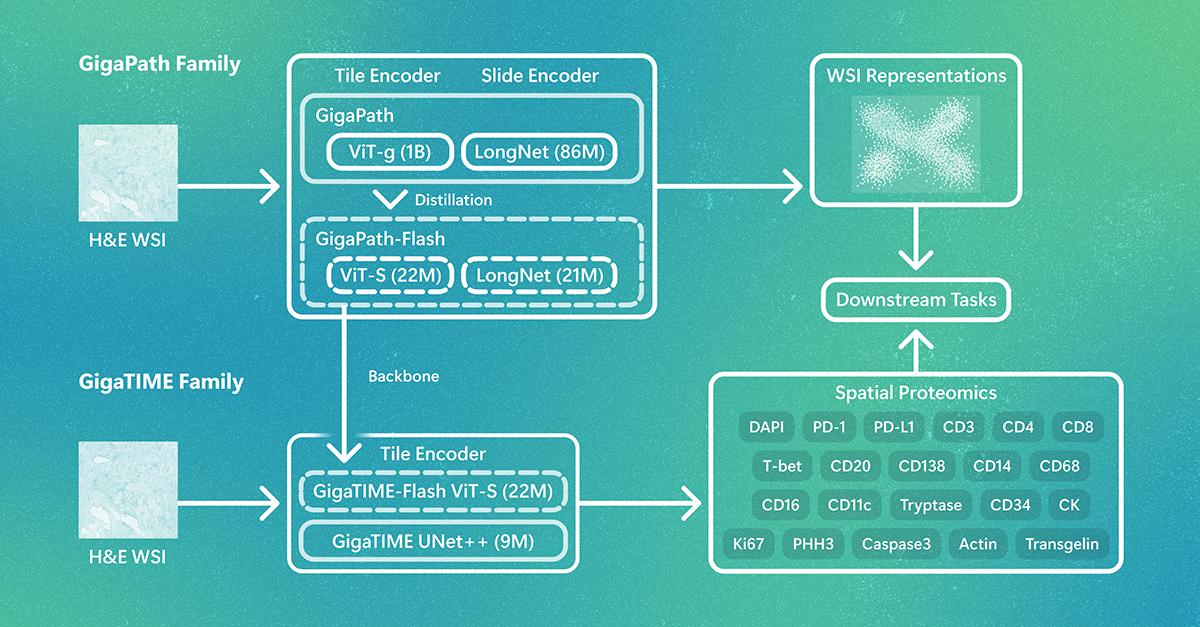
GigaPath-Flash and GigaTIME-Flash: Toward population-scale discovery with efficient pathology foundation models

What if pathology foundation models could do more with less? GigaPath-Flash and GigaTIME-Flash cut computational demands while maintaining strong performance, opening the door to larger studies and broader exploration. The post GigaPath-Flash and GigaTIME-Flash: Toward population-scale discovery with efficient pathology foundation models appeared first on Microsoft Research.

We use cookies to run the site and, with your consent, for analytics and to show ads. See our Cookie Policy.