Machine vision enables artificial intelligence and edge computing, yet its efficiency is hindered by energy‐intensive data transfer between sensing and processing units. Two‐dimensional (2D) optoelectronic neuromorphic devices provide an appealing route toward in‐sensor vision, but existing approaches typically rely on high operating power, complex multi‐terminal architectures, or elaborate fabrication, limiting scalability and practicality. Here, we demonstrate a simple two‐terminal MoS
2
metal‐semiconductor‐metal (MSM) photodetector that realizes reconfigurable and non‐volatile photovoltaic responses through photo‐assisted and electric‐field‐directed programming of native sulfur‐vacancy‐related defects, without intentional defect‐inducing pretreatment or additional functional layers. Under simultaneous 650 nm laser illumination and voltage‐pulse programming, seven stable short‐circuit photocurrent states with reversible magnitude and polarity are deterministically programmed, a functionality unattainable under optical or electrical stimulation alone. Spatially resolved measurements indicate asymmetric contact modulation after photo‐electric programming, which is supported by local photocurrent mapping, low‐temperature PL defect‐related emissions at ∼1.81 and ∼1.83 eV, KPFM surface‐potential measurements, and TEM/FFT lattice‐order analysis. Leveraging these programmable photoresponses, hardware‐measured device outputs support proof‐of‐concept motion detection, edge extraction with 95% Structural Similarity Index (SSIM) and 22 dB Peak Signal‐to‐Noise Ratio (PSNR), and front‐end preprocessing for handwritten digit recognition with accuracies exceeding 97%, establishing a defect‐engineered pathway toward energy‐efficient in‐sensor machine vision hardware.
This publication proposes a definition and a classification of agile software development approaches and analyses ten software development methods that can be characterized as being "agile" against the defined criterion.
P. Abrahamsson, O. Salo, Jussi Ronkainen et al.· arXiv.org· 727 citations· ⚡54
The study shows that agile practices improve both informal and formal communication, but indicates that, in larger development situations involving multiple external stakeholders, a mismatch of adequate communication mechanisms can sometimes even hinder the communication.
M. Pikkarainen, Jukka Haikara, O. Salo et al.· Empirical Software Engineeri...· 401 citations· ⚡48
The results indicate that software engineering work practices are chosen opportunistically, adapted and configured to provide value under the constrains imposed by the startup context.
Nicolò Paternoster, Carmine Giardino, M. Unterkalmsteiner et al.· Information and Software Tec...· 394 citations· ⚡54
The perception of the impact of agile methods is predominantly positive, and several challenge areas were discovered, but based on this study, agile methods are here to stay.
M. Laanti, O. Salo, P. Abrahamsson· Information and Software Tec...· 260 citations· ⚡20
AI is making software generation faster, but speed does not remove the need for expertise. As more work is delegated to AI, tacit knowledge may become one of the most important human advantages in software engineering. The post Beyond Prompt Engineering: The Role of Tacit Knowledge in Software Engineering appeared first on GPT-Lab.
MIT News · Artificial Intelligence· news.mit.eduSep 9, 2026
A weeklong summer workshop brought higher education faculty to campus to explore how AI and machine learning materials can be adapted for their classrooms.
MIT News · Artificial Intelligence· news.mit.eduSep 2, 2026
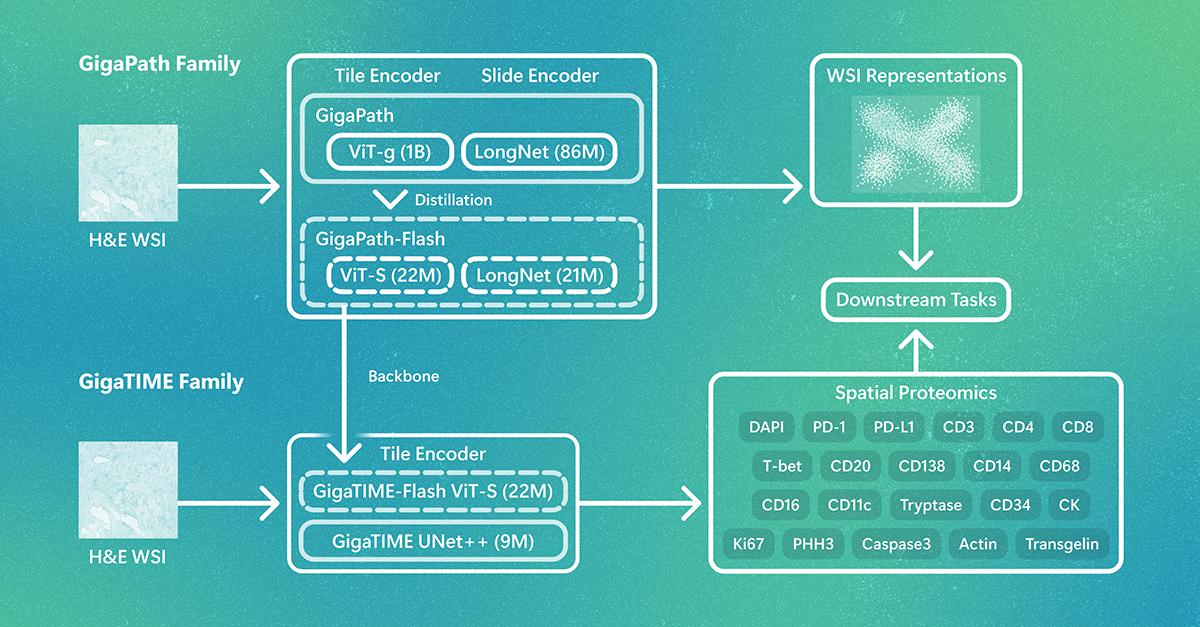
What if pathology foundation models could do more with less? GigaPath-Flash and GigaTIME-Flash cut computational demands while maintaining strong performance, opening the door to larger studies and broader exploration. The post GigaPath-Flash and GigaTIME-Flash: Toward population-scale discovery with efficient pathology foundation models appeared first on Microsoft Research.
We use cookies to run the site and, with your consent, for analytics and to show ads.
See our Cookie Policy.