Structural connectivity partially mediates the seizure-survival association, suggesting preserved network architecture may contribute to why seizure patients survive longer, though the majority of the effect operates through other pathways.
Abstract
Background: In glioblastoma, tumor-related epilepsy (TRE) is paradoxically associated with longer survival, but the mechanism is unclear. We hypothesized that structural connectivity is associated with seizure susceptibility and survival, and tested whether these associations are independent or mediated. Methods: We retrospectively studied glioblastoma patients with preoperative diffusion-weighted MRI. Fractional anisotropy-weighted connectivity matrices were constructed using lesion-aware tractography. Mean edge weight and local efficiency were computed per Yeo 7-network and with global efficiency at hemisphere and whole-brain levels. Associations with TRE, overall survival (OS), and progression-free survival (PFS) were assessed using logistic regression and Cox proportional hazards models with false discovery rate correction. Causal mediation analysis tested whether connectivity and TRE mediate each other's relationship with overall survival. Results: We included 420 glioblastoma patients. Of 406 classifiable for TRE, 217 (53%) had TRE. TRE was associated with higher local efficiency across all seven contralateral networks (d=0.42-0.49, q<0.010) and five of seven ipsilateral networks (d=0.44-0.49, q<0.050). In adjusted models, higher contralateral global efficiency was associated with longer OS (HR 0.84, q=0.021), with no metric associated with PFS. TRE did not mediate the connectivity-OS relationship. Contralateral local efficiency partially mediated the TRE-OS association when postoperative KPS was excluded from the model (ACME 16.6 days, 7.8% mediated, p=0.029), though this was attenuated when KPS was included (p=0.074). Conclusions: Structural connectivity partially mediates the seizure-survival association, suggesting preserved network architecture may contribute to why seizure patients survive longer, though the majority of the effect operates through other pathways.
This publication proposes a definition and a classification of agile software development approaches and analyses ten software development methods that can be characterized as being "agile" against the defined criterion.
P. Abrahamsson, O. Salo, Jussi Ronkainen et al.· arXiv.org· 727 citations· ⚡54
The study shows that agile practices improve both informal and formal communication, but indicates that, in larger development situations involving multiple external stakeholders, a mismatch of adequate communication mechanisms can sometimes even hinder the communication.
M. Pikkarainen, Jukka Haikara, O. Salo et al.· Empirical Software Engineeri...· 401 citations· ⚡48
The results indicate that software engineering work practices are chosen opportunistically, adapted and configured to provide value under the constrains imposed by the startup context.
Nicolò Paternoster, Carmine Giardino, M. Unterkalmsteiner et al.· Information and Software Tec...· 394 citations· ⚡54
The perception of the impact of agile methods is predominantly positive, and several challenge areas were discovered, but based on this study, agile methods are here to stay.
M. Laanti, O. Salo, P. Abrahamsson· Information and Software Tec...· 260 citations· ⚡20
AI is making software generation faster, but speed does not remove the need for expertise. As more work is delegated to AI, tacit knowledge may become one of the most important human advantages in software engineering. The post Beyond Prompt Engineering: The Role of Tacit Knowledge in Software Engineering appeared first on GPT-Lab.
MIT News · Artificial Intelligence· news.mit.eduSep 9, 2026
A weeklong summer workshop brought higher education faculty to campus to explore how AI and machine learning materials can be adapted for their classrooms.
MIT News · Artificial Intelligence· news.mit.eduSep 2, 2026
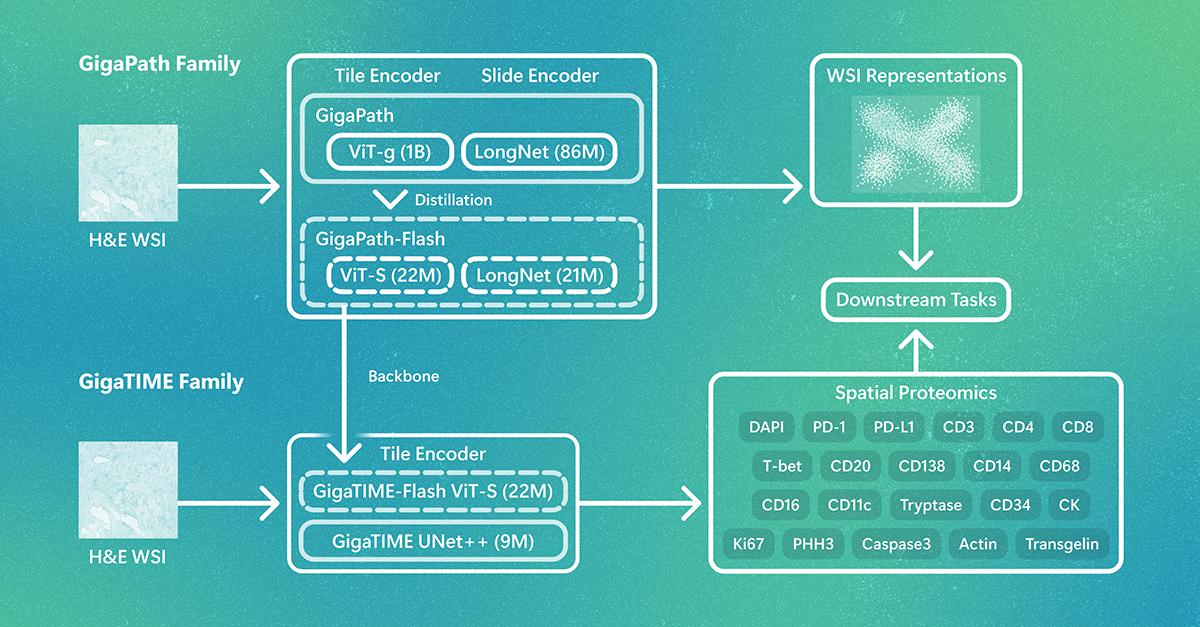
What if pathology foundation models could do more with less? GigaPath-Flash and GigaTIME-Flash cut computational demands while maintaining strong performance, opening the door to larger studies and broader exploration. The post GigaPath-Flash and GigaTIME-Flash: Toward population-scale discovery with efficient pathology foundation models appeared first on Microsoft Research.
We use cookies to run the site and, with your consent, for analytics and to show ads.
See our Cookie Policy.