Gate‐Tunable Polarity‐Reconfigurable Photovoltaic Response With Dual Linearity in NbS3/WSe2 Heterostructures for In‐Sensor Image Processing
Unknown authors
Sep 2026· Advancement of science· 0 citations· 43 references
Medicine
Abstract
ABSTRACT Reconfigurable optoelectronic image sensors capable of in‐sensor computing are promising for energy‐efficient edge visual perception. Self‐powered photovoltaic operation further reduces the power demand of image sensing and processing. However, it remains challenging to achieve a continuously gate‐tunable self‐powered photovoltaic response that combines reversible polarity with linear weight programmability. Here, we demonstrate a gate‐tunable photovoltaic detector based on an NbS3/WSe2 van der Waals heterostructure. Owing to the ambipolar transport of WSe2 and the distinct electrostatic responses of the two constituent materials, gate voltage continuously modulates the interfacial band alignment and reversibly switches the built‐in electric field at the heterointerface. Consequently, the device exhibits gate‐controlled positive and negative photovoltaic responses. The short‐circuit photocurrent scales linearly with incident power density, while the short‐circuit photoresponsivity varies linearly with gate voltage over a broad programming window. This dual linearity allows the photoresponsivity to function as a programmable analog weight for in‐sensor convolution. As a proof of concept, several image convolution kernels are implemented for in‐sensor image processing, and the experimentally obtained outputs agree well with algorithmic simulations. This work provides a promising device‐level building block for reconfigurable and energy‐efficient vision sensors for edge computing.
This publication proposes a definition and a classification of agile software development approaches and analyses ten software development methods that can be characterized as being "agile" against the defined criterion.
P. Abrahamsson, O. Salo, Jussi Ronkainen et al.· arXiv.org· 727 citations· ⚡54
The study shows that agile practices improve both informal and formal communication, but indicates that, in larger development situations involving multiple external stakeholders, a mismatch of adequate communication mechanisms can sometimes even hinder the communication.
M. Pikkarainen, Jukka Haikara, O. Salo et al.· Empirical Software Engineeri...· 401 citations· ⚡48
The results indicate that software engineering work practices are chosen opportunistically, adapted and configured to provide value under the constrains imposed by the startup context.
Nicolò Paternoster, Carmine Giardino, M. Unterkalmsteiner et al.· Information and Software Tec...· 394 citations· ⚡54
The perception of the impact of agile methods is predominantly positive, and several challenge areas were discovered, but based on this study, agile methods are here to stay.
M. Laanti, O. Salo, P. Abrahamsson· Information and Software Tec...· 260 citations· ⚡20
AI is making software generation faster, but speed does not remove the need for expertise. As more work is delegated to AI, tacit knowledge may become one of the most important human advantages in software engineering. The post Beyond Prompt Engineering: The Role of Tacit Knowledge in Software Engineering appeared first on GPT-Lab.
MIT News · Artificial Intelligence· news.mit.eduSep 9, 2026
A weeklong summer workshop brought higher education faculty to campus to explore how AI and machine learning materials can be adapted for their classrooms.
MIT News · Artificial Intelligence· news.mit.eduSep 2, 2026
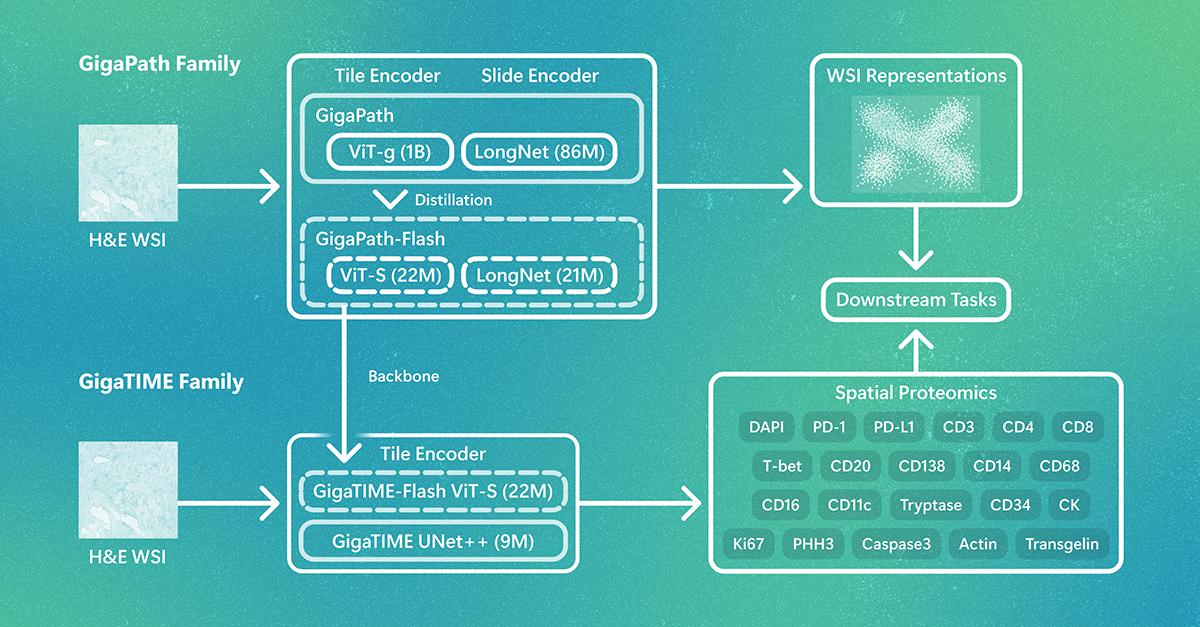
What if pathology foundation models could do more with less? GigaPath-Flash and GigaTIME-Flash cut computational demands while maintaining strong performance, opening the door to larger studies and broader exploration. The post GigaPath-Flash and GigaTIME-Flash: Toward population-scale discovery with efficient pathology foundation models appeared first on Microsoft Research.
We use cookies to run the site and, with your consent, for analytics and to show ads.
See our Cookie Policy.