Sep 2026· North Texas Journal of Undergraduate Research· 0 citations
Abstract
NASA launched the Mars Climate Orbiter and Mars Polar Lander in the late 1990s. Both missions failed because of critical yet preventable errors in testing and communication. The MCO was lost due to a unit conversion error between metric and imperial measurements, while the MPL likely failed because of an early engine shutdown caused by incorrect signals. This study looks at why these missions failed and how much they cost by reviewing NASA's investigation reports, financial documentation, and related writings. The findings reveal systemic flaws, including inadequate software verification, incomplete end-to-end testing, and miscommunication among engineering teams. Financially, the combined direct losses from both missions exceeded $492.6 million, with additional opportunity costs in delayed scientific progress. These results underscore the need for rigorous testing, standardized protocols, and cross-team communication to enhance mission success and mitigate future risks.
The growth of CubeSat missions has expanded access to space for diverse applications and high-bandwidth, low-latency communication. This expansion has intensified concerns regarding orbital debris and the long-term sustainability of Low Earth Orbit (LEO). Current regulations prescribe post-mission disposal periods of f...
Elham Baneshi, Daniel Faran, Daniel Asante et al.· IEEE Journal of Radio Freque...· 0 citations
The radio altimeter is an important navigation instrument on an aircraft, capable of accurately measuring the aircraft's true height above the ground or sea to ensure safe flight. This capability is crucial for ensuring normal flight operations, especially during critical phases such as takeoff, approach, and landing....
Ming-Ming Song, Yu-Jie Mi· SAE technical paper series· 0 citations
Satellite gravimetry missions GRACE and GRACE-FO have significantly advanced Earth observation by enabling monthly, high-precision mapping of global mass redistributions. These missions have provided unprecedented insights into the system Earth, such as ice sheet and glacier mass loss, sea level rise, terrestrial water...
Annike Knabe, Henrik Wessel, S. Bremer et al.· GRACE/GRACE-FO Science Team...· 0 citations
The Nancy Grace Roman Space Telescope (Roman) is the highest-priority large space mission identified by the 2020 New Worlds, New Horizon Decadal Survey in Astronomy and Astrophysics. Its mission encompasses critical research in dark energy, dark matter, exoplanets, and infrared astrophysics. Additionally, Roman feature...
K. Liu, James Govern, M. Melton et al.· Astronomical Telescopes + In...· 0 citations
Founded as a launch service provider for sounding rocket flight missions in the sixties, Mobile Rocket Base (MORABA) has conducted more than five hundred sounding rocket missions. For the longest time, focus of the research supported was on astronomy, atmospheric physics and microgravity research. Beginning in the ne...
Frank Scheuerpflug, Thomas Röhr, D. Hargarten et al.· CEAS Space Journal· 0 citations
The 2023 Planetary Science and Astrobiology Decadal Survey—Oceans, Worlds, and Life (OWL)—recommended a Uranus Orbiter and Probe (UOP) as the highest-priority next flagship mission. However, the concept presented in OWL baselined a 2031 launch, which is not compatible with a realistic projected funding timeline for UOP...
J. Englander, R. Anderson, Donald H. Ellison et al.· Journal of Spacecraft and Ro...· 0 citations
Related blog posts
Microsoft Research Blog· microsoft.comOct 30, 2026
Evaluating Microsoft Copilot at enterprise scale requires test data that captures the full complexity of real organizations, yet real enterprise data contains sensitive information that cannot be used for evaluation under any circumstances. The post From synthetic enterprise data evaluations to real Microsoft Copilot AI confidence appeared first on Microsoft Research.
Microsoft Research Blog· microsoft.comOct 29, 2026
Host Sowbhagya Suresh shares some of the latest news and cutting-edge research from across Microsoft—from understanding the challenges facing coding agents to uncovering how people use AI at work and improving extended-range weather forecasting. The post Microsoft Research Focus – Edition #97 appeared first on Microsoft Research.
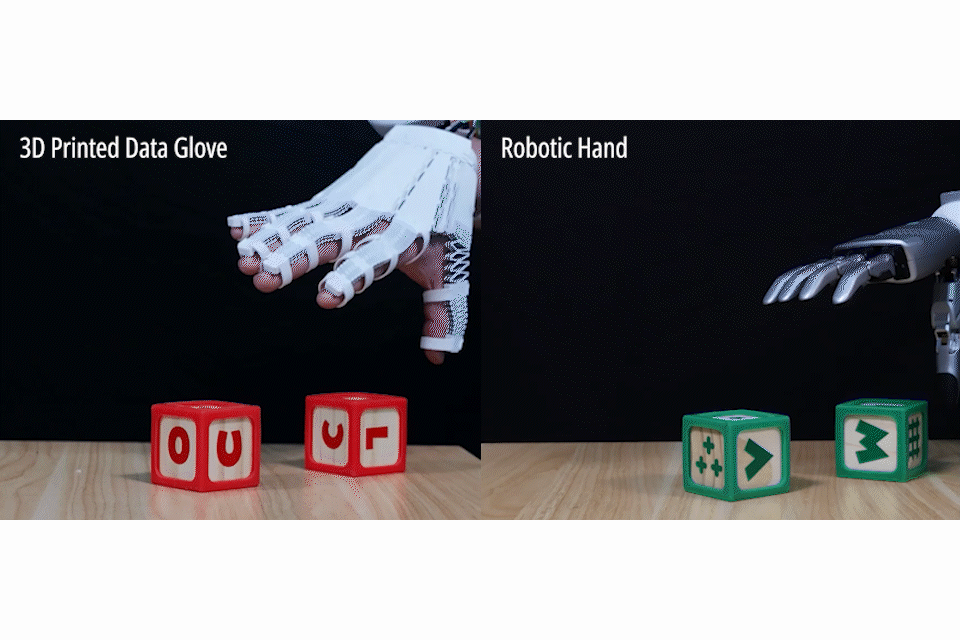
“X-Hinges” helps design and 3D print items like lamps and gloves with an interactive twist: automatically embedded sensors that perceive and adaptively respond to human contact.
We use cookies to run the site and, with your consent, for analytics and to show ads.
See our Cookie Policy.