Skip to content
#software testing Open access

Virtual bioequivalence-guided PBBM prediction for ibuprofen/diphenhydramine citrate tablets: impact of dissolution variability and clinical standard development

Unknown authors
Sep 2026 · Saudi Pharmaceutical Journal · Vol 34 · 0 citations · 58 references
Medicine

TL;DR

This study provides a product-specific, model-informed workflow for bioequivalence risk assessment of ibuprofen/diphenhydramine citrate tablets and offers guidance for quantitative BE risk assessment, thereby holding promise to accelerate the development process while reducing associated costs.

Abstract

This study aimed to integrate in vitro dissolution testing, in vivo pharmacokinetic (PK) studies, and computational simulation to develop a physiologically based biopharmaceutics model (PBBM) for fixed-dose combination ibuprofen/diphenhydramine citrate tablets, thereby evaluating bioequivalence (BE) and establishing a dissolution safe space. Initially, a PBBM model was constructed using B2O Simulator software. Subsequently, an integrated approach was employed, combining dissolution profiles with physiological parameters to develop a virtual bioequivalence (VBE) model. Through simulations involving virtual batches exhibiting diverse dissolution characteristics, the safe dissolution range was determined. Consequently, the PBBM models for ibuprofen and diphenhydramine were successfully validated. Furthermore, the VBE model demonstrated favorable bioequivalence, with an absolute average fold error (AAFE) of less than 1.5 between predicted and observed values for key PK parameters (Cmax and AUC). Scenario analyses supported a formulation- and medium-specific dissolution criterion of no less than 85% dissolution within 30 min for both APIs in pH 6.5 phosphate buffer. Additionally, scenario analyses suggested that, within the simulated two-treatment, two-period crossover settings evaluated in this study, a sample size of approximately 40 subjects may represent a practical lower bound for obtaining stable BE conclusions. In conclusion, this study provides a product-specific, model-informed workflow for bioequivalence risk assessment of ibuprofen/diphenhydramine citrate tablets. The application of PBBM and VBE modeling offers guidance for quantitative BE risk assessment, thereby holding promise to accelerate the development process while reducing associated costs. (The bioequivalence study in healthy subjects was conducted in accordance with the Declaration of Helsinki and approved by the Ethics Committee of the Second Affiliated Hospital of Anhui Medical University [ChiCTR registration number: ChiCTR2500106504; approved: March 12, 2023].)


Read PDF

Similar papers

#computer vision Review Sep 2017

Agile Software Development Methods: Review and Analysis

This publication proposes a definition and a classification of agile software development approaches and analyses ten software development methods that can be characterized as being "agile" against the defined criterion.

P. Abrahamsson, O. Salo, Jussi Ronkainen et al. · 727 citations · ⚡54
#computer vision Jun 2008

The impact of agile practices on communication in software development

The study shows that agile practices improve both informal and formal communication, but indicates that, in larger development situations involving multiple external stakeholders, a mismatch of adequate communication mechanisms can sometimes even hinder the communication.

M. Pikkarainen, Jukka Haikara, O. Salo et al. · 401 citations · ⚡48
#machine learning Review Open access Oct 2014

Software development in startup companies: A systematic mapping study

The results indicate that software engineering work practices are chosen opportunistically, adapted and configured to provide value under the constrains imposed by the startup context.

Nicolò Paternoster, Carmine Giardino, M. Unterkalmsteiner et al. · 394 citations · ⚡54
#computer vision Review Mar 2008

Agile methods in European embedded software development organisations: a survey on the actual use and usefulness of Extreme Programming and Scrum

The results show that the embedded industry has been able to apply agile methods in its development processes and that the appreciation of the agile methods and their individual practices appears to increase once adopted and applied in practice.

O. Salo, P. Abrahamsson · 238 citations · ⚡9
#computer vision Open access Jul 2017

What happens when software developers are (un)happy

Consequences of happiness and unhappiness that are beneficial and detrimental for developers' mental well-being, the software development process, and the produced artifacts are found.

D. Graziotin, Fabian Fagerholm, Xiaofeng Wang et al. · 236 citations · ⚡13
#computer vision Open access Oct 2004

Mobile-D: an agile approach for mobile application development

The Mobile-D approach is briefly outlined here and the experiences gained from four case studies are discussed, which helped develop an agile development approach for mobile application development.

P. Abrahamsson, Antti Hanhineva, H. Hulkko et al. · 225 citations · ⚡18

Related blog posts

GPT-Lab Sep 17, 2026

Beyond Prompt Engineering: The Role of Tacit Knowledge in Software Engineering

AI is making software generation faster, but speed does not remove the need for expertise. As more work is delegated to AI, tacit knowledge may become one of the most important human advantages in software engineering. The post Beyond Prompt Engineering: The Role of Tacit Knowledge in Software Engineering appeared first on GPT-Lab.

MIT News · Artificial Intelligence Aug 17, 2026

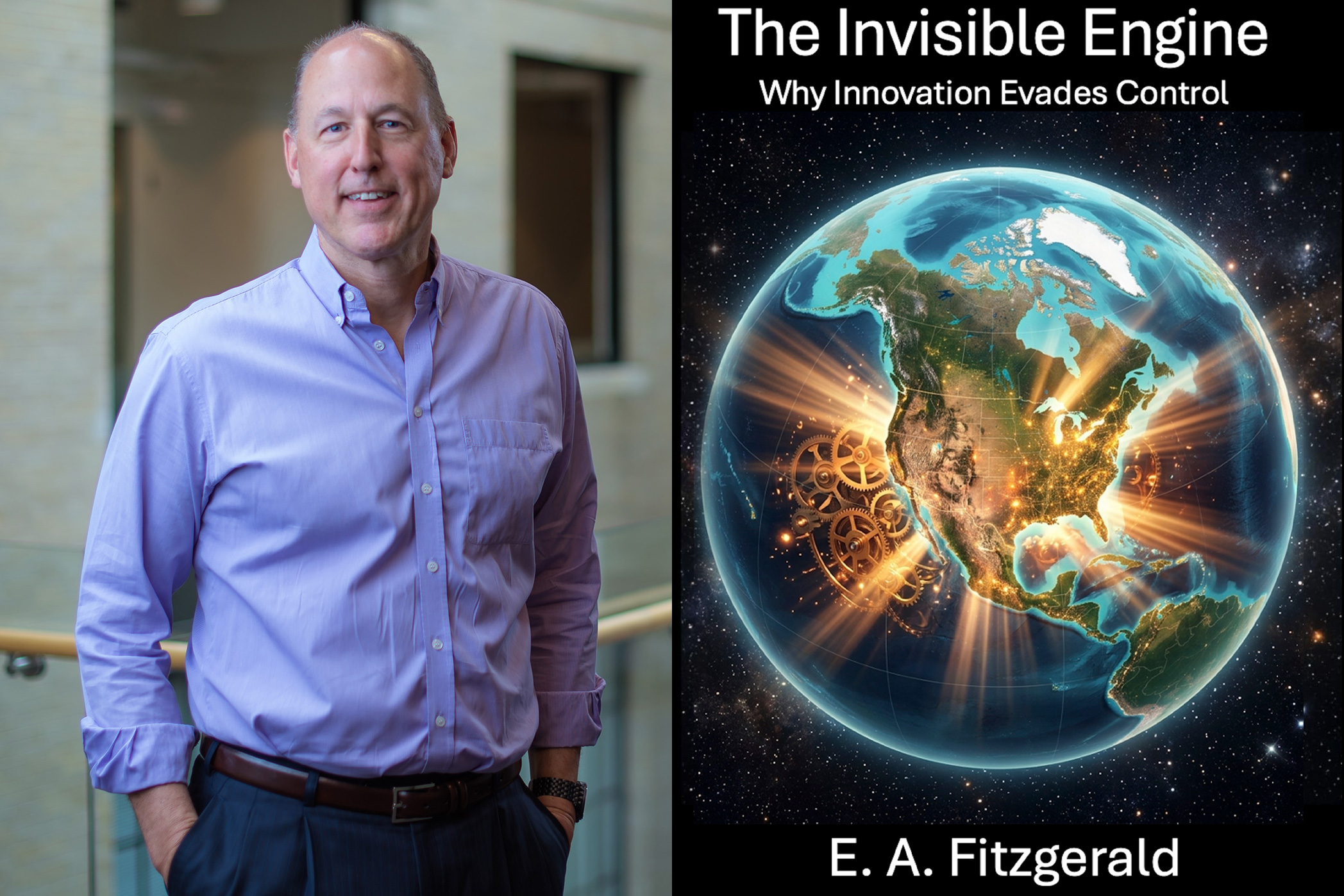
Q&A: Rethinking how innovation happens

In his latest book, Professor Eugene Fitzgerald examines the forces that turn breakthroughs into value — and why innovation resists simple formulas.

Microsoft Research Blog Aug 12, 2026

MindTopo reveals VLMs’ spatial reasoning abilities

A path, a fence, a knot. MindTopo sets a new benchmark for testing how AI understands topological relationships and highlights new opportunities to strengthen spatial reasoning and planning. The post MindTopo reveals VLMs’ spatial reasoning abilities appeared first on Microsoft Research.

We use cookies to run the site and, with your consent, for analytics and to show ads. See our Cookie Policy.