ORCH: Organizational Principles Enable Collective Intelligence in Embodied AI
Zhengran JiJonathan HyunBoyuan Chen
Sep 2026
Artificial IntelligenceMachine LearningRobotics
Abstract
Collective intelligence depends not only on the capabilities of individual members, but also on how those members are organized. Yet artificial multi-agent systems are typically assembled using fixed organizational structures, even when the physical tasks they perform impose fundamentally different coordination requirements. Here we show that principles from human organization theory can be operationalized to organize large, heterogeneous collectives of embodied artificial agents. We introduce ORCH (Organizing Roles and Coordination Hierarchies), which constructs task-specific hierarchical organizations by combining pooled interdependence for work that can proceed concurrently with sequential interdependence for work governed by prerequisite relationships. Across 25 wildfire-response missions spanning reconnaissance, rescue, transportation, resource management, containment and suppression, we evaluated teams of up to 50 heterogeneous agents using eight large language models. Organizations constructed using these principles consistently outperformed four representative embodied multi-agent approaches across mission outcome, execution efficiency, exploration and computational resource use. Human-designed ORCH organizations improved final score by 63.97% and execution efficiency by 74.29% on average relative to the four prior frameworks. Organizations generated automatically by language models improved these measures by 43.63% and 52.53%, respectively. These advantages persisted across missions and underlying language models. Notably, collective performance was not monotonically determined by model scale. Analysis of long-horizon missions showed that hierarchical organization enabled teams to preserve concurrent activity within specialized groups while coordinating ordered transitions between mission phases.

The results indicate that software engineering work practices are chosen opportunistically, adapted and configured to provide value under the constrains imposed by the startup context.
Nicolò Paternoster, Carmine Giardino, M. Unterkalmsteiner et al.· Information and Software Tec...· 394 citations· ⚡54
The possibility of inferring high-dimensional data inference in a model that consists of a prior and an auxiliary differentiable constraint given some additional information is considered, thereby allowing a range of potential applications in adapting models to new domains and tasks.
Alexandros Graikos, Esmeralda S. Whitammer, N. Jojic et al.· Neural Information Processin...· 316 citations· ⚡15
It is proved that any global minimizer of the trajectory balance objective can define a policy that samples exactly from the target distribution, and empirically demonstrate the benefits of the trajectories balance objective for GFlowNet convergence, diversity of generated samples, and robustness to long action sequences and large action spaces.
Esmeralda S. Whitammer, Moksh Jain, Emmanuel Bengio et al.· Neural Information Processin...· 302 citations· ⚡60
GAOKAO-Bench is introduced, an intuitive benchmark that employs questions from the Chinese GAOKAO examination as test samples, including both subjective and objective questions that contribute a robust evaluation benchmark for future large language models and offers valuable insights into the advantages and limitations of such models.
Xiaotian Zhang, Chun-yan Li, Yi Zong et al.· arXiv.org· 216 citations· ⚡17
This state-of-practice investigation was performed using a literature review followed by a multiple-case study approach and presents how inconsistency between managerial strategies and execution can lead to failure by means of a behavioral framework.
Carmine Giardino, Xiaofeng Wang, P. Abrahamsson· International Conference on...· 175 citations· ⚡19
This work investigates the possibilities of using LLMs in a resume screening setting via a document retrieval framework that simulates job candidate selection and finds that the MTEs are biased, significantly favoring White-associated names in 85% of cases and female-associated names in only 11.1% of cases.
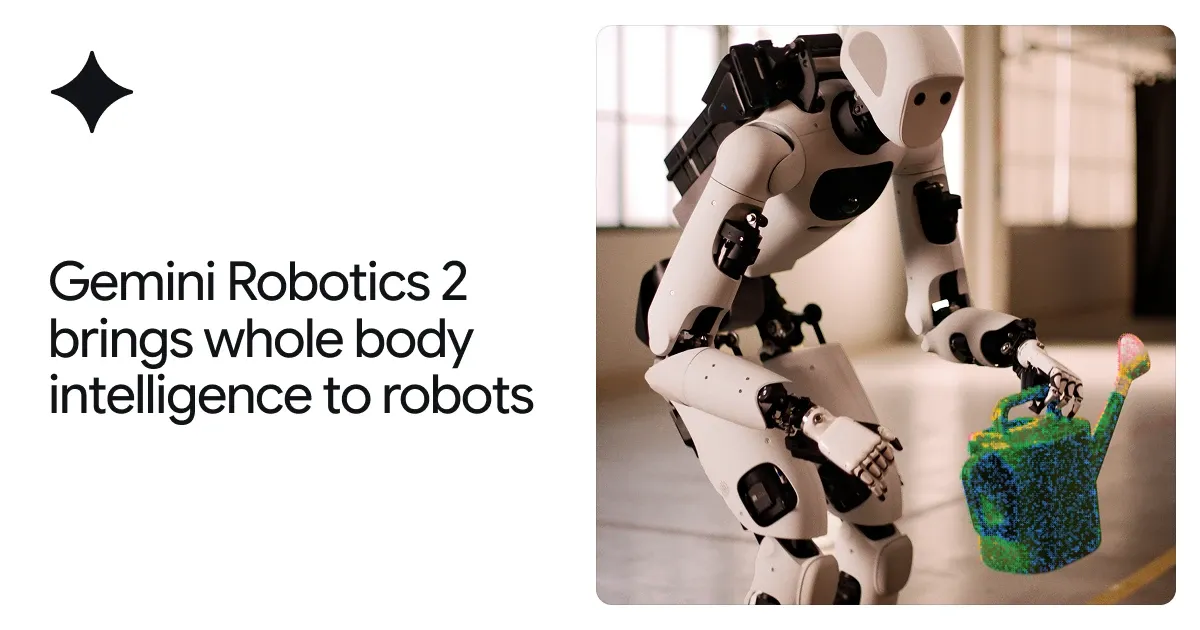
From feet to fingertips — we are teaching robots intelligent whole-body control, fine dexterity, and teamwork to complete a broad range of complex tasks.
We use cookies to run the site and, with your consent, for analytics and to show ads.
See our Cookie Policy.