For every consistent computably axiomatized extension of ZFC and every sufficiently large fixed $r$, there is a finite family $\mathcal F$ for which the true equality $\pi(\mathcal F)=\tau_r$ is neither provable nor refutable; analogous independence holds for the five structural properties above.
Abstract
Given a finite family $\mathcal F$ of forbidden $r$-graphs, the Tur\'an problem asks for the maximum asymptotic edge density of $\mathcal F$-free $r$-graphs and the structure of near-extremal examples. We show that both questions can encode arbitrary computation. Fix a universal Turing machine $\mathsf U$. For every sufficiently large fixed $r$, there is a rational $\tau_r\in(0,1)$ such that, from each binary word $\beta$, one can construct a finite family $\mathcal F_{r,\beta}$ with $\pi(\mathcal F_{r,\beta})=\tau_r$ if $\mathsf U$ does not halt on $\beta$, and $\pi(\mathcal F_{r,\beta})>\tau_r$ otherwise. The same dichotomy governs extremal structure. We construct finite families $\mathcal G_{r,\beta}$ such that nonhalting gives a unique extremal limit and Erd\H{o}s--Simonovits stability, whereas halting gives two nonempty compact extremal phases separated by the sign of a fixed continuous statistic. Hence uniqueness and connectedness of the extremal space, symmetry breaking, two-phase behavior, and stability are all undecidable. The reductions are effective and verifiable in ZFC by finite certificates. Consequently, for every consistent computably axiomatized extension of ZFC and every sufficiently large fixed $r$, there is a finite family $\mathcal F$ for which the true equality $\pi(\mathcal F)=\tau_r$ is neither provable nor refutable; analogous independence holds for the five structural properties above. We also obtain effective approximation, classify exact comparison complexity, and show that the smallest improvement witnesses have Busy-Beaver growth, with no uniform computable positive lower bound on the density gain.
This publication proposes a definition and a classification of agile software development approaches and analyses ten software development methods that can be characterized as being "agile" against the defined criterion.
P. Abrahamsson, O. Salo, Jussi Ronkainen et al.· arXiv.org· 727 citations· ⚡54
The study shows that agile practices improve both informal and formal communication, but indicates that, in larger development situations involving multiple external stakeholders, a mismatch of adequate communication mechanisms can sometimes even hinder the communication.
M. Pikkarainen, Jukka Haikara, O. Salo et al.· Empirical Software Engineeri...· 401 citations· ⚡48
The results indicate that software engineering work practices are chosen opportunistically, adapted and configured to provide value under the constrains imposed by the startup context.
Nicolò Paternoster, Carmine Giardino, M. Unterkalmsteiner et al.· Information and Software Tec...· 394 citations· ⚡54
The perception of the impact of agile methods is predominantly positive, and several challenge areas were discovered, but based on this study, agile methods are here to stay.
M. Laanti, O. Salo, P. Abrahamsson· Information and Software Tec...· 260 citations· ⚡20
AI is making software generation faster, but speed does not remove the need for expertise. As more work is delegated to AI, tacit knowledge may become one of the most important human advantages in software engineering. The post Beyond Prompt Engineering: The Role of Tacit Knowledge in Software Engineering appeared first on GPT-Lab.
MIT News · Artificial Intelligence· news.mit.eduSep 9, 2026
A weeklong summer workshop brought higher education faculty to campus to explore how AI and machine learning materials can be adapted for their classrooms.
MIT News · Artificial Intelligence· news.mit.eduSep 2, 2026
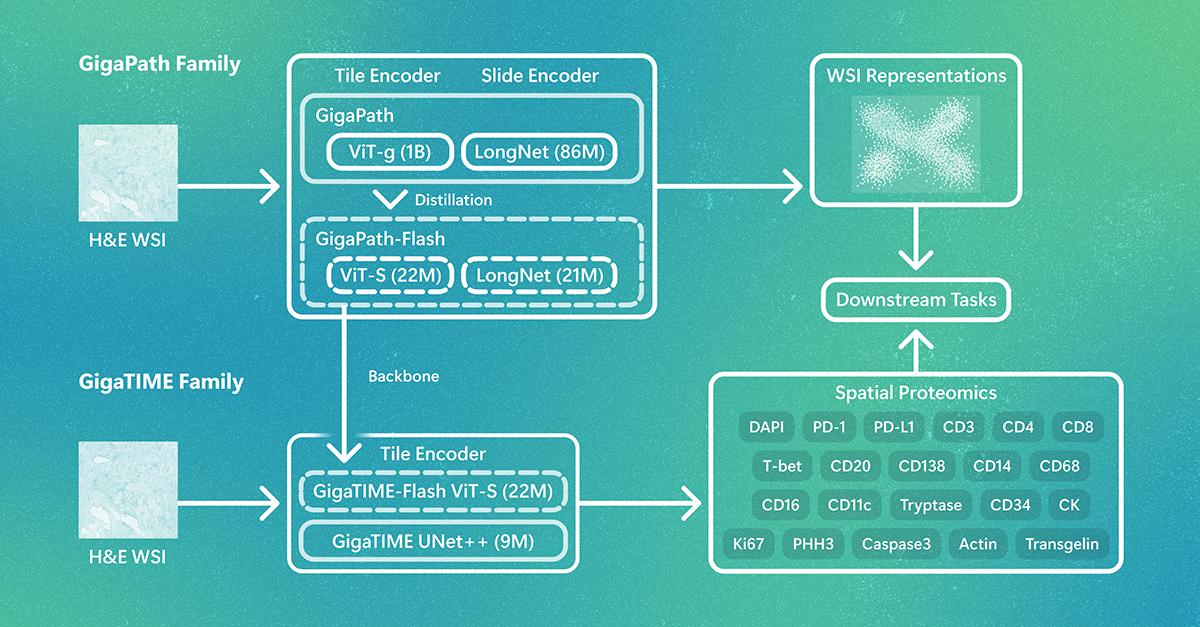
What if pathology foundation models could do more with less? GigaPath-Flash and GigaTIME-Flash cut computational demands while maintaining strong performance, opening the door to larger studies and broader exploration. The post GigaPath-Flash and GigaTIME-Flash: Toward population-scale discovery with efficient pathology foundation models appeared first on Microsoft Research.
We use cookies to run the site and, with your consent, for analytics and to show ads.
See our Cookie Policy.