Simulation and Design Study of Edge-on GaAs:Cr Detector for Clinical Photon Counting CT.
Unknown authors
Sep 2026· IEEE Transactions on Medical Imaging· Vol PP· 0 citations
Medicine
TL;DR
The results indicate that the GaAs:Cr detector exhibits excellent mono-energetic spectrum response and low material decomposition (MD) noise, and provides lower noise, higher contrast-to-noise ratio (CNR) in VMI results, and more precise concentration measurements in quantitative analysis, compared to existing PCDs.
Abstract
Chromium-compensated Gallium Arsenide (GaAs:Cr) has emerged as a promising sensor material for photon counting detectors (PCDs) due to its excellent resistivity and charge carrier mobility. However, due to the limitations of the Cr compensation process, the GaAs:Cr wafer thickness is less than 1 mm, which distorts its X-ray absorption efficiency and limits its application in clinical computed tomography (CT). This study proposes a GaAs detector with an edge-on structure for clinical photon counting CT (PCCT) applications. To evaluate the performance of the detector, we modeled the spectral response and analyzed material decomposition (MD) noise using a full-chain detector model. In imaging domain study, digital phantoms, such as low contrast phantom, Gammex phantom, and XCAT digital phantoms, were virtually scanned to assess the image uniformity, CT number accuracy, material decomposition, and virtual mono-energetic imaging (VMI) performance, with the detector system modeled to reflect actual PCCT prototypes. The results indicate that the GaAs:Cr detector exhibits excellent mono-energetic spectrum response and low material decomposition (MD) noise. Additionally, the GaAs:Cr detector provides lower noise, higher contrast-to-noise ratio (CNR) in VMI results, and more precise concentration measurements in quantitative analysis, compared to existing PCDs. These findings highlight the feasibility of developing GaAs:Cr detectors for clinical CT applications, offering potential advantages over existing PCDs.
This publication proposes a definition and a classification of agile software development approaches and analyses ten software development methods that can be characterized as being "agile" against the defined criterion.
P. Abrahamsson, O. Salo, Jussi Ronkainen et al.· arXiv.org· 727 citations· ⚡54
The study shows that agile practices improve both informal and formal communication, but indicates that, in larger development situations involving multiple external stakeholders, a mismatch of adequate communication mechanisms can sometimes even hinder the communication.
M. Pikkarainen, Jukka Haikara, O. Salo et al.· Empirical Software Engineeri...· 401 citations· ⚡48
The results indicate that software engineering work practices are chosen opportunistically, adapted and configured to provide value under the constrains imposed by the startup context.
Nicolò Paternoster, Carmine Giardino, M. Unterkalmsteiner et al.· Information and Software Tec...· 394 citations· ⚡54
The perception of the impact of agile methods is predominantly positive, and several challenge areas were discovered, but based on this study, agile methods are here to stay.
M. Laanti, O. Salo, P. Abrahamsson· Information and Software Tec...· 260 citations· ⚡20
AI is making software generation faster, but speed does not remove the need for expertise. As more work is delegated to AI, tacit knowledge may become one of the most important human advantages in software engineering. The post Beyond Prompt Engineering: The Role of Tacit Knowledge in Software Engineering appeared first on GPT-Lab.
MIT News · Artificial Intelligence· news.mit.eduSep 9, 2026
A weeklong summer workshop brought higher education faculty to campus to explore how AI and machine learning materials can be adapted for their classrooms.
MIT News · Artificial Intelligence· news.mit.eduSep 2, 2026
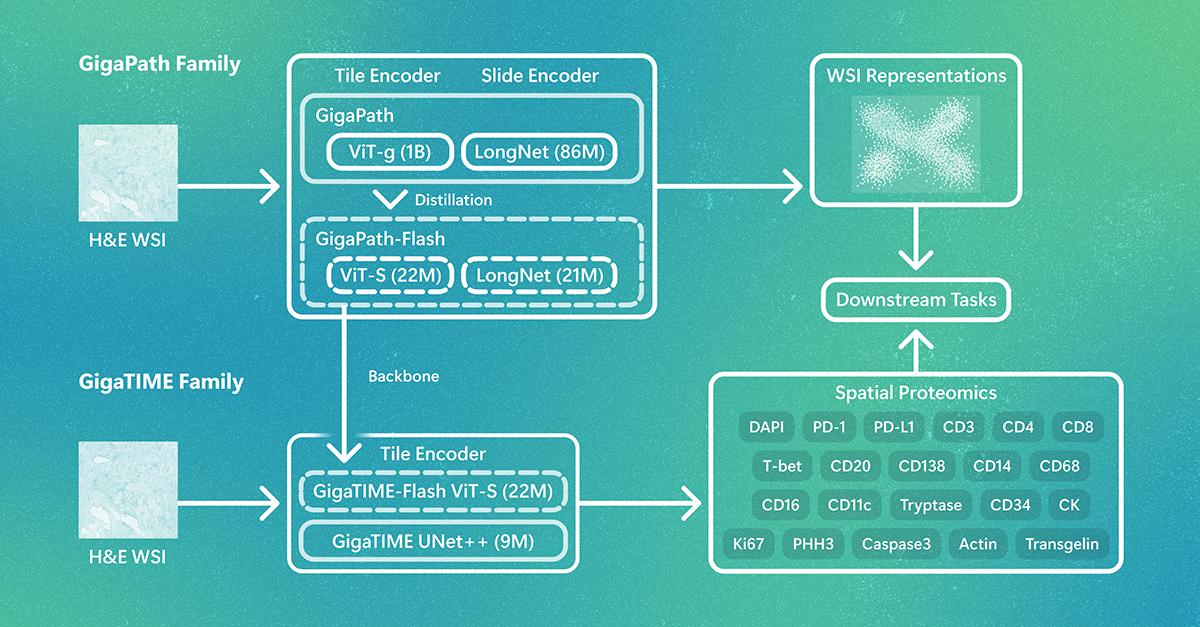
What if pathology foundation models could do more with less? GigaPath-Flash and GigaTIME-Flash cut computational demands while maintaining strong performance, opening the door to larger studies and broader exploration. The post GigaPath-Flash and GigaTIME-Flash: Toward population-scale discovery with efficient pathology foundation models appeared first on Microsoft Research.
We use cookies to run the site and, with your consent, for analytics and to show ads.
See our Cookie Policy.