Sep 2026· Measurement science and technology· 0 citations· 54 references
Topological and Geometric Data Analysis
Abstract
Topological Data Analysis (TDA) is a powerful tool for characterizing nonlinear and nonstationary dynamics, but the rapid computational growth of persistent homology filtrations, particularly Vietoris--Rips (VR) constructions, limits its use in high-rate and edge-computing applications. This paper introduces Fast Topological Data Analysis (Fast~TDA), a geometry-based framework designed to approximate one-dimensional persistent homology ($H_1$) from two-dimensional delay-coordinate embeddings with reduced computational cost. Fast~TDA bypasses explicit filtration construction by utilizing a pipeline of least-squares ellipse fitting and $k$-dimensional tree (KD-tree)-based inscribed circle extraction to achieve efficient geometry-guided feature extraction. The method is formulated for both single-loop regimes and multi-loop point-cloud structures, reconstructing multiple geometric primitives to track evolving topologies. The performance of Fast~TDA is evaluated against persistent homology computed with VR and alpha-complex ($\alpha$-complex) filtrations across noisy synthetic harmonic signals, experimental high-rate Dynamic Reproduction of Projectiles in Ballistic Environments for Advanced Research (DROPBEAR) testbed data, and the chaotic Lorenz attractor. Results demonstrate that, for single-harmonic regimes, Fast~TDA operates in the sub-millisecond range, reducing runtime relative to both persistence-based baselines evaluated in this study while exhibiting strong noise robustness. For multi-frequency and complex multi-loop signals, $\alpha$-complex persistence provides the lowest runtimes in the tested two-dimensional embeddings, but its extracted descriptors remain more sensitive to noise in the multi-loop cases considered. In contrast, Fast~TDA remains substantially faster than VR-based persistence and maintains stronger noise resilience while preserving sub-second execution. Overall, these results position Fast~TDA as a scalable geometry-guided surrogate for real-time feature extraction when VR-based persistence is computationally prohibitive, and noise-resilient topology-informed descriptors are desired.
This publication proposes a definition and a classification of agile software development approaches and analyses ten software development methods that can be characterized as being "agile" against the defined criterion.
P. Abrahamsson, O. Salo, Jussi Ronkainen et al.· arXiv.org· 727 citations· ⚡54
The study shows that agile practices improve both informal and formal communication, but indicates that, in larger development situations involving multiple external stakeholders, a mismatch of adequate communication mechanisms can sometimes even hinder the communication.
M. Pikkarainen, Jukka Haikara, O. Salo et al.· Empirical Software Engineeri...· 401 citations· ⚡48
The results indicate that software engineering work practices are chosen opportunistically, adapted and configured to provide value under the constrains imposed by the startup context.
Nicolò Paternoster, Carmine Giardino, M. Unterkalmsteiner et al.· Information and Software Tec...· 394 citations· ⚡54
The perception of the impact of agile methods is predominantly positive, and several challenge areas were discovered, but based on this study, agile methods are here to stay.
M. Laanti, O. Salo, P. Abrahamsson· Information and Software Tec...· 260 citations· ⚡20
AI is making software generation faster, but speed does not remove the need for expertise. As more work is delegated to AI, tacit knowledge may become one of the most important human advantages in software engineering. The post Beyond Prompt Engineering: The Role of Tacit Knowledge in Software Engineering appeared first on GPT-Lab.
MIT News · Artificial Intelligence· news.mit.eduSep 9, 2026
A weeklong summer workshop brought higher education faculty to campus to explore how AI and machine learning materials can be adapted for their classrooms.
MIT News · Artificial Intelligence· news.mit.eduSep 2, 2026
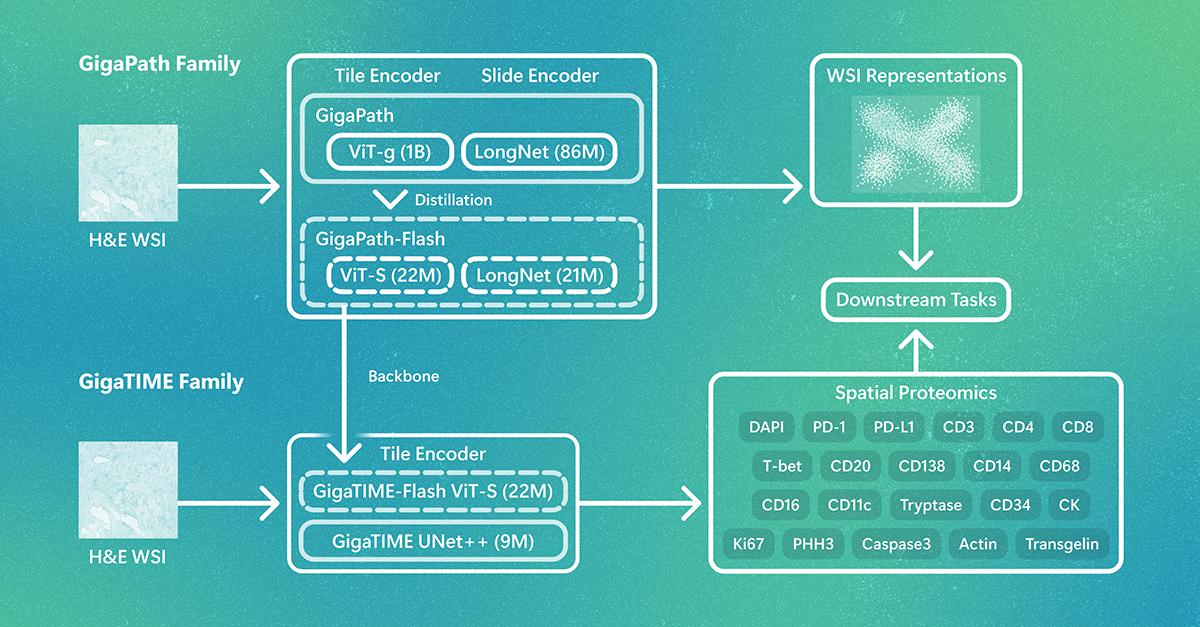
What if pathology foundation models could do more with less? GigaPath-Flash and GigaTIME-Flash cut computational demands while maintaining strong performance, opening the door to larger studies and broader exploration. The post GigaPath-Flash and GigaTIME-Flash: Toward population-scale discovery with efficient pathology foundation models appeared first on Microsoft Research.
We use cookies to run the site and, with your consent, for analytics and to show ads.
See our Cookie Policy.