Skip to content
#edge computing Open access

Blockchain-enabled secure IOT framework using energy-efficient functional materials for scalable cross-border financial transactions

Sep 2026 · Discover Applied Sciences
Blockchain Technology Applications and Security

Abstract

The quick convergence between IoT and blockchain technologies has opened possibilities for revolutionizing the global finance system across borders, but the issues concerning energy usage, Scalability, Security, and Costs have become major obstacles in their deployment on a massive scale. In this research, we propose an IoT-based blockchain solution using energy-efficient functional materials to solve the issues and facilitate processing of cross-border financial transactions. Our system features a multi-layered architecture combining IoT sensors, edge computing, and permissioned blockchain through lightweight consensus algorithms, which helps to cut down computation costs. At the sensor layer, innovative functional materials, including GaN and SiC, can be used to save energy without sacrificing performance. It employs encryption algorithms that are Secure, Reliable, Efficient, and Use lightweight cryptography techniques. The proposed framework was validated through a simulation based approach, where NS-3.42 was integrated as the network communication modeling tool for IoT networks, Hyperledger Caliper 0.6.0 was used as a performance evaluation tool for the blockchain, and TCAD/Material Project semiconductor models were used to analyze the energy characteristics of GaN and SiC devices. The performance was measured by the following key metrics: energy usage, transaction throughput, end-to-end (e2e) latency, security resilience, and transaction cost in the simulated cross-border financial transaction scenarios. Furthermore, the transaction throughput reaches a maximum value of 4800 transactions per second, whereas the average latencies are around 1.2 s. Furthermore, the framework achieves enhanced security with a probability of secure operation exceeding 0.992 and reduces cross-border transaction costs by up to 94% compared to traditional financial systems. The findings highlight the potential of integrating blockchain, IoT, and energy-efficient materials to develop Sustainable, Secure, and High- Performance digital financial infrastructures for next-generation global applications.

View source

Similar papers

#computer vision Review Sep 2017

Agile Software Development Methods: Review and Analysis

This publication proposes a definition and a classification of agile software development approaches and analyses ten software development methods that can be characterized as being "agile" against the defined criterion.

P. Abrahamsson, O. Salo, Jussi Ronkainen et al. · 727 citations · ⚡54
#computer vision Jun 2008

The impact of agile practices on communication in software development

The study shows that agile practices improve both informal and formal communication, but indicates that, in larger development situations involving multiple external stakeholders, a mismatch of adequate communication mechanisms can sometimes even hinder the communication.

M. Pikkarainen, Jukka Haikara, O. Salo et al. · 401 citations · ⚡48
#machine learning Review Open access Oct 2014

Software development in startup companies: A systematic mapping study

The results indicate that software engineering work practices are chosen opportunistically, adapted and configured to provide value under the constrains imposed by the startup context.

Nicolò Paternoster, Carmine Giardino, M. Unterkalmsteiner et al. · 394 citations · ⚡54

Related blog posts

GPT-Lab Sep 17, 2026

Beyond Prompt Engineering: The Role of Tacit Knowledge in Software Engineering

AI is making software generation faster, but speed does not remove the need for expertise. As more work is delegated to AI, tacit knowledge may become one of the most important human advantages in software engineering. The post Beyond Prompt Engineering: The Role of Tacit Knowledge in Software Engineering appeared first on GPT-Lab.

Microsoft Research Blog Aug 31, 2026

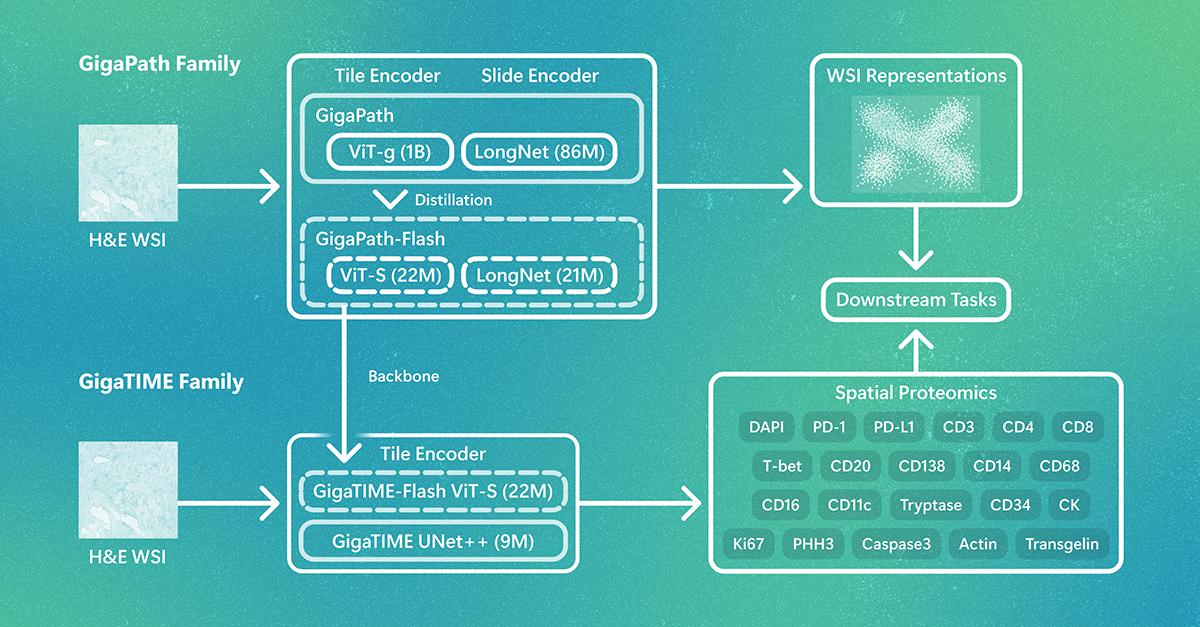
GigaPath-Flash and GigaTIME-Flash: Toward population-scale discovery with efficient pathology foundation models

What if pathology foundation models could do more with less? GigaPath-Flash and GigaTIME-Flash cut computational demands while maintaining strong performance, opening the door to larger studies and broader exploration. The post GigaPath-Flash and GigaTIME-Flash: Toward population-scale discovery with efficient pathology foundation models appeared first on Microsoft Research.

We use cookies to run the site and, with your consent, for analytics and to show ads. See our Cookie Policy.