Skip to content
#edge computing Review Open access

GPU and RISC-V acceleration for neuromorphic computing based on spiking neural networks: taxonomy, comparison, and open challenges

Sep 2026 · Neuromorphic Computing and Engineering · 0 citations
Advanced Memory and Neural Computing

Abstract

Neuromorphic computing has emerged as an event-driven, energy-efficient paradigm for brain-like information processing. Unlike conventional architectures, it unifies memory and computation to mitigate the von Neumann bottleneck, and it typically relies on spiking neural networks (SNNs) as its computational model. As SNNs grow in structure and scale, their hardware acceleration becomes increasingly important for performance and power efficiency. Among the available platforms, graphics processing units (GPUs) and the open-standard RISC-V instruction set occupy a distinctive position: both remain fully software-programmable, yet they sit at opposite ends of the throughput-versus-efficiency spectrum, which makes their joint study particularly informative for neuromorphic system design. This survey reviews 71 studies published between 2015 and 2025 (45 GPU-based and 26 RISC-V-based) and organizes them into a taxonomy that classifies GPU works into simulation frameworks, training-acceleration techniques, large-scale and multi-GPU simulation, and application deployments, and RISC-V works into instruction-set extensions and tightly-coupled cores, accelerator system-on-chips, programmable neuromorphic processors, and edge deployments. For each study, we extract the software frameworks, learning methods, SNN architectural features, network scale, power and energy, speedup, memory use, runtime, and throughput, and we consolidate the comparable metrics to expose the order-of-magnitude separation between the two platforms in operating power and supported network size. A coverage analysis of the corpus shows that the two communities report largely disjoint metric sets (GPU studies emphasize runtime and speedup, RISC-V studies emphasize power and latency), which we identify as the structural reason a fair head-to-head comparison is currently infeasible; and we note that the efficiency advantage of dedicated neuromorphic chips, used here as the baseline, stems substantially from near- and in-memory organization that itself carries area and energy costs. Building on the gaps identified across the corpus, the survey outlines research directions for next-generation GPU and RISC-V accelerators, including heterogeneous workload partitioning, standardized benchmarking, and integration with emerging in-memory technologies.

Read PDF

Similar papers

#computer vision Review Sep 2017

Agile Software Development Methods: Review and Analysis

This publication proposes a definition and a classification of agile software development approaches and analyses ten software development methods that can be characterized as being "agile" against the defined criterion.

P. Abrahamsson, O. Salo, Jussi Ronkainen et al. · 727 citations · ⚡54
#computer vision Jun 2008

The impact of agile practices on communication in software development

The study shows that agile practices improve both informal and formal communication, but indicates that, in larger development situations involving multiple external stakeholders, a mismatch of adequate communication mechanisms can sometimes even hinder the communication.

M. Pikkarainen, Jukka Haikara, O. Salo et al. · 401 citations · ⚡48
#machine learning Review Open access Oct 2014

Software development in startup companies: A systematic mapping study

The results indicate that software engineering work practices are chosen opportunistically, adapted and configured to provide value under the constrains imposed by the startup context.

Nicolò Paternoster, Carmine Giardino, M. Unterkalmsteiner et al. · 394 citations · ⚡54

Related blog posts

GPT-Lab Sep 17, 2026

Beyond Prompt Engineering: The Role of Tacit Knowledge in Software Engineering

AI is making software generation faster, but speed does not remove the need for expertise. As more work is delegated to AI, tacit knowledge may become one of the most important human advantages in software engineering. The post Beyond Prompt Engineering: The Role of Tacit Knowledge in Software Engineering appeared first on GPT-Lab.

Microsoft Research Blog Aug 31, 2026

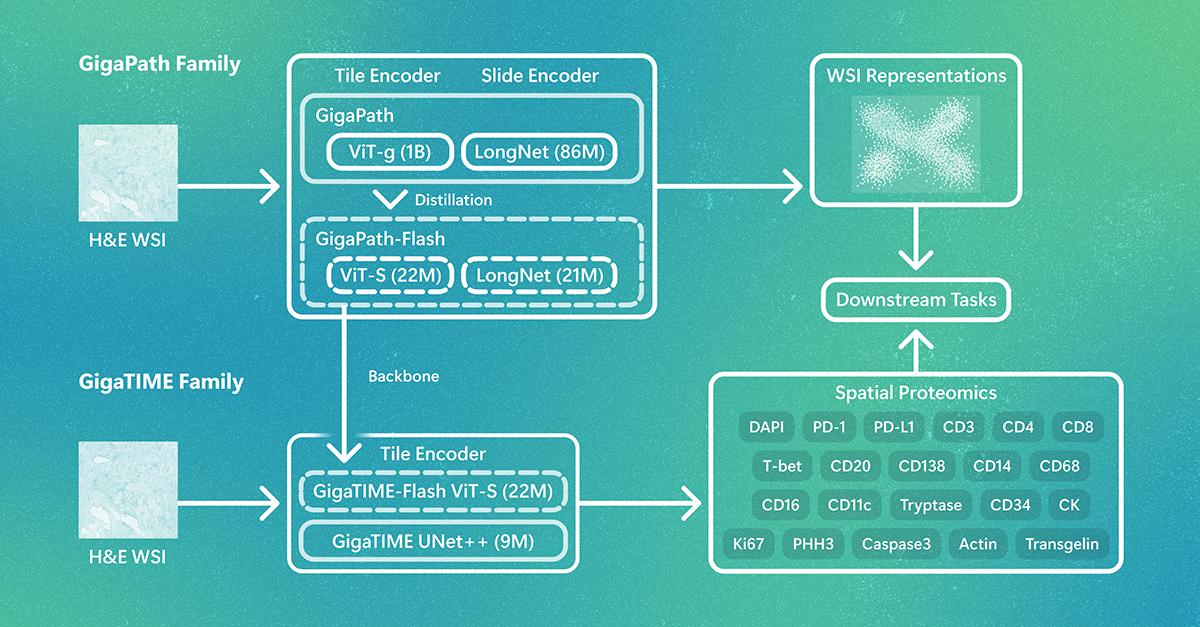
GigaPath-Flash and GigaTIME-Flash: Toward population-scale discovery with efficient pathology foundation models

What if pathology foundation models could do more with less? GigaPath-Flash and GigaTIME-Flash cut computational demands while maintaining strong performance, opening the door to larger studies and broader exploration. The post GigaPath-Flash and GigaTIME-Flash: Toward population-scale discovery with efficient pathology foundation models appeared first on Microsoft Research.

We use cookies to run the site and, with your consent, for analytics and to show ads. See our Cookie Policy.