Skip to content
#edge computing Open access

Cognitive Shell E: Hodge Decomposition of Causal Emergence– Spectral Triple Decomposition of Information Flow on Constraint Networks

Sep 2026 · Zenodo (CERN European Organization for Nuclear Research)

Abstract

The quantification of causal emergence faces a fundamental difficulty: how canmacroscopic causal power be identified in microscopic dynamics without falling intoa circular reliance on a presupposed coarse-graining strategy? In this paper, theconstraint network of a cognitive system is modelled as a simplicial complex, anddiscrete Hodge decomposition is introduced as an analytical tool to rigorously decompose the edge information flow into three orthogonal components: the gradientfield (corresponding to driving causal effects), the curl field (corresponding to cyclicfeedback structures), and the harmonic field (corresponding to global emergent patterns). Under the spectral definition (Definition 4.1), causal emergence manifestsas a sudden change in the harmonic energy proportion at a critical threshold of thespectral parameter (Corollary 4.1), while the strict equivalence between spectralevents and topological events is given by Theorem 4.1. This framework unifiesthe theory of effective information and the theory of integrated information on thesame spectral-analytic base, and provides a computable algorithmic pathway fordetecting critical points of emergence from observational data. On this basis, we introduce slow-scale operator dynamics, which closes the three links of directionality,estimation consistency, and dynamical origin of the spectral criterion, making thedetermination of causal emergence an operational spectral-event detection protocol.

View source

Similar papers

#computer vision Review Sep 2017

Agile Software Development Methods: Review and Analysis

This publication proposes a definition and a classification of agile software development approaches and analyses ten software development methods that can be characterized as being "agile" against the defined criterion.

P. Abrahamsson, O. Salo, Jussi Ronkainen et al. · 727 citations · ⚡54
#computer vision Jun 2008

The impact of agile practices on communication in software development

The study shows that agile practices improve both informal and formal communication, but indicates that, in larger development situations involving multiple external stakeholders, a mismatch of adequate communication mechanisms can sometimes even hinder the communication.

M. Pikkarainen, Jukka Haikara, O. Salo et al. · 401 citations · ⚡48
#machine learning Review Open access Oct 2014

Software development in startup companies: A systematic mapping study

The results indicate that software engineering work practices are chosen opportunistically, adapted and configured to provide value under the constrains imposed by the startup context.

Nicolò Paternoster, Carmine Giardino, M. Unterkalmsteiner et al. · 394 citations · ⚡54

Related blog posts

GPT-Lab Sep 17, 2026

Beyond Prompt Engineering: The Role of Tacit Knowledge in Software Engineering

AI is making software generation faster, but speed does not remove the need for expertise. As more work is delegated to AI, tacit knowledge may become one of the most important human advantages in software engineering. The post Beyond Prompt Engineering: The Role of Tacit Knowledge in Software Engineering appeared first on GPT-Lab.

Microsoft Research Blog Aug 31, 2026

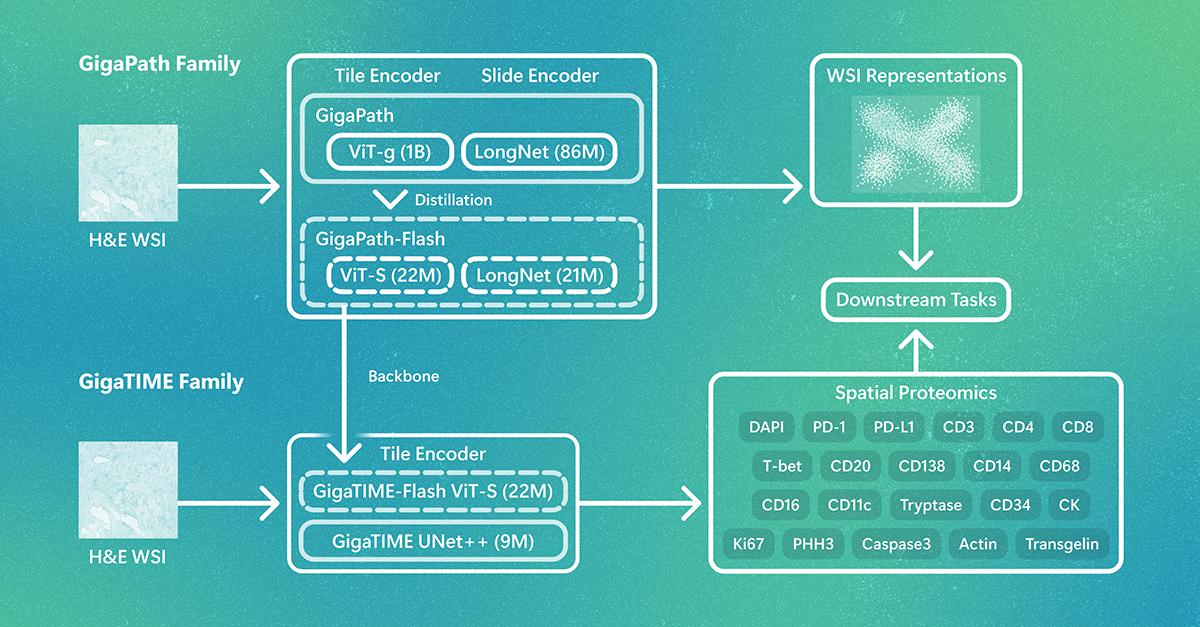
GigaPath-Flash and GigaTIME-Flash: Toward population-scale discovery with efficient pathology foundation models

What if pathology foundation models could do more with less? GigaPath-Flash and GigaTIME-Flash cut computational demands while maintaining strong performance, opening the door to larger studies and broader exploration. The post GigaPath-Flash and GigaTIME-Flash: Toward population-scale discovery with efficient pathology foundation models appeared first on Microsoft Research.

We use cookies to run the site and, with your consent, for analytics and to show ads. See our Cookie Policy.