Skip to content
#software testing Open access

Verification software for A Split-Graph Counterexample to a Roman–Double Roman Candidate Inequality

Sep 2026 · Figshare

Abstract

Offline, standard-library-only verification software accompanying Seth Christopher's preprint “A Split-Graph Counterexample to a Roman–Double Roman Candidate Inequality”. Version 1.0.0; source-only publication revision figshare.1. This item contains Roman_Double_Roman_Verification_Software_v1.0.0.zip, including the byte-preserved mathematical modules and original standalone verifier, a new strict-JSON wrapper, a new public process adapter, a bounded sequential replay instrument, and a separate LaTeX build driver. The software and its software-use documentation are offered under MIT to the extent applicable rights are held. The original full archives did not have a blanket MIT grant and are not redistributed here. Required companion inputsThe manuscript, exact inputs and research evidence are in the companion Preprint “A Split-Graph Counterexample to a Roman–Double Roman Candidate Inequality”, file Roman_Double_Roman_Manuscript_Source_and_Evidence_v1.0.0.zip, under CC BY 4.0. Merge the two extracted archives into their common Roman_Double_Roman_v1.0.0 directory. Their file paths do not overlap. ReproductionFrom the assembled directory run: python3 -I -S -B verification/check.py inputs/certificate.jsonFor the full bounded replay run: python3 -I -S -B reproduce.py --out ../roman_double_roman_replayUse a new external output directory. Expected replay status: SOURCE_ONLY_ROMAN_REPLAY_PASS. Full replay requires Linux and Python 3.10+; each serial child defaults to 60 wall seconds and 4 GiB address space. No network or model call is required. ScopeFresh public-source replay completed 15 bounded serial processes. The standalone check accepted the exact 15-vertex certificate, verified its upper witnesses and chordality, and exhausted all 42,129 Roman assignments of weight below seven and all 1,076,624 double Roman assignments of weight below ten. The original differential suite passed 1,323,108 assertions across 1,098 labeled graphs on two through five vertices, with 24 relabelings and nine deliberately invalid or unsupported certificates rejected by both production checkers. Additional protocol and strict-JSON rejections passed. These checks share authorship and are not independent peer review. No global priority, minimum-order counterexample, or proof-assistant-kernel certification is claimed. The public source generation is distinct from the original private-runtime generation. The host Python interpreter is not included in the protocol-generation hash. This source-only publication does not reproduce the private sandbox or claim confidential-read isolation. AI assistance: ChatGPT provided substantial assistance with question selection, the graph construction and proofs, source research, verification software, test execution, and manuscript preparation. Aurelia performed bounded candidate search; Selene checked adjacency-set and reduced-label obligations; Mica checked the full original label alphabets and freshly rechecked use. These are computational roles, not coauthors or independent peer reviewers. Seth Christopher initiated and directed the research programme and is the sole author responsible for the submitted content.


View source

Similar papers

#computer vision Review Sep 2017

Agile Software Development Methods: Review and Analysis

This publication proposes a definition and a classification of agile software development approaches and analyses ten software development methods that can be characterized as being "agile" against the defined criterion.

P. Abrahamsson, O. Salo, Jussi Ronkainen et al. · 727 citations · ⚡54
#computer vision Jun 2008

The impact of agile practices on communication in software development

The study shows that agile practices improve both informal and formal communication, but indicates that, in larger development situations involving multiple external stakeholders, a mismatch of adequate communication mechanisms can sometimes even hinder the communication.

M. Pikkarainen, Jukka Haikara, O. Salo et al. · 401 citations · ⚡48
#machine learning Review Open access Oct 2014

Software development in startup companies: A systematic mapping study

The results indicate that software engineering work practices are chosen opportunistically, adapted and configured to provide value under the constrains imposed by the startup context.

Nicolò Paternoster, Carmine Giardino, M. Unterkalmsteiner et al. · 394 citations · ⚡54
#computer vision Review Mar 2008

Agile methods in European embedded software development organisations: a survey on the actual use and usefulness of Extreme Programming and Scrum

The results show that the embedded industry has been able to apply agile methods in its development processes and that the appreciation of the agile methods and their individual practices appears to increase once adopted and applied in practice.

O. Salo, P. Abrahamsson · 238 citations · ⚡9
#computer vision Open access Jul 2017

What happens when software developers are (un)happy

Consequences of happiness and unhappiness that are beneficial and detrimental for developers' mental well-being, the software development process, and the produced artifacts are found.

D. Graziotin, Fabian Fagerholm, Xiaofeng Wang et al. · 236 citations · ⚡13
#computer vision Open access Oct 2004

Mobile-D: an agile approach for mobile application development

The Mobile-D approach is briefly outlined here and the experiences gained from four case studies are discussed, which helped develop an agile development approach for mobile application development.

P. Abrahamsson, Antti Hanhineva, H. Hulkko et al. · 225 citations · ⚡18

Related blog posts

GPT-Lab Sep 17, 2026

Beyond Prompt Engineering: The Role of Tacit Knowledge in Software Engineering

AI is making software generation faster, but speed does not remove the need for expertise. As more work is delegated to AI, tacit knowledge may become one of the most important human advantages in software engineering. The post Beyond Prompt Engineering: The Role of Tacit Knowledge in Software Engineering appeared first on GPT-Lab.

MIT News · Artificial Intelligence Aug 17, 2026

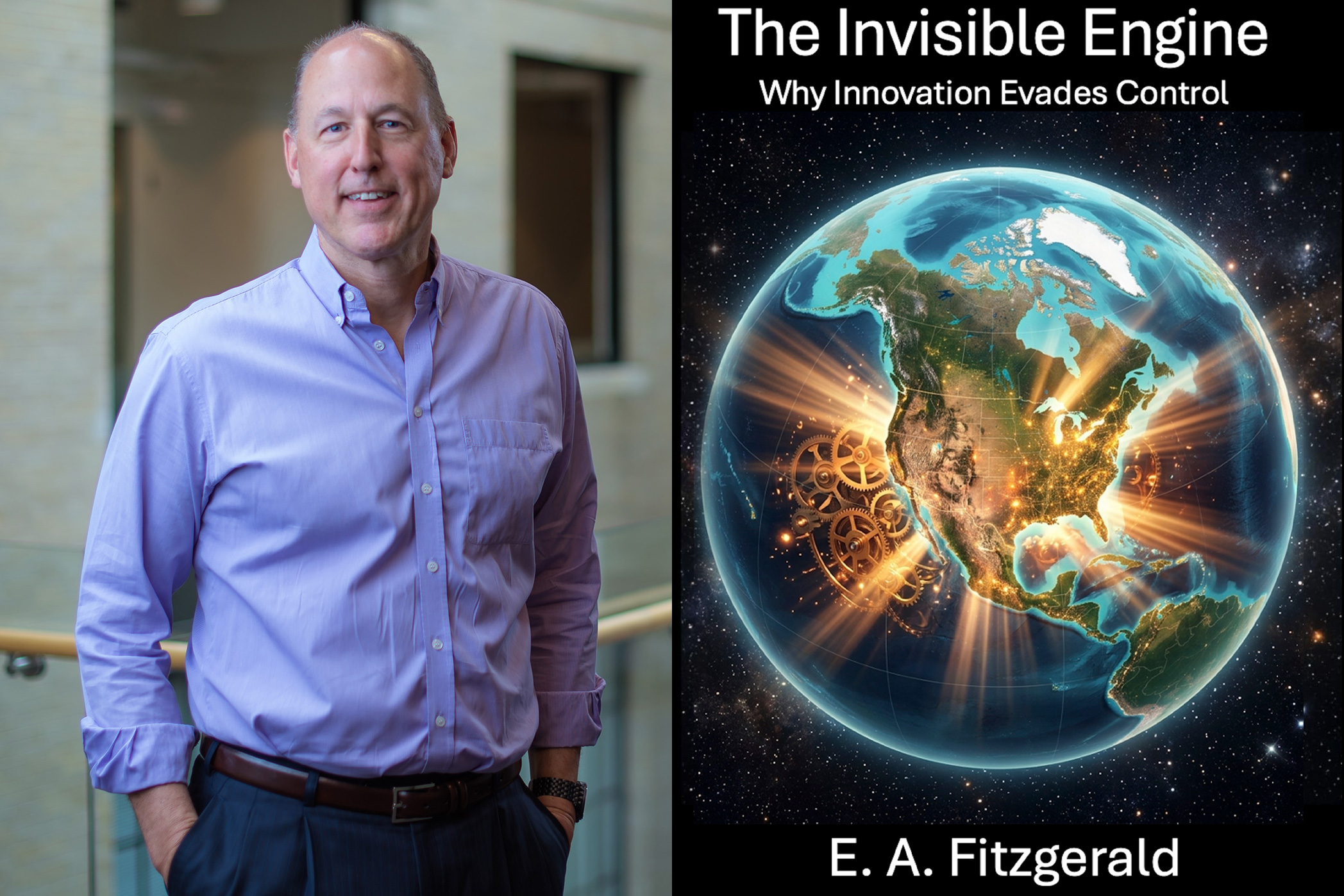
Q&A: Rethinking how innovation happens

In his latest book, Professor Eugene Fitzgerald examines the forces that turn breakthroughs into value — and why innovation resists simple formulas.

Microsoft Research Blog Aug 12, 2026

MindTopo reveals VLMs’ spatial reasoning abilities

A path, a fence, a knot. MindTopo sets a new benchmark for testing how AI understands topological relationships and highlights new opportunities to strengthen spatial reasoning and planning. The post MindTopo reveals VLMs’ spatial reasoning abilities appeared first on Microsoft Research.

We use cookies to run the site and, with your consent, for analytics and to show ads. See our Cookie Policy.