Skip to content
#software testing Open access

Execution Governance for Physical AI

Sep 2026 · Zenodo (CERN European Organization for Nuclear Research)

Abstract

Execution Governance for Physical AI v1.1.0 presents a cumulative EG1–EG6 research profile for governing consequential physical effects produced by robots, autonomous machines, smart spaces, vehicles, drones, industrial automation, and other cyber-physical systems. Physical AI moves AI-mediated decisions across a boundary where software can create real-world motion, contact, access, energy flow, equipment state changes, and other physical consequences. The central governance question is therefore not merely whether a system is capable, authenticated, safe, or permitted in a general sense, but whether this exact proposed physical effect possesses current authority to occur here and now — and whether that authority remains valid through commitment and execution. The profile applies the cumulative Execution Governance architecture across six layers: EG1 establishes the Six Conditions for current effect authority — Verified Mandate, Valid Constraints, Live-Context Integrity, Accountability, Reviewability, and Sufficient Verifiable Proof; EG2 places the governance decision before consequential effect; EG3 binds authorization to the exact effect commitment; EG4 preserves authority across heterogeneous Governed Effect Fabrics; EG5 governs material changes to the governance regime itself; and EG6 requires effect-dispositive claims to remain grounded to the correct referents, sources or procedures, semantics, temporal conditions, and uncertainty at commitment. A key contribution is a four-plane governed-execution architecture that keeps EG authority, deterministic enforcement, independent safety, and independent witnessing explicitly separate. A Physical AI effect may therefore be released only when current cumulative authority remains valid, the released command matches the authorized effect envelope, and the independent safety plane permits physical release. Safety does not create authority, and authority does not override safety. v1.1.0 also introduces governed physical-effect envelopes, Safe-Hold semantics, commitment and revocation continuity, grounding-dependency closure, threat and abuse cases, a machine-readable illustrative JSON profile, fifteen adversarial conformance vectors, an evidence-maturity ladder, and a vendor-neutral heavy AGV / autonomous-forklift reference-pilot baseline. The research profile is synchronized with the stronger September 2026 EG evidence frontier, including bounded machine-checked/runtime evidence for selected cumulative obligations, external reproduction of the common tested core across three separately controlled ARM edge environments, and a bounded lower-stack ESP32-S3 physical-effect HIL. These results are deliberately treated as inherited programme-level evidence, not as dedicated AGV, forklift, humanoid, real-vehicle, or production Physical AI validation. This publication is an independent research and pre-standardization profile. It is not a functional-safety case, certification scheme, conformity assessment, legal determination, patentability opinion, or claim of governance completeness. Dedicated Physical AI controller HIL, controlled real-device pilots, independent effect witnessing, external reconstruction, and multi-vendor interoperability remain future validation gates. Core proposition:Ability is not authority. Safety is not authority. Deterministic execution is not authority.For Physical AI, the relevant governance question is whether the exact system, under the current mandate, constraints, runtime, regime, grounding, and evidence, may commit the exact physical effect here and now — and whether another party can reconstruct why.


View source

Similar papers

#computer vision Review Sep 2017

Agile Software Development Methods: Review and Analysis

This publication proposes a definition and a classification of agile software development approaches and analyses ten software development methods that can be characterized as being "agile" against the defined criterion.

P. Abrahamsson, O. Salo, Jussi Ronkainen et al. · 727 citations · ⚡54
#computer vision Jun 2008

The impact of agile practices on communication in software development

The study shows that agile practices improve both informal and formal communication, but indicates that, in larger development situations involving multiple external stakeholders, a mismatch of adequate communication mechanisms can sometimes even hinder the communication.

M. Pikkarainen, Jukka Haikara, O. Salo et al. · 401 citations · ⚡48
#machine learning Review Open access Oct 2014

Software development in startup companies: A systematic mapping study

The results indicate that software engineering work practices are chosen opportunistically, adapted and configured to provide value under the constrains imposed by the startup context.

Nicolò Paternoster, Carmine Giardino, M. Unterkalmsteiner et al. · 394 citations · ⚡54
#computer vision Review Mar 2008

Agile methods in European embedded software development organisations: a survey on the actual use and usefulness of Extreme Programming and Scrum

The results show that the embedded industry has been able to apply agile methods in its development processes and that the appreciation of the agile methods and their individual practices appears to increase once adopted and applied in practice.

O. Salo, P. Abrahamsson · 238 citations · ⚡9
#computer vision Open access Jul 2017

What happens when software developers are (un)happy

Consequences of happiness and unhappiness that are beneficial and detrimental for developers' mental well-being, the software development process, and the produced artifacts are found.

D. Graziotin, Fabian Fagerholm, Xiaofeng Wang et al. · 236 citations · ⚡13
#computer vision Open access Oct 2004

Mobile-D: an agile approach for mobile application development

The Mobile-D approach is briefly outlined here and the experiences gained from four case studies are discussed, which helped develop an agile development approach for mobile application development.

P. Abrahamsson, Antti Hanhineva, H. Hulkko et al. · 225 citations · ⚡18

Related blog posts

GPT-Lab Sep 17, 2026

Beyond Prompt Engineering: The Role of Tacit Knowledge in Software Engineering

AI is making software generation faster, but speed does not remove the need for expertise. As more work is delegated to AI, tacit knowledge may become one of the most important human advantages in software engineering. The post Beyond Prompt Engineering: The Role of Tacit Knowledge in Software Engineering appeared first on GPT-Lab.

MIT News · Artificial Intelligence Aug 17, 2026

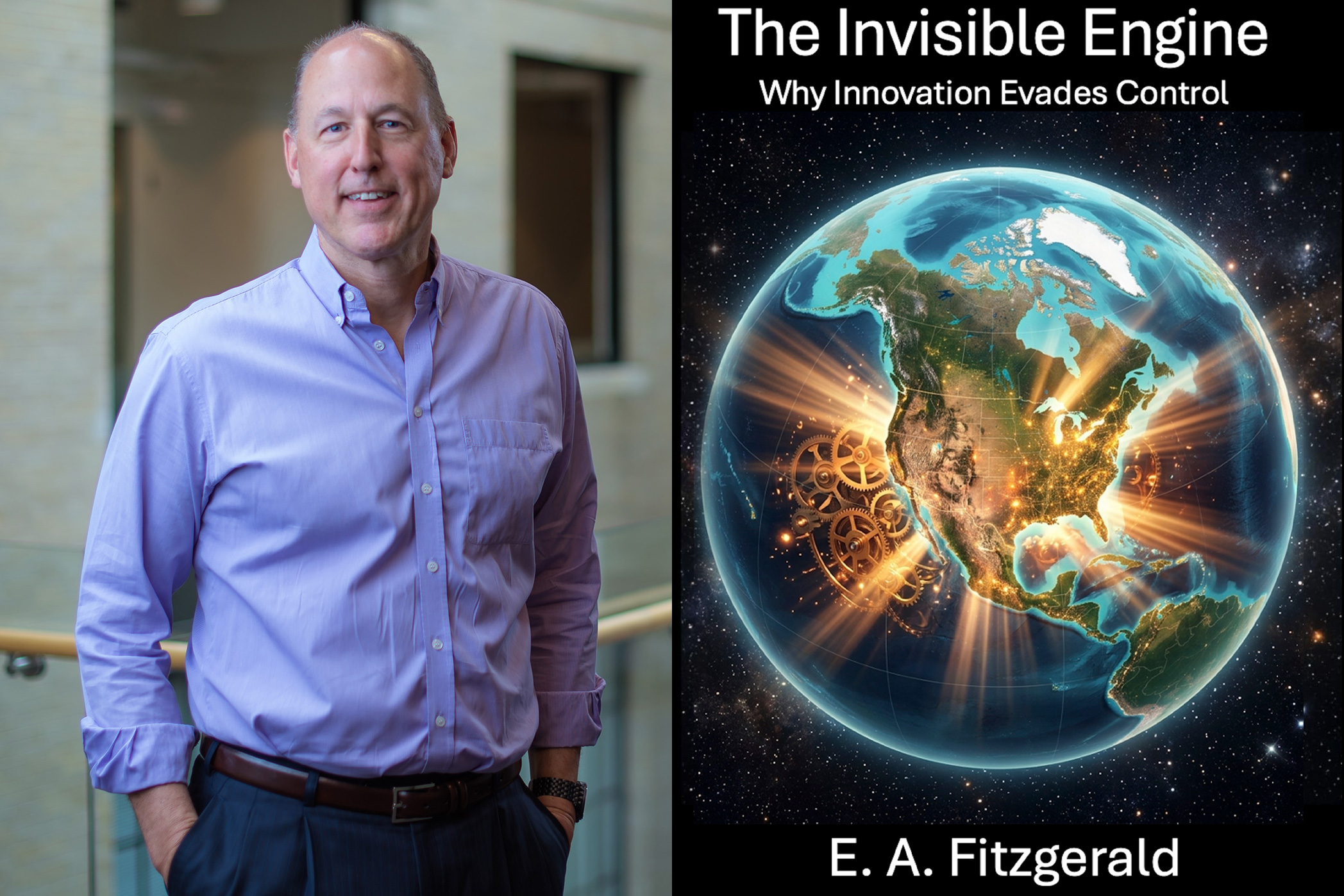
Q&A: Rethinking how innovation happens

In his latest book, Professor Eugene Fitzgerald examines the forces that turn breakthroughs into value — and why innovation resists simple formulas.

Microsoft Research Blog Aug 12, 2026

MindTopo reveals VLMs’ spatial reasoning abilities

A path, a fence, a knot. MindTopo sets a new benchmark for testing how AI understands topological relationships and highlights new opportunities to strengthen spatial reasoning and planning. The post MindTopo reveals VLMs’ spatial reasoning abilities appeared first on Microsoft Research.

We use cookies to run the site and, with your consent, for analytics and to show ads. See our Cookie Policy.