Time-Frequency Geometric Cross-Attention for Chunked Vision-Language-Action Models
Shengye DongHaochen NiuHao LiuPeiwen LinChuang WangShanmin Pang
Sep 2026
Artificial IntelligenceRobotics
Abstract
Modern vision-language-action (VLA) policies predict a whole chunk of actions: one to two seconds of coordinated motion emitted in a single forward pass. Yet an action chunk is essentially a short multivariate trajectory, but inside these models it is a sequence of generic per-timestep hidden tokens decoded by a linear head. This under-serves two motion structures. First, frequency: a chunk superimposes a smooth global trend and fine corrective motion across time scales, and a single token entangles them. Second, cross-phase geometry: motions of different phases (reach, contact, grasp adjustment, settling) unfold along very different, near-orthogonal directions in representation space, yet are tightly related for the task and arise across the time axis. Dot-product attention scores alignment by an inner product, so it favors aligned tokens and is least sensitive near orthogonality, leaving such relationships for the network to recover through a detour.
We introduce Time-Frequency Geometric Cross-Attention (TFGCA), a drop-in module repairing both blind spots. TFGCA uses a per-dimension learnable stationary wavelet transform to decompose the action chunk into time-frequency tokens, and each time token retrieves information from them via a cross-attention that fuses the dot product (similarity) with the wedge-product magnitude (sensitive to near-orthogonality) through a learnable weight. A zero-initialized residual reproduces the base behavior at initialization, so it can be dropped onto a pretrained VLA and fine-tuned jointly. Relative to the same-source base, TFGCA improves in-distribution LIBERO by +1.5 on average, the OOD LIBERO-Plus by +6.3, the randomized average under RoboTwin domain randomization by +28.5, and the overall success rate on three real-robot AgiBot A2 tasks by +11.67 points, with larger gains out of distribution.

GAOKAO-Bench is introduced, an intuitive benchmark that employs questions from the Chinese GAOKAO examination as test samples, including both subjective and objective questions that contribute a robust evaluation benchmark for future large language models and offers valuable insights into the advantages and limitations of such models.
Xiaotian Zhang, Chun-yan Li, Yi Zong et al.· arXiv.org· 216 citations· ⚡17
This work investigates the possibilities of using LLMs in a resume screening setting via a document retrieval framework that simulates job candidate selection and finds that the MTEs are biased, significantly favoring White-associated names in 85% of cases and female-associated names in only 11.1% of cases.
Empirically, PRISM reduces the end-to-end time for data selection and model tuning to just 30% of conventional pipelines, and achieves this efficiency while simultaneously enhancing performance, surpassing models fine-tuned on the full dataset across eight multimodal and three language understanding benchmarks.
Jinhe Bi, Yifan Wang, Danqi Yan et al.· arXiv.org· 73 citations· ⚡4
The method, ECCOLA, is presented, which aims at making the high-level AI ethics principles more practical, making it possible for developers to more easily implement them in practice.
Ville Vakkuri, Kai-Kristian Kemell, P. Abrahamsson· EUROMICRO Conference on Soft...· 64 citations· ⚡6
This paper designs Markov decision processes (MDPs) for different combinatorial problems and proposes to train conditional GFlowNets to sample from the solution space and demonstrates that GFlowNet policies can efficiently find high-quality solutions.
Dinghuai Zhang, H. Dai, Esmeralda S. Whitammer et al.· Advances in Neural Informati...· 59 citations· ⚡8
An empirical study on the current state of practice in artificial intelligence ethics is conducted by means of a multiple case study of five case companies, which indicates a gap between research and practice in the area.
Ville Vakkuri, Kai-Kristian Kemell, Joni Kultanen et al.· arXiv.org· 56 citations· ⚡6
Related blog posts
MIT News · Artificial Intelligence· news.mit.eduJul 30, 2026
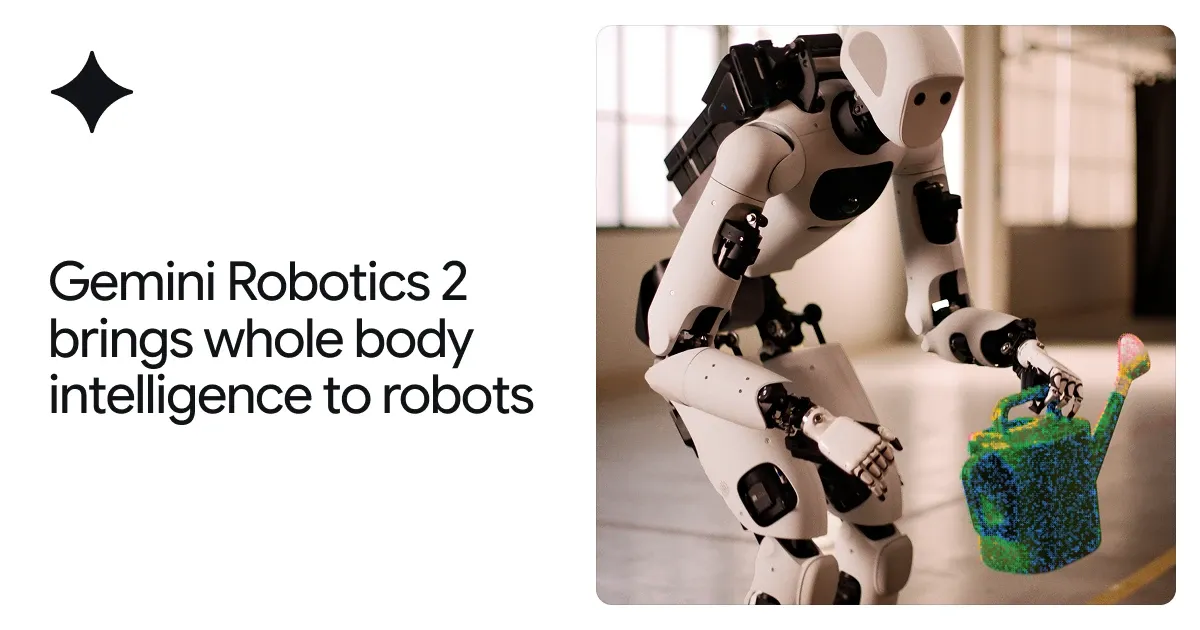
From feet to fingertips — we are teaching robots intelligent whole-body control, fine dexterity, and teamwork to complete a broad range of complex tasks.