Skip to content
#edge computing Open access

cellcheck

Sep 2026 · Zenodo (CERN European Organization for Nuclear Research)

Abstract

First public release. cellcheck reads the lattice parameters of a crystal structure and reports whether its unit cell satisfies the minimum-image convention for a given interaction cutoff, and if not, along which axis and by how much. What it does Computes true perpendicular widths (V / |a_j × a_k|), not edge lengths. In oblique cells the edges overstate clearance: IRMOF-74-V has 39.87 Å edges but faces only 34.5 Å apart at α = 60.3°. Reports the per-axis replication n_i = ceil(2 r_c / w_i), the total replication m, and the worst-axis replication n_max. Returns a verdict: compliant / acceptable for ranking / recompute (with the uptake-error band observed for that stratum in the accompanying audit). Emits UnitCells lines ready to paste into RASPA inputs (--raspa). CSV and JSON output for screening whole libraries. Why n_max and not m Minimum-image violation fails independently along each lattice direction, so the error tracks the worst single axis, not the total number of cells. A framework needing 4×1×1 is as badly biased as one needing 4×3×3 and costs a ninth as much to fix. Rod-SBU frameworks (MOF-74, the IRMOF-74 series) fail systematically: their metal–oxygen chain fixes one lattice repeat near 6.5 Å however large the pores become. Usage python cellcheck.py structure.cif python cellcheck.py *.cif --cutoff 12.8 python cellcheck.py --cell 6.4618 39.8715 39.8715 60.2892 86.9032 93.0968 python cellcheck.py *.cif --raspa python cellcheck.py *.cif --format csv Requirements Python 3.8+. No dependencies beyond the standard library. Notes The error bands attached to each verdict are observed values from an audit of 85 CoRE MOF 2019 frameworks (H2, 77 K, 12 Å cutoff, dispersion-only) and are reported as measurements, not as guarantees; the geometry itself is exact. Accompanying manuscript in submission - reference and DOI to follow in a patch release.

View source

Similar papers

#computer vision Review Sep 2017

Agile Software Development Methods: Review and Analysis

This publication proposes a definition and a classification of agile software development approaches and analyses ten software development methods that can be characterized as being "agile" against the defined criterion.

P. Abrahamsson, O. Salo, Jussi Ronkainen et al. · 727 citations · ⚡54
#computer vision Jun 2008

The impact of agile practices on communication in software development

The study shows that agile practices improve both informal and formal communication, but indicates that, in larger development situations involving multiple external stakeholders, a mismatch of adequate communication mechanisms can sometimes even hinder the communication.

M. Pikkarainen, Jukka Haikara, O. Salo et al. · 401 citations · ⚡48
#machine learning Review Open access Oct 2014

Software development in startup companies: A systematic mapping study

The results indicate that software engineering work practices are chosen opportunistically, adapted and configured to provide value under the constrains imposed by the startup context.

Nicolò Paternoster, Carmine Giardino, M. Unterkalmsteiner et al. · 394 citations · ⚡54

Related blog posts

GPT-Lab Sep 17, 2026

Beyond Prompt Engineering: The Role of Tacit Knowledge in Software Engineering

AI is making software generation faster, but speed does not remove the need for expertise. As more work is delegated to AI, tacit knowledge may become one of the most important human advantages in software engineering. The post Beyond Prompt Engineering: The Role of Tacit Knowledge in Software Engineering appeared first on GPT-Lab.

Microsoft Research Blog Aug 31, 2026

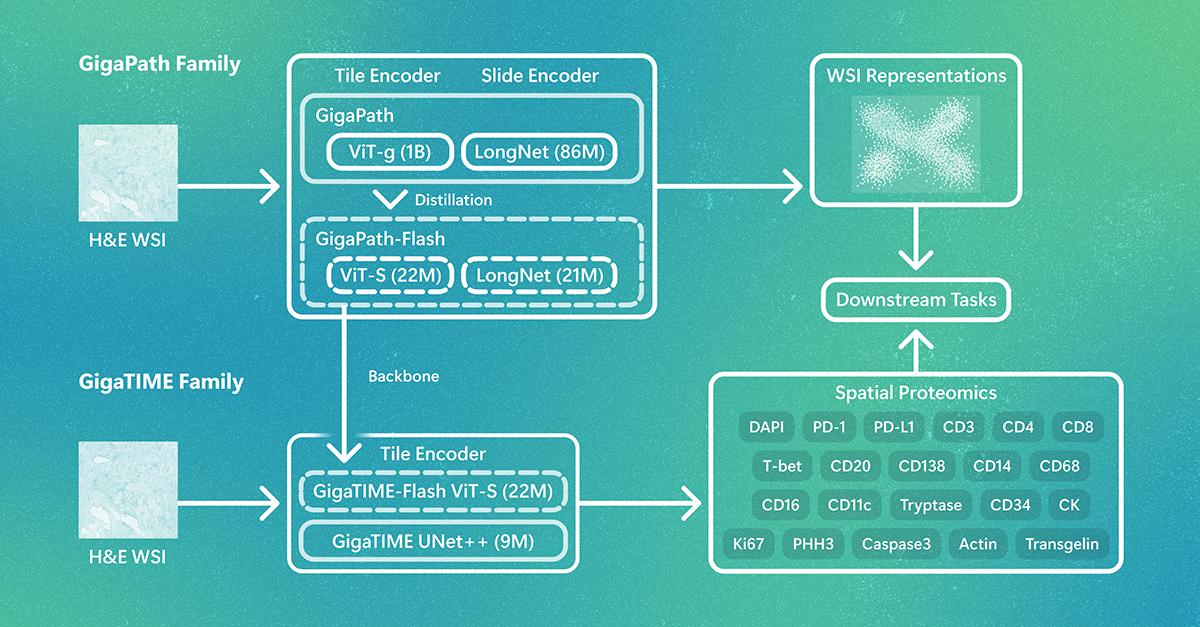
GigaPath-Flash and GigaTIME-Flash: Toward population-scale discovery with efficient pathology foundation models

What if pathology foundation models could do more with less? GigaPath-Flash and GigaTIME-Flash cut computational demands while maintaining strong performance, opening the door to larger studies and broader exploration. The post GigaPath-Flash and GigaTIME-Flash: Toward population-scale discovery with efficient pathology foundation models appeared first on Microsoft Research.

We use cookies to run the site and, with your consent, for analytics and to show ads. See our Cookie Policy.