Skip to content
#edge computing Open access

Theoretical instability strips of γ-Doradus stars including the effect of the metallicity and rotation

Sep 2026 · Astronomy & Astrophysics · 0 citations
Stellar, planetary, and galactic studies

Abstract

Recent space missions such as have provided large-scale observations of the γ-Doradus instability strips (IS), which can be used to constrain models and explore their limitations. One persistent limitation is the prediction of the blue edge of the γ-Doradus IS, where a significant number of γ-Doradus stars are observed. Despite these observational advances, no systematic study has explored the effects of different physical processes on the γ-Doradus IS. Kepler Our aim is to systematically explore the theoretical γ-Doradus IS with modern tools, accounting for the effects of rotation and metallicity, and providing a large grid of models and their oscillation parameters for the scientific community. We investigated the non-adiabatic pulsation properties of stars in a grid of stellar models with masses between 1.35,M_⊙ and 2.5,M_⊙, metallicities between Z=0.01 and Z=0.025, and solid-body rotation rates ranging from Ω=0 to crit , where Ω_ crit denotes the critical rotation rate. We find that, across all computations, the theoretical γ-Doradus IS agrees well with the observed IS, except in the extended blue region. In terms of radial orders, our models consistently reproduce excited modes in broad agreement with observations for the ell=1, ell=2, and Rossby modes. We also show that the range of excited radial orders is strongly dependent on the effective temperature. The range of excited radial orders can be used to constrain the position of a star within the γ-Doradus IS and may provide insight into the physical mechanisms responsible for the discrepancies observed in the blue region. We have made all computed grids available, including those containing mode damping and growth rates for γ-Doradus stars calculated using a time-dependent treatment of the convection–oscillation interaction.

Read PDF

Similar papers

#computer vision Review Sep 2017

Agile Software Development Methods: Review and Analysis

This publication proposes a definition and a classification of agile software development approaches and analyses ten software development methods that can be characterized as being "agile" against the defined criterion.

P. Abrahamsson, O. Salo, Jussi Ronkainen et al. · 727 citations · ⚡54
#computer vision Jun 2008

The impact of agile practices on communication in software development

The study shows that agile practices improve both informal and formal communication, but indicates that, in larger development situations involving multiple external stakeholders, a mismatch of adequate communication mechanisms can sometimes even hinder the communication.

M. Pikkarainen, Jukka Haikara, O. Salo et al. · 401 citations · ⚡48
#machine learning Review Open access Oct 2014

Software development in startup companies: A systematic mapping study

The results indicate that software engineering work practices are chosen opportunistically, adapted and configured to provide value under the constrains imposed by the startup context.

Nicolò Paternoster, Carmine Giardino, M. Unterkalmsteiner et al. · 394 citations · ⚡54

Related blog posts

GPT-Lab Sep 17, 2026

Beyond Prompt Engineering: The Role of Tacit Knowledge in Software Engineering

AI is making software generation faster, but speed does not remove the need for expertise. As more work is delegated to AI, tacit knowledge may become one of the most important human advantages in software engineering. The post Beyond Prompt Engineering: The Role of Tacit Knowledge in Software Engineering appeared first on GPT-Lab.

Microsoft Research Blog Aug 31, 2026

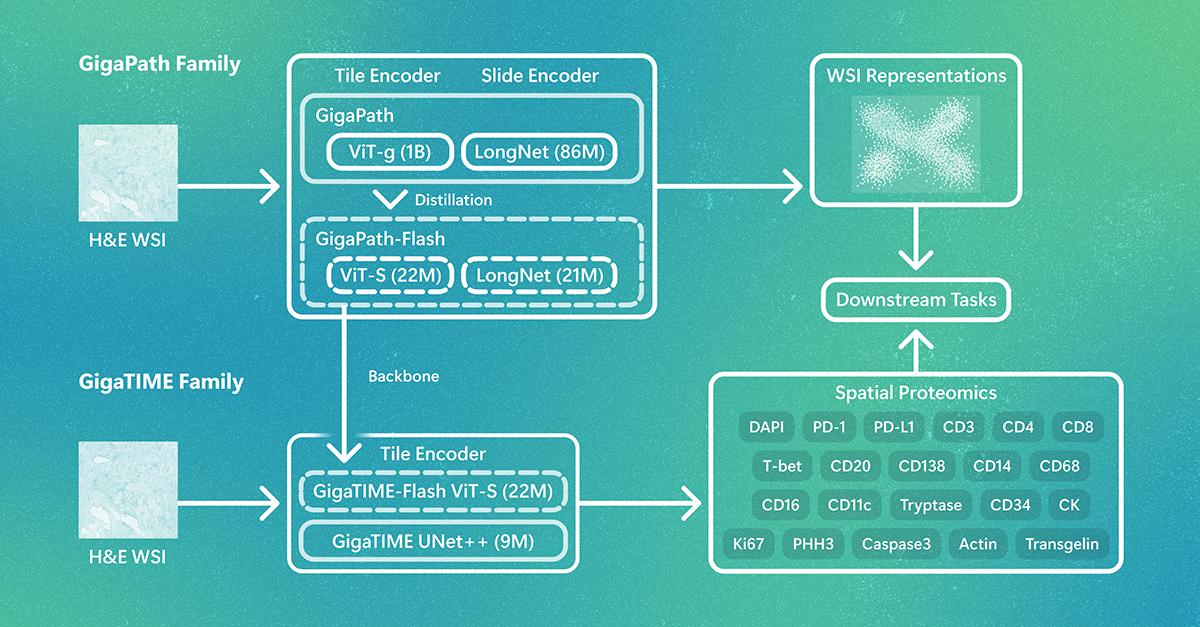
GigaPath-Flash and GigaTIME-Flash: Toward population-scale discovery with efficient pathology foundation models

What if pathology foundation models could do more with less? GigaPath-Flash and GigaTIME-Flash cut computational demands while maintaining strong performance, opening the door to larger studies and broader exploration. The post GigaPath-Flash and GigaTIME-Flash: Toward population-scale discovery with efficient pathology foundation models appeared first on Microsoft Research.

We use cookies to run the site and, with your consent, for analytics and to show ads. See our Cookie Policy.