Skip to content
#software testing Open access

PENGARUH PENGGUNAAN MEDIA PEMBELAJARAN INTERAKTIF BERBASIS AR (AUGMENTED REALITY) TERHADAP KETERAMPILAN PROSES SAINS (KPS) PESERTA DIDIK SMA MUHAMMADIYAH MAUMERE MATERI ASAM BASA

Sep 2026 · SCIENCE Jurnal Inovasi Pendidikan Matematika dan IPA

Abstract

The rapid development of Industry 4.0 technology demands a transformation in chemistry learning media from passive printed materials to interactive three-dimensional visualisations to optimize students' Science Process Skills (SPS). This study aims to analyze the impact of the effective use of AR-based interactive learning media on the improvement of students' Science Process Skills regarding acid-base concepts. This study employed a quantitative approach using an experimental design with a one-group pretest-posttest design, involving 18 11th-grade MIPA students at Muhammadiyah Maumere High School. Data were collected through SPS essay tests, practical observation sheets, and student response questionnaires, which were analyzed using Shapiro-Wilk normality tests, paired sample t-tests, and N-Gain calculations with the assistance of IBM SPSS Statistics 22 software. The results indicated a significant increase in students' SPS after implementing AR media, as evidenced by a significance value of p=0.000<0.05 and an increase in the mean score from 60.56 (pretest) to 81.94 (posttest). This improvement in microscopic visual concept understanding was categorized as moderate, with a mean N-Gain value of 0.544 (54.44%). Thus, it can be concluded that the use of AR-based interactive learning media is effective in significantly improving students' science process skills in acid-base materials. ABSTRAK Perkembangan pesat teknologi Revolusi Industri 4.0 menuntut transformasi media pembelajaran kimia dari sistem cetak pasif menuju visualisasi interaktif tiga dimensi untuk mengoptimalkan Keterampilan Proses Sains (KPS) peserta didik. Penelitian ini bertujuan untuk menganalisis pengaruh keefektifan pemanfaatan media pembelajaran interaktif berbasis Augmented Reality (AR) terhadap peningkatan KPS peserta didik pada materi asam basa. Penelitian ini menggunakan pendekatan kuantitatif dengan jenis eksperimen semu (quasi-experimental) dan desain one-group pretest-posttest design, melibatkan 18 peserta didik kelas XI MIPA SMA Muhammadiyah Maumere. Data dikumpulkan melalui instrumen tes uraian KPS, lembar observasi praktikum, dan angket respon, kemudian dianalisis menggunakan uji normalitas Shapiro-Wilk, paired sample t-test, dan perhitungan N-Gain dengan bantuan software IBM SPSS Statistics 22. Hasil penelitian menunjukkan peningkatan signifikan pada KPS peserta didik setelah penerapan media AR, yang ditunjukkan oleh nilai signifikansi p=0,000<0,05 dan kenaikan rerata skor dari 60,56 (pretest) menjadi 81,94 (posttest). Peningkatan pemahaman konsep visual mikroskopis ini dikategorikan sedang dengan nilai rata-rata N-Gain sebesar 0,544 (54,44%). Dengan demikian, dapat disimpulkan bahwa penggunaan media pembelajaran interaktif berbasis AR berpengaruh positif dan signifikan dalam meningkatkan KPS peserta didik pada materi asam basa.


Read PDF

Similar papers

#computer vision Review Sep 2017

Agile Software Development Methods: Review and Analysis

This publication proposes a definition and a classification of agile software development approaches and analyses ten software development methods that can be characterized as being "agile" against the defined criterion.

P. Abrahamsson, O. Salo, Jussi Ronkainen et al. · 727 citations · ⚡54
#computer vision Jun 2008

The impact of agile practices on communication in software development

The study shows that agile practices improve both informal and formal communication, but indicates that, in larger development situations involving multiple external stakeholders, a mismatch of adequate communication mechanisms can sometimes even hinder the communication.

M. Pikkarainen, Jukka Haikara, O. Salo et al. · 401 citations · ⚡48
#machine learning Review Open access Oct 2014

Software development in startup companies: A systematic mapping study

The results indicate that software engineering work practices are chosen opportunistically, adapted and configured to provide value under the constrains imposed by the startup context.

Nicolò Paternoster, Carmine Giardino, M. Unterkalmsteiner et al. · 394 citations · ⚡54
#computer vision Review Mar 2008

Agile methods in European embedded software development organisations: a survey on the actual use and usefulness of Extreme Programming and Scrum

The results show that the embedded industry has been able to apply agile methods in its development processes and that the appreciation of the agile methods and their individual practices appears to increase once adopted and applied in practice.

O. Salo, P. Abrahamsson · 238 citations · ⚡9
#computer vision Open access Jul 2017

What happens when software developers are (un)happy

Consequences of happiness and unhappiness that are beneficial and detrimental for developers' mental well-being, the software development process, and the produced artifacts are found.

D. Graziotin, Fabian Fagerholm, Xiaofeng Wang et al. · 236 citations · ⚡13
#computer vision Open access Oct 2004

Mobile-D: an agile approach for mobile application development

The Mobile-D approach is briefly outlined here and the experiences gained from four case studies are discussed, which helped develop an agile development approach for mobile application development.

P. Abrahamsson, Antti Hanhineva, H. Hulkko et al. · 225 citations · ⚡18

Related blog posts

GPT-Lab Sep 17, 2026

Beyond Prompt Engineering: The Role of Tacit Knowledge in Software Engineering

AI is making software generation faster, but speed does not remove the need for expertise. As more work is delegated to AI, tacit knowledge may become one of the most important human advantages in software engineering. The post Beyond Prompt Engineering: The Role of Tacit Knowledge in Software Engineering appeared first on GPT-Lab.

MIT News · Artificial Intelligence Aug 17, 2026

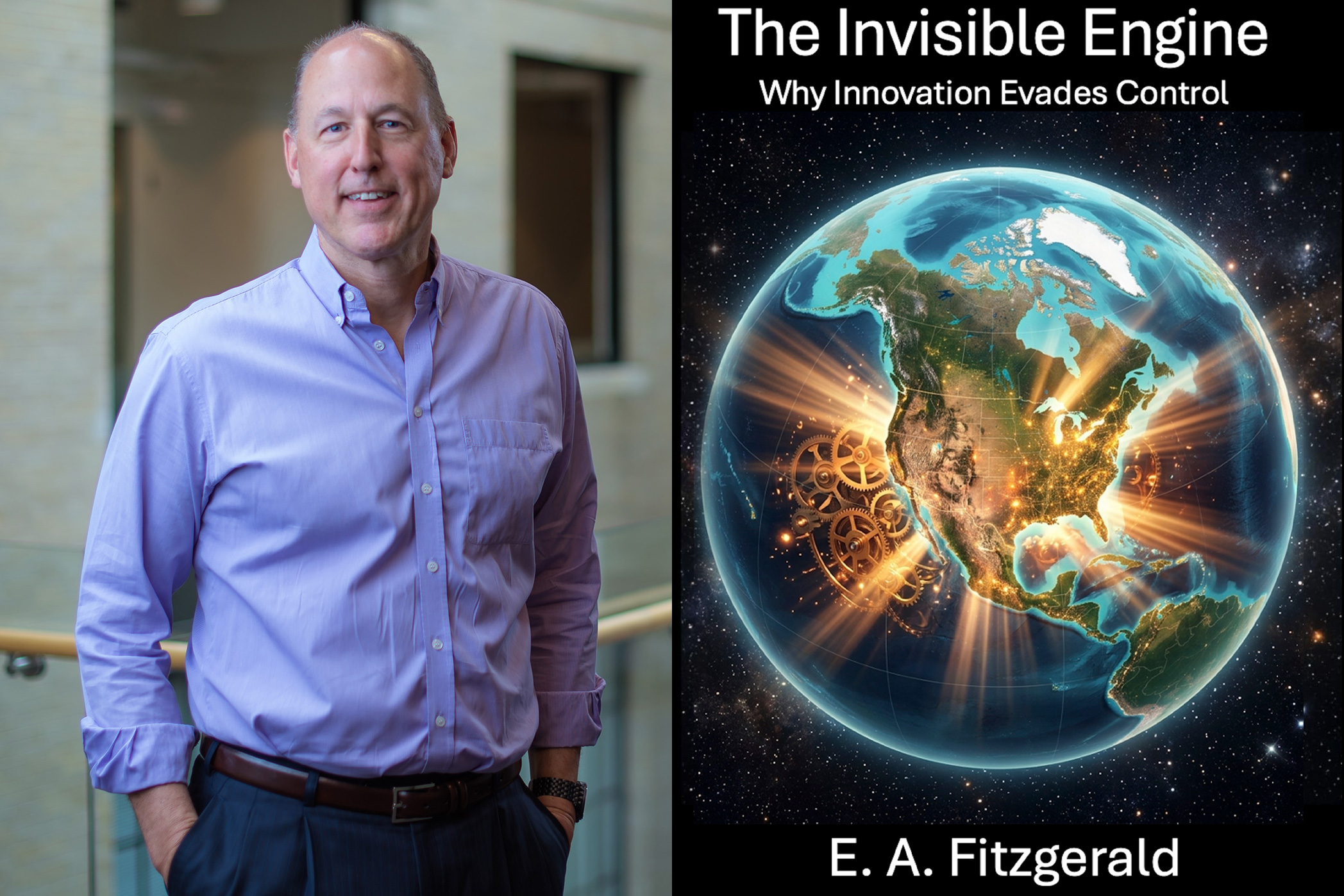
Q&A: Rethinking how innovation happens

In his latest book, Professor Eugene Fitzgerald examines the forces that turn breakthroughs into value — and why innovation resists simple formulas.

Microsoft Research Blog Aug 12, 2026

MindTopo reveals VLMs’ spatial reasoning abilities

A path, a fence, a knot. MindTopo sets a new benchmark for testing how AI understands topological relationships and highlights new opportunities to strengthen spatial reasoning and planning. The post MindTopo reveals VLMs’ spatial reasoning abilities appeared first on Microsoft Research.

We use cookies to run the site and, with your consent, for analytics and to show ads. See our Cookie Policy.