Based on findings, authoring environments should consider the context of scientific work aspects such as domain expertise, collaboration culture, and publication traditions, and examine ways of meaningfully integrating AI.
Abstract
We report on a case study for designing authoring environments for interactive visualizations to enhance scientific work. We conducted a workshop and prototype review with a group of marine biologists. When it came to visualizing their data, participants identified challenges in conveying their research accurately and completely as well as and analyzing it with ease. Based on our findings, authoring environments should consider the context of scientific work aspects such as domain expertise, collaboration culture, and publication traditions. We propose consideration of non-traditional programming languages and environments for scientific work, discuss ways of facilitating interactive visualizations for scientists, and examine ways of meaningfully integrating AI. The critiques, artifacts, and reactions from the scientists along with our analysis and discussion inform how computational tools should be designed for scientific work.
We present CARE-HCI, an interactive visualisation tool built to support literature exploration, stemming from the needs during our own review process. By integrating paper data and citation relationships with timeline and graph-based overviews, it offers researchers an intuitive way to visually navigate and make sense...
Zi-Xuan Wang, Sheng-Chen Zhang, Xin-Huan Shu· Adjunct Proceedings of the 1...· 0 citations
This paper investigates the challenges faced by independent publishing professionals as they collaborate on multiformat books. We ran four structured participatory design sessions with 16 professionals to collect detailed examples of how they appropriate their specialised but isolated authoring tools, and negotiate the...
Yann Trividic, Camille Gobert, M. Beaudouin-Lafon et al.· Proceedings of the ACM on Hu...· 0 citations
These findings show that Vis designers actively use LLMs for both creative and technical aspects of the visualization process, and opens up opportunities for research combining LLM-mediated work with Vis tools that incorporate data visualization guidance, constraints, and best practices.
S. Spivak, Aditi Krishna, Mahsan Nourani et al.· IEEE Computer Graphics and A...· 0 citations
This experience report describes the formation of Research in Editing and Publishing (REAP), a new academic organization for scholars, teachers, and practitioners of editing and publishing (E&P). Because E&P programs are scattered across many disciplines, opportunities to share research and develop a shared disciplinar...
Shelton Weech, H. Baker, R. Bryson et al.· Proceedings of the 44th ACM...· 0 citations
Data visualizations are vital for communication and decision-making, yet accessibility barriers limit their effectiveness for people with disabilities. While earlier literature reviews examined Human-Computer Interaction (HCI) research on visualization accessibility, there has not been an analysis that accounts for rec...
Saad Hassan, Areen Khalaila, Dylan Cashman et al.· Proceedings of the 2026 28th...· 0 citations
Related blog posts
MIT News · Artificial Intelligence· news.mit.eduOct 28, 2026
Professor Paris Smaragdis develops computers with superhuman hearing for applications like speech recognition, music understanding, and environmental monitoring.
MIT News · Artificial Intelligence· news.mit.eduOct 23, 2026
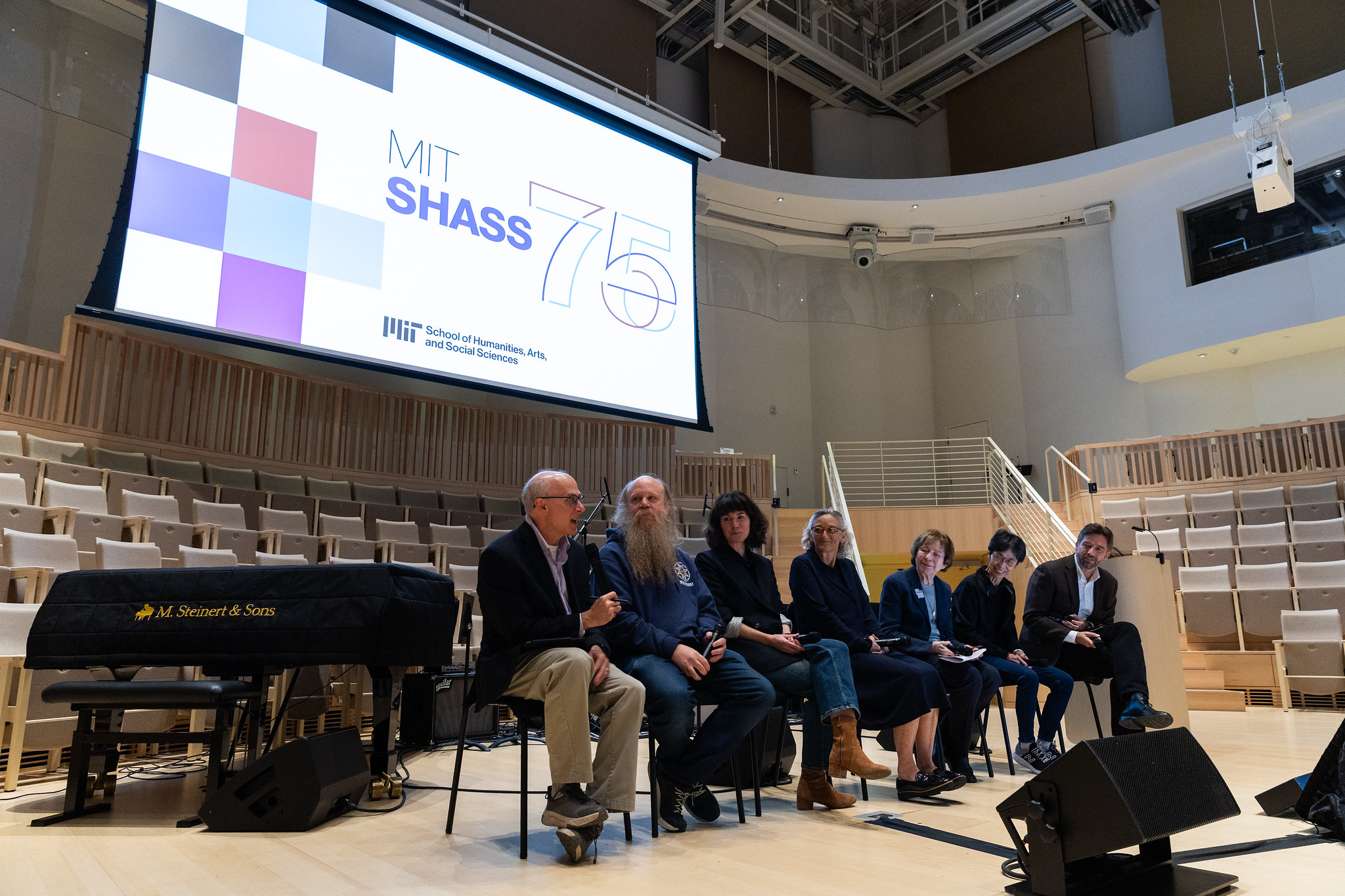
During the School of Humanities, Arts, and Social Sciences’ 75th Anniversary Symposium, President Sally Kornbluth said “MIT has never needed your particular insight and guidance more than we do now.”
MIT News · Artificial Intelligence· news.mit.eduOct 23, 2026
Assistant Professor Benjamin Lindquist studies how engineers deliberately injected randomness into early AI, giving rise to deep-learning models that sometimes hallucinate.
MIT News · Artificial Intelligence· news.mit.eduOct 22, 2026
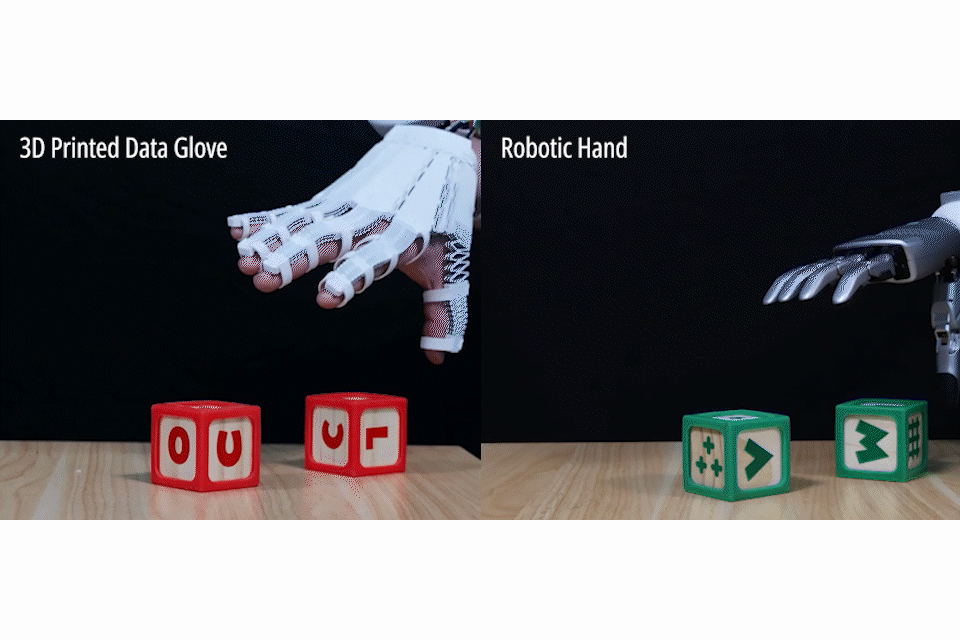
“X-Hinges” helps design and 3D print items like lamps and gloves with an interactive twist: automatically embedded sensors that perceive and adaptively respond to human contact.
We use cookies to run the site and, with your consent, for analytics and to show ads.
See our Cookie Policy.