Judicial judgments are increasingly available, yet dense language and distributed relationships among facts, evidence, reasoning, and rulings remain difficult for non-experts to interpret. Through a mixed-methods formative study with Chinese non-expert readers (survey N=34; interviews N=6), we identified structural, interpretive, verification, and action breakdowns. We developed JudgmentLens, an AI-augmented reading system combining persistent case representations, adaptive explanations, and traceable links from generated interpretations to judgment passages. In a counterbalanced within-subject evaluation (N=16), participants completed tasks faster with JudgmentLens than with conventional PDF reading and reported lower workload and greater self-reported decision understanding, while rubric-scored comprehension did not differ reliably. An exploratory PDF+DeepSeek probe suggested that conversational AI supported formulated questions while leaving question formulation, answer integration, and source checking largely to users. We contribute an empirical account of non-expert judgment sensemaking and design strategies for inspectable, source-grounded AI mediation.
This study studies how large language model (LLM)-powered chatbots respond to series of questions about legal reasonableness, and suggests that chatbot responses generally track those of human participants.
Nirav Patel, Emily Wenger, C. Buccafusco· Proceedings of the AAAI/ACM...· 0 citations
Large Language Models (LLMs) are entering democratic contexts as instruments of governance, where the challenges at hand are ill-structured, marked by ambiguity and contestation. Ill-structured democratic problems demand more than factual precision; they call for intersubjective reasoning: context-sensitive judgments t...
F. Veri, Gustavo Kreia Umbelino· Proceedings of the National...· 0 citations
Large language models (LLMs) are increasingly deployed in settings that require collective reasoning on complex, value-laden problems. Confidence in these deployments rests largely on benchmarks for verifiable tasks (mathematics, coding, coordination games), yet many of these applications concern problems where no obje...
Maurice Flechtner· Proceedings of the AAAI/ACM...· 2 citations
The results suggest that development-set performance is insufficient evidence for deployment validity on a shifted distribution, and that point-estimate judges can obscure the heterogeneity in subjective human evaluation.
Rui-Chen Zheng, Yi-He Wang, Fabrice Y. Harel-Canada et al.· 0 citations
This work operationalizes the importance of a reasoning step as its advantage: the change in expected reward, e.g., producing the correct final answer, from including that step, estimated via Monte Carlo rollouts, and evaluates whether LLM judges can identify high-advantage steps and finds that sufficiently capable LLM...
Kevin Du, A. Hoyle, L. Ruis et al.· 1 citation
Related blog posts
MIT News · Artificial Intelligence· news.mit.eduOct 28, 2026
Professor Paris Smaragdis develops computers with superhuman hearing for applications like speech recognition, music understanding, and environmental monitoring.
MIT News · Artificial Intelligence· news.mit.eduOct 23, 2026
During the School of Humanities, Arts, and Social Sciences’ 75th Anniversary Symposium, President Sally Kornbluth said “MIT has never needed your particular insight and guidance more than we do now.”
MIT News · Artificial Intelligence· news.mit.eduOct 23, 2026
Assistant Professor Benjamin Lindquist studies how engineers deliberately injected randomness into early AI, giving rise to deep-learning models that sometimes hallucinate.
MIT News · Artificial Intelligence· news.mit.eduOct 22, 2026
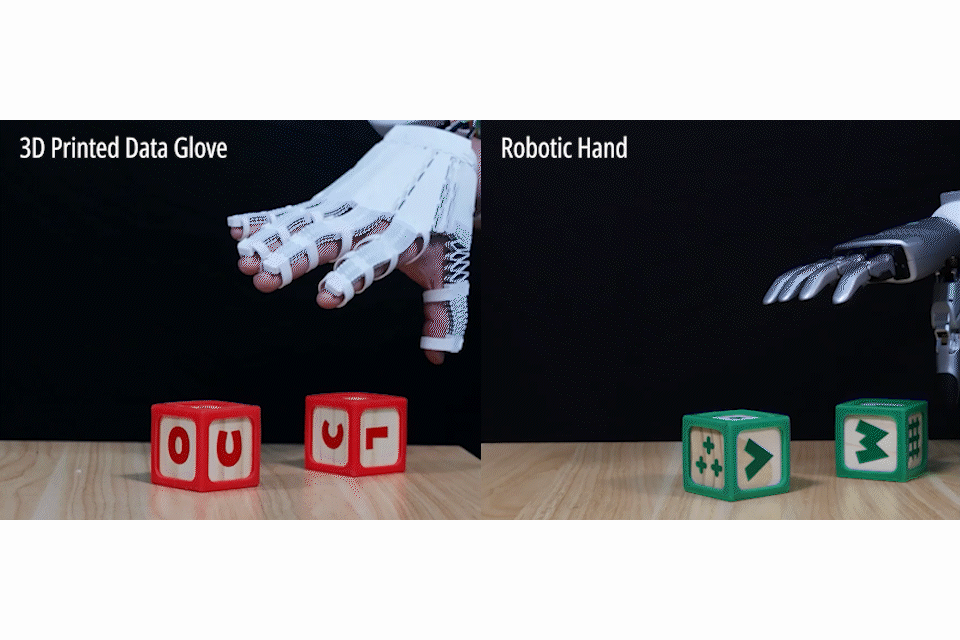
“X-Hinges” helps design and 3D print items like lamps and gloves with an interactive twist: automatically embedded sensors that perceive and adaptively respond to human contact.
We use cookies to run the site and, with your consent, for analytics and to show ads.
See our Cookie Policy.