Skip to content

Stable-MM-R1: Anchoring Multimodal Reasoning Dynamics via Entropy-Guided Stratification

Sep 2026 · 0 citations · 54 references
Computer Science

TL;DR

This work presents Hybrid Stratified Replay (HSR), a novel mechanism that restructures batches by stratifying rollouts based on Path Entropy, a rollout-level confidence proxy, and outcome reward, offering a principled solution for stable and efficient RL fine-tuning.

Abstract

While Reinforcement Learning (RL) effectively incentivizes reasoning in Large Language Models, current pipelines are hindered by training instability and rapid entropy collapse. These limitations often stem from"Rollout Silencing"and low-quality gradient signals in standard sampling procedures. In this work, we propose a robust, data-centric framework to stabilize RL training. We first introduce Potential-Aware Query Mining (PAQM), which filters data dynamically to focus on the"Distillation Zone"---samples with high potential for capability elicitation. Furthermore, we present Hybrid Stratified Replay (HSR), a novel mechanism that restructures batches by stratifying rollouts based on Path Entropy, a rollout-level confidence proxy, and outcome reward. Within each optimization step, HSR reuses current-policy"Stability Anchors"and"Hard Negatives"to construct high-contrast optimization groups, then clears its buffers before the next step. This approach mitigates entropy collapse while improving the utilization of learning signals under limited compute. Our method outperforms strong baselines on complex reasoning tasks, offering a principled solution for stable and efficient RL fine-tuning.


View source

Similar papers

#machine learning Preprint Sep 2026

EmbodiedMind: Adaptive Data Curation and Prefix-Tree Reinforcement Learning for Efficient Embodied Intelligence

Trie-GRPO, a novel reinforcement learning algorithm based on action prefix trees, which enables step-level advantage estimation, is introduced, which resolves the credit assignment problem by isolating intermediate correct decisions from downstream errors, while effectively balancing exploration efficiency and depth co...

Fei-Fan Wang, Zong-Bing Zhang, Yu Zhang et al. · 0 citations
#small language model Preprint Aug 2026

Boosting LLM Exploration via Weak-Model Guidance in RLVR

This work empirically study the potential of outer prefixes, revealing the mechanism of the impact of distributional discrepancy to the exploration dynamics in RLVR training and efficiently mitigates entropy collapse without requiring additional SFT, intricate reward designs, or complex prompting.

Xin Shen, Huishuai Zhang, Peng Li et al. · 2 citations · ⚡1
Conference Aug 2026

Post-Training for Reasoning LLMs with Reinforcement Learning: A Stability–Efficiency Perspective

Reinforcement Learning (RL)-based post-training has become a key mechanism for improving reasoning Large Language Models (LLMs), especially when automated verifiers enable Reinforcement Learning with Verifiable Reward (RLVR). Recent methods, however, are increasingly modular: many apparent algorithmic advances recombin...

Liu Yang, Han Zhu, Zheng-Yang Zhong et al. · 2 citations
#artificial intelligence Preprint Sep 2026

Difficulty-Adaptive Tree-Structured Policy Optimization for Expanding Reasoning Coverage in RLVR

DATPO (Difficulty-Adaptive Sentence-entropy-guided Tree-structured Policy Optimization) integrates difficulty-adaptive tree search with a sibling-diversity advantage term, explicitly promoting semantic diversity to expand reasoning coverage during training.

Young Kyu Yu, Sanghwan Jang, Hwanjo Yu · 2 citations
Preprint Aug 2026

LEMUR: Latent Entropy-aware Multimodal Unlearning via Visual-anchored Reasoning Redirection

Reinforcement-learning (RL) post-training equips multimodal large reasoning models (MLRMs) with exploratory chains of thought (CoT), substantially improving visual reasoning. However, we find that this capability introduces a distinct privacy vulnerability: even when a sensitive fact is successfully unlearned from the...

Xin-Hao Zhong, Yu Qiao, Jun-Hao Li et al. · 0 citations
#machine learning Preprint Sep 2026

Sampling via Decision-Flow: Training-Free Extraction of Improved Latent Reasoning Paths in Large Language Models

Decision-Flow Sampling (DF-Sample), a training-free, data-free inference-time framework that constructs a hierarchical reasoning tree, scores terminal nodes for quality, and back-propagates utilities to inform each intermediate branching decision, indicating substantial latent reasoning potential in pretrained base mod...

Zhen-Dong Mi, Shao-Yi Huang · 0 citations

Related blog posts

MIT News · Artificial Intelligence Oct 28, 2026

Making machines that can listen

Professor Paris Smaragdis develops computers with superhuman hearing for applications like speech recognition, music understanding, and environmental monitoring.

Microsoft Research Blog Aug 11, 2026

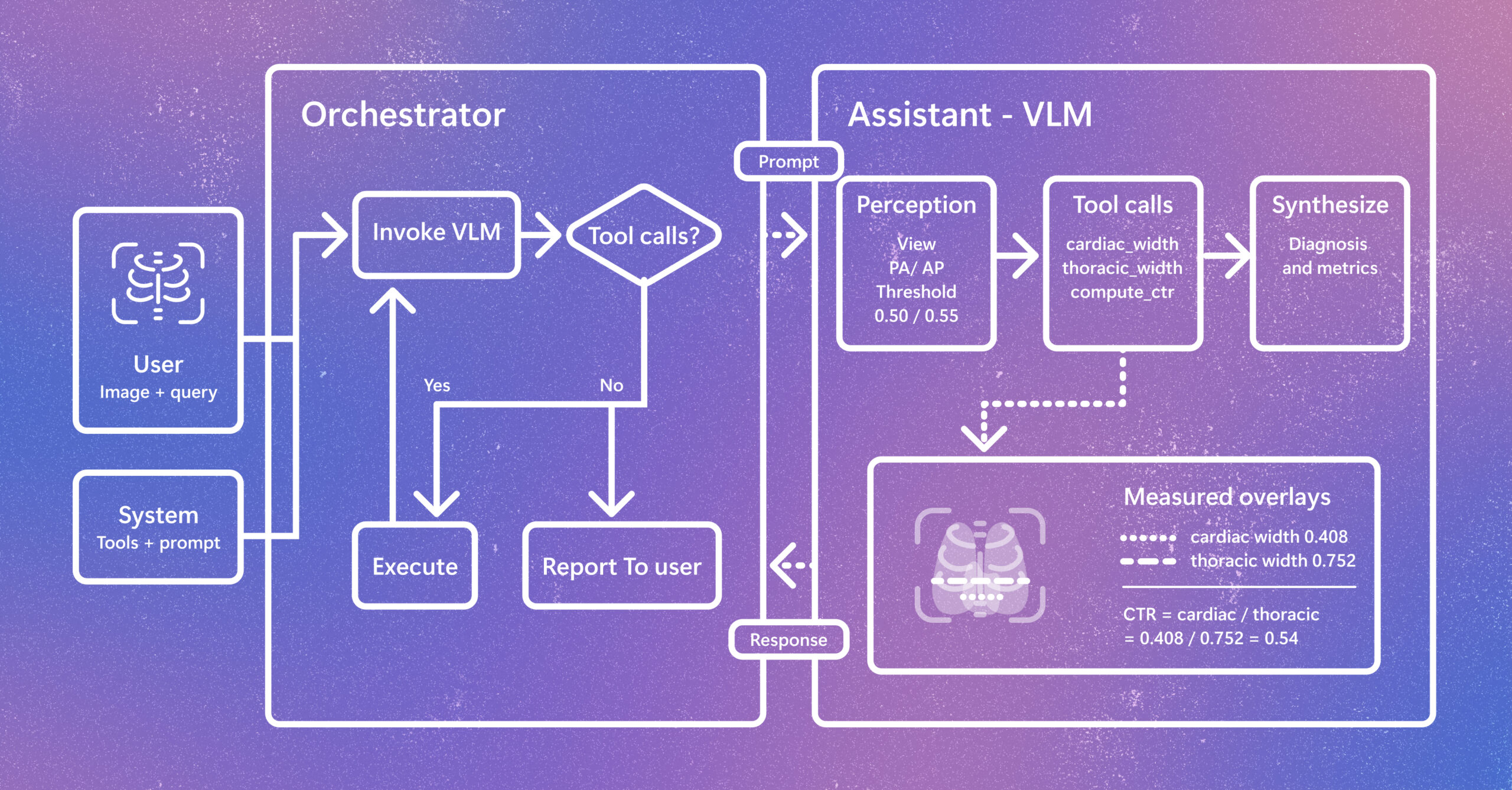
Introducing CARE-X: Towards Clinically Useful Radiology VLMs with Auxiliary Supervision, Reward-Aligned Learning, and Tool-Augmented Measurement

Radiology AI is evolving beyond report generation. CARE-X explores a unified approach that combines flexible reasoning, calibrated predictions, and measurement-based tools for chest X-ray interpretation. The post Introducing CARE-X: Towards Clinically Useful Radiology VLMs with Auxiliary Supervision, Reward-Aligned Learning, and Tool-Augmented Measurement appeared first on Microsoft Research.

We use cookies to run the site and, with your consent, for analytics and to show ads. See our Cookie Policy.