End-to-end vision-language-action (VLA) and world-action models offer an elegant route to general-purpose robotics, but their reliability is bounded by validated physical coverage. When an unfamiliar object, sensor, embodiment, or contact falls outside that coverage and no validated fallback exists, correcting the failure requires new robot data, a policy update, and regression testing. This recurring burden is the retraining tax. Unlike text, embodied data must often be created by operating machines. We present Teach-and-Grow Learning (TGL), an agent-centered architecture for general robot learning. In its general form, a multimodal agent turns a few successful demonstrations into reusable Skill Blocks: closed-loop behaviors for meaningful subgoals. In a new scene, the agent grounds and composes these blocks, selects learned or geometric tools, observes the physical outcome, and revises the route when execution departs from intent. A Skill Library stores executable behavior, while structured Experience Memory carries forward success, failure, and repair. New tasks are acquired without task-specific policy retraining. Our LIBERO evaluation attains state-of-the-art performance; controlled studies expose skill induction, persistent reuse, and agent-directed adaptation. Finally, we propose the Teach-and-Grow scaling-law hypothesis: if X denotes effective reusable experience, future-task error and teaching demand should approach irreducible floors as power laws in X. The architecture therefore treats deployment as a period of continued learning, in which one task can make the next easier.
This work introduces a pioneering exploration of Self-Supervised Learning (SSL) within the SNN, and proposes a novel Spiking Self-Attention (SSA) and Spiking Transformer (Spikformer) that achieves 80+% accuracy on ImageNet.
Zhaokun Zhou, Kaiwei Che, Wei Fang et al.· arXiv.org· 69 citations· ⚡10
EquiPocket is proposed, an E(3)-equivariant Graph Neural Network for binding site prediction, which comprises three modules: the first one to extract local geometric information for each surface atom, the second one to model both the chemical and spatial structure of protein and the last one to capture the geometry of the surface via equivariant message passing over the surface atoms.
Yang Zhang, Wenbing Huang, Zhewei Wei et al.· International Conference on...· 43 citations· ⚡4
Investigating how experienced developers use agents in building software, including their motivations, strategies, task suitability, and sentiments finds that while experienced developers value agents as a productivity boost, they retain their agency in software design and implementation out of insistence on fundamental software quality attributes.
It is shown that the maximum hypergraph density of any multiclass hypothesis class is upper-bounded by its DS dimension, which proves a longstanding conjecture of Daniely and Shalev-Shwartz (2014) and determines the optimal dependence of the sample complexity on the DS dimension for multiclass as well as list learning.
Quantum measurements are the means by which we recover messages encoded into quantum states. They are at the forefront of quantum hypothesis testing, wherein the goal is to perform an optimal measurement for arriving at a correct conclusion. Mathematically, a measurement operator is Hermitian with eigenvalues in [0,1]. By noticing that this constraint on each eigenvalue is the same as that imposed on fermions by the Pauli exclusion principle, we interpret every eigenmode of a measurement operator as an independent effective fermionic mode. Under this perspective, various objective functions in quantum hypothesis testing can be viewed as the total expected energy associated with these fermionic occupation numbers. By instead fixing a temperature and minimizing the total expected fermionic free energy, we find that optimal measurements for these modified objective functions are Fermi-Dirac thermal measurements, wherein their eigenvalues are specified by Fermi-Dirac distributions. In the low-temperature limit, their performance closely approximates that of optimal measurements for quantum hypothesis testing, and we show that their parameters can be learned by classical or hybrid quantum-classical optimization algorithms. This leads to a new quantum machine-learning model, termed Fermi-Dirac machines, consisting of parameterized Fermi-Dirac thermal measurements-an alternative to quantum Boltzmann machines based on thermal states. Beyond hypothesis testing, we show how general semidefinite optimization problems can be solved using this approach, leading to a novel paradigm for semidefinite optimization on quantum computers, in which the goal is to implement thermal measurements rather than prepare thermal states. Finally, we propose quantum algorithms for implementing Fermi-Dirac thermal measurements, and we also propose second-order hybrid quantum-classical optimization algorithms.
This systematic review evaluates 55 studies from 2017 to 2023 on the application of machine learning techniques to ASD, highlighting key challenges and opportunities, particularly the need for models that can integrate complex data to improve diagnostic accuracy and treatment outcomes.
Rafael Muñoz-Terol, Jesús Peral, Sandra Amador et al.· Heliyon· 4 citations· ⚡1
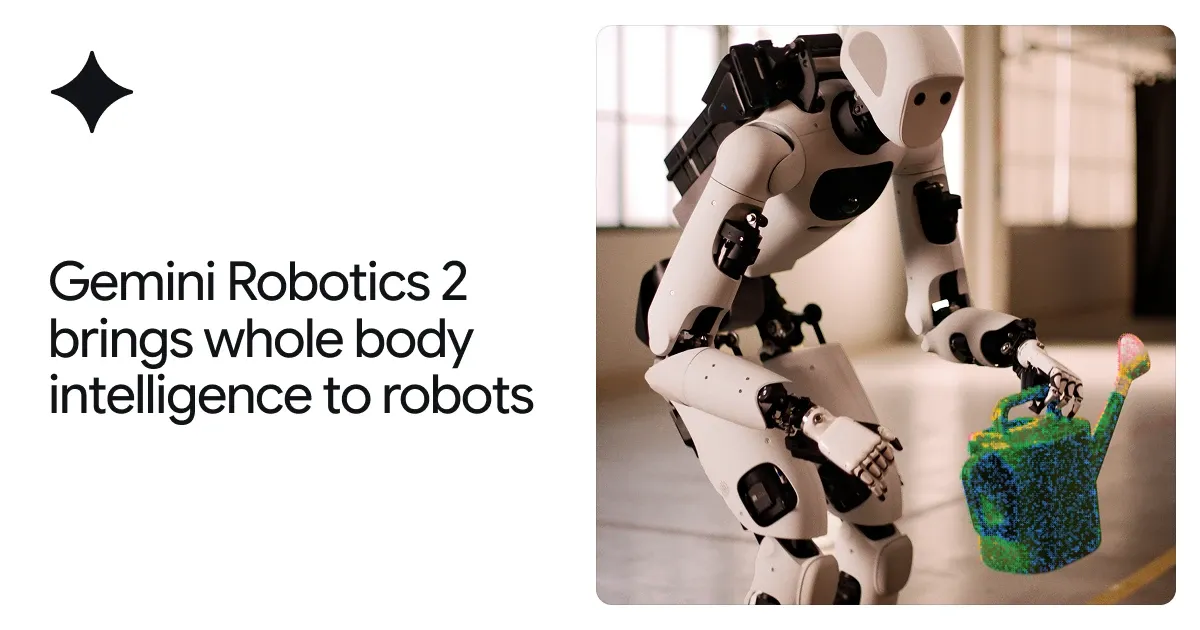
From feet to fingertips — we are teaching robots intelligent whole-body control, fine dexterity, and teamwork to complete a broad range of complex tasks.