Skip to content

KirchhoffNet: End-to-End Analog Circuit Acceleration for ODE-Based Neural Networks

Sep 2026 · IEEE Transactions on Computer-Aided Design of Integrated Circuits and Systems · Vol 45, pp. 4408-4421 · 0 citations · 76 references

Abstract

This article introduces KirchhoffNet, a novel class of neural network models inspired by the principles of analog electronic circuitry, specifically Kirchhoff’s laws. KirchhoffNet operates as an analog circuit, where the network input is represented by initial node voltages, and the output corresponds to the node voltages at a specific time. The dynamics of the node voltages are governed by learnable parameters on the edges, and the evolution of these voltages follows a system of ordinary differential equations (ODEs). Despite the absence of traditional neural network components such as convolutional layers, KirchhoffNet achieves outstanding performance across a wide range of machine-learning tasks. We further demonstrate that KirchhoffNet is capable of computing diffusion models, making it a promising candidate for accelerating modern generative AI applications. Most notably, KirchhoffNet can be implemented as a high-speed & low-power analog integrated circuit, which introduces a compelling advantage: irrespective of the number of parameters in the network, its on-chip forward calculation can always be completed within a short time. This property makes KirchhoffNet a highly attractive and scalable paradigm for implementing large-scale neural networks, opening new avenues in the realm of analog neural networks for artificial intelligence (AI).


View source

Similar papers

Preprint Aug 2026

ODEONN: A Digital ODE Solver Architecture for Oscillatory Neural Networks

This work introduces a modular and scalable architecture called ODEONN that is generic to multiple applications of ONNs, and to the best of the knowledge, is the first fully digital ONN to also support complex-valued coupling.

Bram F Haverkort, A. Todri-Sanial · 0 citations
Book Open access Aug 2026

Optimization of Emerging Analog Compute Systems with Shem

Shem is presented, a framework that enables gradient-based optimization of system-level objectives such as robustness and accuracy on user-defined analog compute models and introduces an autoparallelization algorithm that reduces total optimization runtime by 49–91%.

Yu-Neng Wang, Sara Achour · 0 citations
Review Jul 2026

Spiking Neural Networks: A Computational Paradigm for Neuromorphic Computing

It is aimed at proving that SNNs have potential in such areas as computer vision, robotics, and speech recognition, and their role in overcoming the barrier between artificial and biological neural systems is proved.

Mesala Sravani, K. Kumari, S. M. Reddy · 0 citations
Preprint Aug 2026

Noisy group neurons with synchronous resetting for high-performance spiking neural networks

This work proposes a noisy group neuron (NGN) model, which incorporates population-level synchronous resetting and neural stochasticity as fundamental computational mechanisms, and develops the NGN method as a framework that combines the NGN model with backpropagation learning based on mean-field dynamics.

Yajie Zhai, Yanmei Kang, Meng Li et al. · 0 citations
Preprint Aug 2026

An Embedded RISC-V Evaluation of Kolmogorov--Arnold Networks in Hard-Constrained Recurrent Physics-Informed Models

Results indicate that the parameter efficiency reported for KANs does not transfer to deployment cost on scalar embedded cores, and that an MLP residual branch is the more dependable default for embedded HRPINN deployment unless specific quantization co-design is used.

Enzo Nicolás Spotorno, J. Leal · 0 citations
Jul 2026

Beyond Backpropagation: Monte Carlo Method Can Train Deep Neural Networks

This paper shows that indeed the simplest Monte Carlo algorithm implemented on a single GPU can practically train deep networks and may offer a complementary perspective for understanding the self-organization and learning mechanisms of neural networks, and also provides an alternative route for building physically ins...

Hong Zhao · 0 citations

Related blog posts

MIT News · Artificial Intelligence Oct 15, 2026

AI model decodes the language cells use to communicate

A new computational approach reveals how cells communicate to assemble into tissues. This could accelerate stem cell engineering, improve disease models, and inform therapies.

Microsoft Research Blog Sep 29, 2026

Introducing Quine: An AI research system designed for the complexity of biology

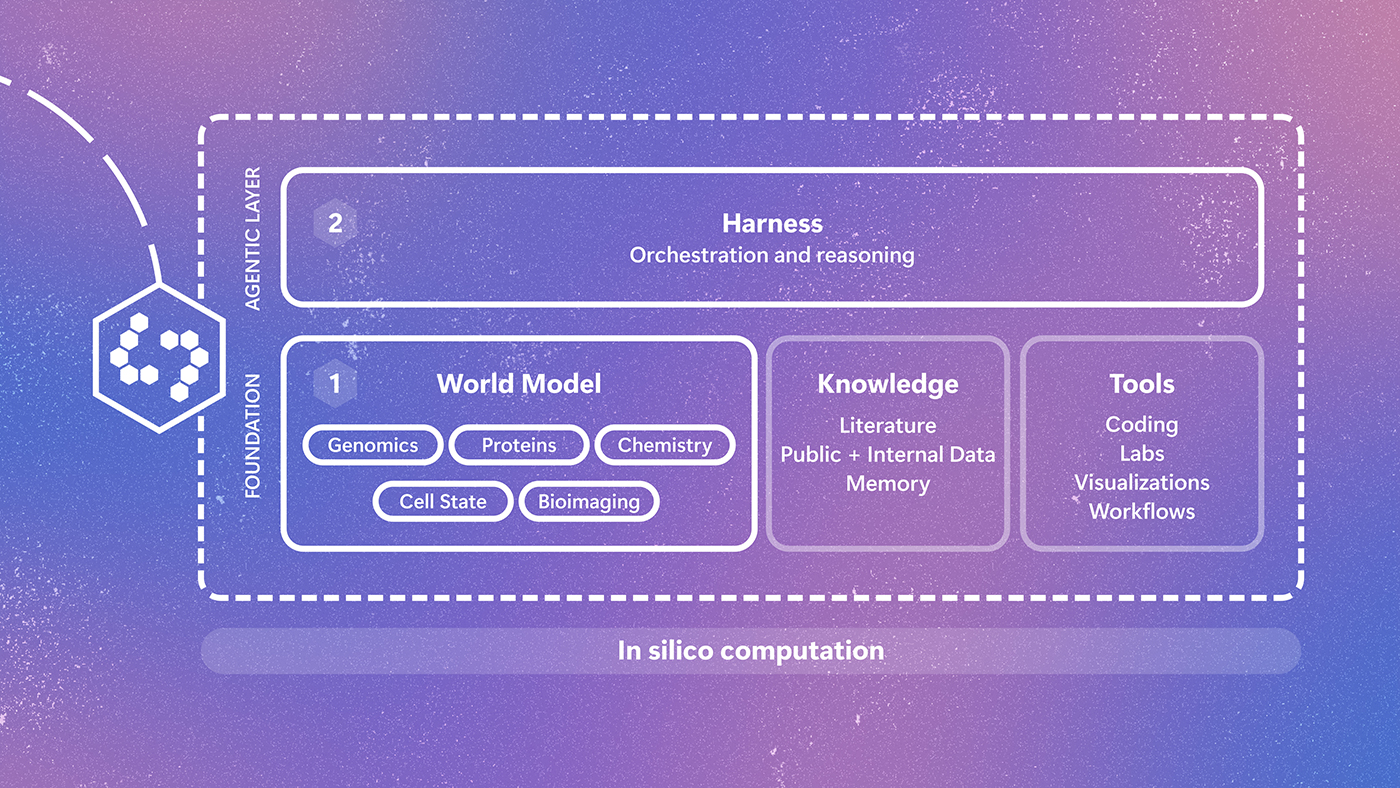
Biology doesn't operate in silos, and neither should the AI representation of it. Quine is an early-stage research effort to create a multimodal world model of biology. By connecting insights across biological scales and modalities, Quine helps scientists computationally search a space far larger than intuition allows and prioritize hypotheses before they reach the lab. Experimental results provide important feedback, helping researchers sharpen future research directions. The post Introducing Q…

MIT News · Artificial Intelligence Jul 14, 2026

Helping AI models to meet the real world

Through research and entrepreneurship, Professor Devavrat Shah is helping to design methods that can handle constant decision-making using limited computational resources.

We use cookies to run the site and, with your consent, for analytics and to show ads. See our Cookie Policy.