Skip to content

Decoupled Edge Data Integrity Verification via Federated Adaptation and Cryptographic Validation

Sep 2026 · IEEE Internet of Things Journal · Vol 13, pp. 39702-39718 · 0 citations · 41 references
Computer Science

Abstract

Mobile edge computing (MEC) accelerates Internet of Things (IoT) applications by caching content near end users. However, cached data remains vulnerable to corruption, misleading applications, and eroding user trust. Traditional centralized edge data integrity verification (EDIV) methods adopt challenge-response protocols involving third-party auditors (TPAs), incurring nontrivial computation and communication costs along with privacy concerns. Recent decentralized frameworks leverage federated learning (FL) to train models for initial screening, eliminating TPAs. However, their performance is impeded by computational and data heterogeneity across edge nodes and the substantial overhead of blockchain-based validation. Furthermore, such frameworks exhibit limited precision in localizing corrupted data. To address these challenges, this article introduces the decoupled EDIV (D-EDIV) framework, which explicitly decouples integrity verification into a two-stage mechanism of corruption detection and corruption localization. During Stage 1, D-EDIV executes corruption detection models at edge nodes. A federated adaptation scheme tailors these models to each node’s computational resources and local data distribution. Upon detecting anomalous instances, a fusion strategy correlates network-layer alerts with cached data modification events to generate perblock suspicion scores, prompting the application vendor (AV) to trigger Stage 2. In this stage, the AV conducts targeted localization on potentially corrupted data. In particular, after authenticating data commitments via a digital signature, the AV utilizes suspicion scores to calculate dynamic decision thresholds, guiding Merkle tree traversal and restricting cryptographic validation to high-risk data blocks. Experimental results demonstrate that D-EDIV improves detection accuracy by 3%–12% and reduces computational overhead by $3\times $ – $8\times $ , efficiently achieving fine-grained integrity verification in heterogeneous MEC environments.

View source

Similar papers

#computer vision Review Sep 2017

Agile Software Development Methods: Review and Analysis

This publication proposes a definition and a classification of agile software development approaches and analyses ten software development methods that can be characterized as being "agile" against the defined criterion.

P. Abrahamsson, O. Salo, Jussi Ronkainen et al. · 727 citations · ⚡54
#computer vision Jun 2008

The impact of agile practices on communication in software development

The study shows that agile practices improve both informal and formal communication, but indicates that, in larger development situations involving multiple external stakeholders, a mismatch of adequate communication mechanisms can sometimes even hinder the communication.

M. Pikkarainen, Jukka Haikara, O. Salo et al. · 401 citations · ⚡48
#machine learning Review Open access Oct 2014

Software development in startup companies: A systematic mapping study

The results indicate that software engineering work practices are chosen opportunistically, adapted and configured to provide value under the constrains imposed by the startup context.

Nicolò Paternoster, Carmine Giardino, M. Unterkalmsteiner et al. · 394 citations · ⚡54

Related blog posts

GPT-Lab Sep 17, 2026

Beyond Prompt Engineering: The Role of Tacit Knowledge in Software Engineering

AI is making software generation faster, but speed does not remove the need for expertise. As more work is delegated to AI, tacit knowledge may become one of the most important human advantages in software engineering. The post Beyond Prompt Engineering: The Role of Tacit Knowledge in Software Engineering appeared first on GPT-Lab.

Microsoft Research Blog Aug 31, 2026

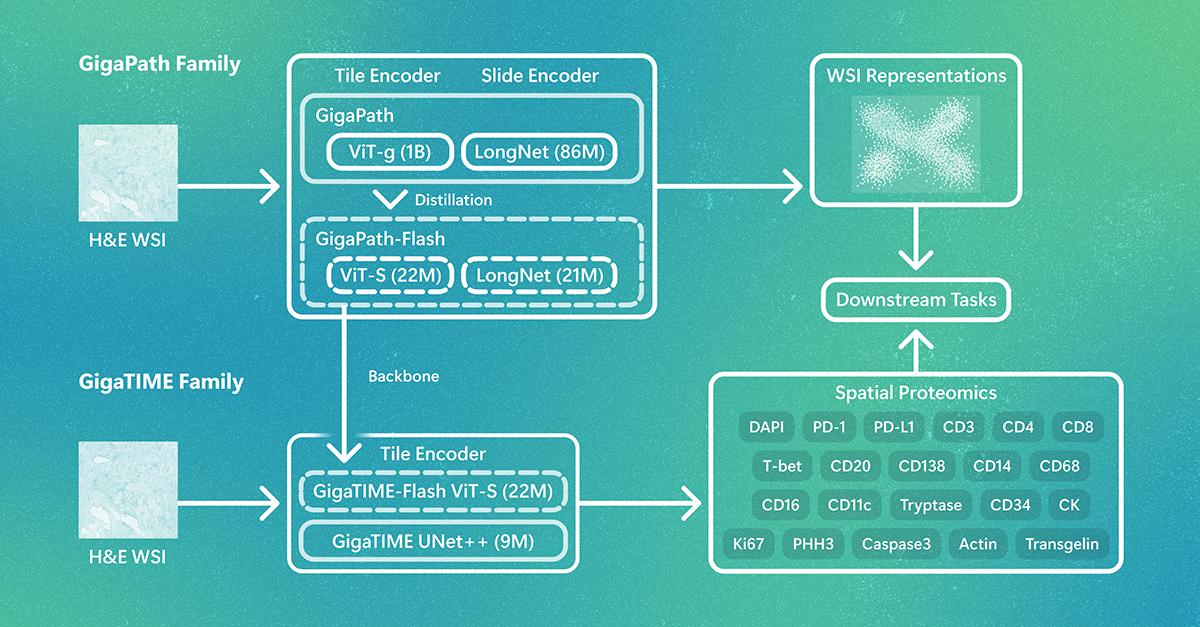
GigaPath-Flash and GigaTIME-Flash: Toward population-scale discovery with efficient pathology foundation models

What if pathology foundation models could do more with less? GigaPath-Flash and GigaTIME-Flash cut computational demands while maintaining strong performance, opening the door to larger studies and broader exploration. The post GigaPath-Flash and GigaTIME-Flash: Toward population-scale discovery with efficient pathology foundation models appeared first on Microsoft Research.

We use cookies to run the site and, with your consent, for analytics and to show ads. See our Cookie Policy.