Sep 2026· e-Journal of Nondestructive Testing· 0 citations
Abstract
Le contrôle qualité en temps réel des pièces composites dans l'industrie aéronautique représente un enjeu majeur pour garantir l'intégrité structurale des composants tout en maintenant des cadences de production élevées. Cet article présente un système modulaire open-source combinant vision industrielle et Line Scan Thermography (LST) [1-3], conçu pour une intégration flexible dans des environnements industriels. Chaque caméra (thermique ou visible) est connectée à un Raspberry Pi 5 dédié (edge computing), formant un nœud autonome capable d'acquisition, de traitement d'images et de transmission des résultats via des protocoles industriels standardisés (OPC UA, HTTP). L'application ciblée est le contrôle en ligne des défauts surfaciques et sous-surfaciques (délaminages, gaps, overlaps, polluants) lors de procédés de fabrication robotisés type Automated Fiber Placement (AFP). Les résultats préliminaires montrent une détection efficace des défauts à des vitesses de balayage allant jusqu'à 0,3 m/s avec une résolution spatiale adaptée aux exigences industrielles. Les perspectives incluent la fusion des données thermiques et visibles ainsi que l'intégration d'algorithmes de super-résolution ESRGAN [4] par IA (Enhanced Super-Resolution Generative Adversarial Networks) pour améliorer la précision des diagnostics.
This publication proposes a definition and a classification of agile software development approaches and analyses ten software development methods that can be characterized as being "agile" against the defined criterion.
P. Abrahamsson, O. Salo, Jussi Ronkainen et al.· arXiv.org· 727 citations· ⚡54
The study shows that agile practices improve both informal and formal communication, but indicates that, in larger development situations involving multiple external stakeholders, a mismatch of adequate communication mechanisms can sometimes even hinder the communication.
M. Pikkarainen, Jukka Haikara, O. Salo et al.· Empirical Software Engineeri...· 401 citations· ⚡48
The results indicate that software engineering work practices are chosen opportunistically, adapted and configured to provide value under the constrains imposed by the startup context.
Nicolò Paternoster, Carmine Giardino, M. Unterkalmsteiner et al.· Information and Software Tec...· 394 citations· ⚡54
The perception of the impact of agile methods is predominantly positive, and several challenge areas were discovered, but based on this study, agile methods are here to stay.
M. Laanti, O. Salo, P. Abrahamsson· Information and Software Tec...· 260 citations· ⚡20
AI is making software generation faster, but speed does not remove the need for expertise. As more work is delegated to AI, tacit knowledge may become one of the most important human advantages in software engineering. The post Beyond Prompt Engineering: The Role of Tacit Knowledge in Software Engineering appeared first on GPT-Lab.
MIT News · Artificial Intelligence· news.mit.eduSep 9, 2026
A weeklong summer workshop brought higher education faculty to campus to explore how AI and machine learning materials can be adapted for their classrooms.
MIT News · Artificial Intelligence· news.mit.eduSep 2, 2026
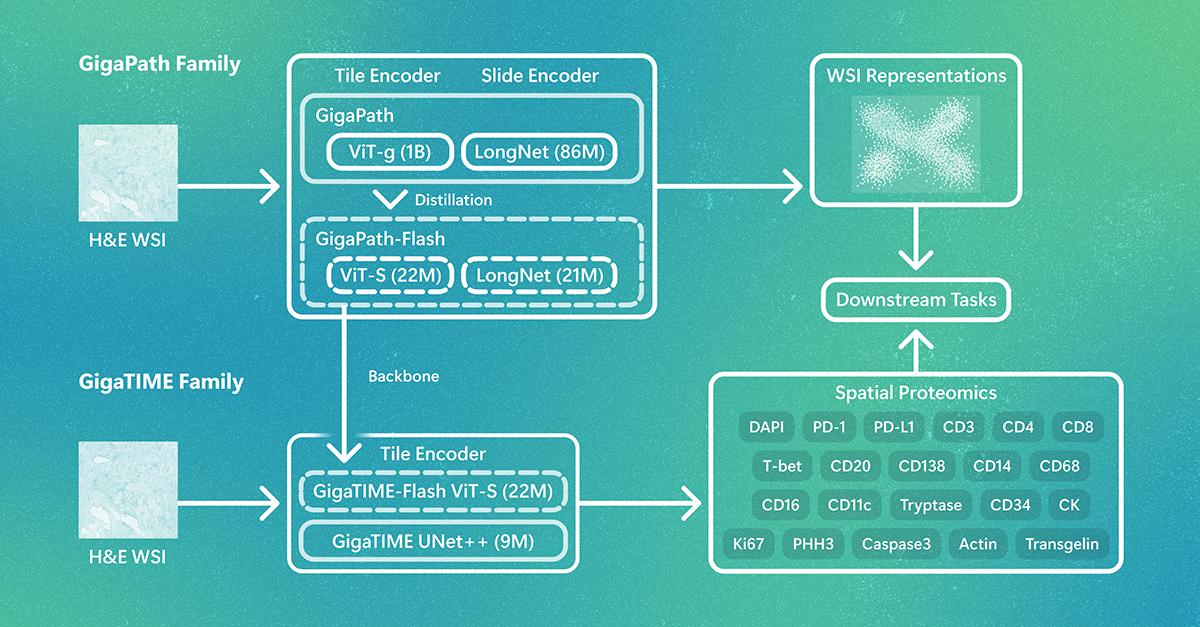
What if pathology foundation models could do more with less? GigaPath-Flash and GigaTIME-Flash cut computational demands while maintaining strong performance, opening the door to larger studies and broader exploration. The post GigaPath-Flash and GigaTIME-Flash: Toward population-scale discovery with efficient pathology foundation models appeared first on Microsoft Research.
We use cookies to run the site and, with your consent, for analytics and to show ads.
See our Cookie Policy.